


California legislation regulating auto glass repair now applies more narrowly than originally proposed, potentially excluding many collision repair shops that replace windshields as part of larger repairs.
Senate Bill 988, the California Motor Vehicle Glass Act, has passed the full state Senate and cleared the only Assembly policy committee. It is pending before the Assembly Appropriations Committee, where LegiScan's tracking of the bill shows the last recorded action as a June 24 hearing followed by placement on the suspense file.
What changed in the definition
As introduced, SB 988 defined a "motor vehicle glass repair shop" broadly, as "a person, including the person's employees and agents, that for consideration engages in the repair or replacement of damaged motor vehicle glass," according to the bill's introduced text. Under that language, collision repair facilities replacing vehicle glass as part of broader repairs also would have fallen within the definition.
The current amended version of the bill defines a "motor vehicle glass repair shop" differently, as "a person or business primarily engaged in automotive glass replacement, including the cutting, fabrication, repair, and installation of vehicle windows and windshields," according to the amended bill text. The bill has been amended four times since introduction, on March 23, April 16, June 3, and June 4.
What the bill still requires of glass shops
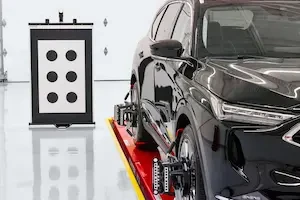
For businesses that meet the current definition, the bill's substantive requirements remain largely unchanged from earlier drafts. Before starting work, a covered shop must notify the customer whether the vehicle has an advanced driver assistance system (ADAS) and, if so, whether calibration or recalibration is needed following a windshield repair or replacement and whether the shop intends to perform that calibration, according to the amended bill text.
If a shop performs a calibration or recalibration, it must provide the customer with written notice of whether it was successful, and if not, that the vehicle should go to the manufacturer's certified dealership or another qualified specialist.
The bill also bars a shop from contracting to do first-party insurance work until the customer has filed a claim and the shop has received a claim or referral number, requires a good-faith estimate and an updated estimate before work begins, and requires an itemized invoice and receipt on completion.
It prohibits an insured from assigning, delegating or otherwise transferring their duties, rights or benefits under a motor vehicle insurance policy to a repair shop, and states that a contract entered into in violation of that prohibition on or after Jan. 1, 2027, is void and unenforceable.
It also bars kickbacks or incentives offered in exchange for directing insurance claims, and separately states that an insured cannot be required to use a particular shop to receive claim payments.
Violations carry a civil penalty of up to $500 for a first offense and up to $2,000 for each subsequent offense, enforceable through a civil action brought by a city attorney, district attorney, county counsel or the state Attorney General, according to the bill text.
Industry opposition and the author's response
Members of the auto glass industry, including the Auto Glass Safety Council and the Independent Glass Association, have objected to the bill's requirement that shops obtain a claim number from an insurer before starting work, calling it anti-competitive.
State Sen. Tim Grayson, D-Concord, the bill's author, told the Senate Judiciary Committee in April that the bill is not aimed at regulating independent shops but is meant to protect consumers, saying the current process can lead to "poor outcomes for consumers, including inflated claims or overbilling," according to reporting on the hearing.
At the same hearing, state Sen. Eloise Gómez Reyes, D-San Bernardino, said opposition to the bill centered less on the claim-number requirement itself and more on concern that it could shift leverage toward insurers and their preferred repair networks, the outlet reported.
Members of the auto glass industry, including the Independent Glass Association Executive Director Gary Hart, testified again when the bill reached the Assembly Judiciary Committee on June 9, according to glassBYTEs.com.
The Assembly Appropriations Committee must decide whether to advance the bill before it can be considered by the full Assembly.



Lisa McArdle