


If an automaker cites a procedure as “recommended,” and a collision repair shop doesn’t do it, does that heighten the shop’s liability if that vehicle is in a subsequent accident?
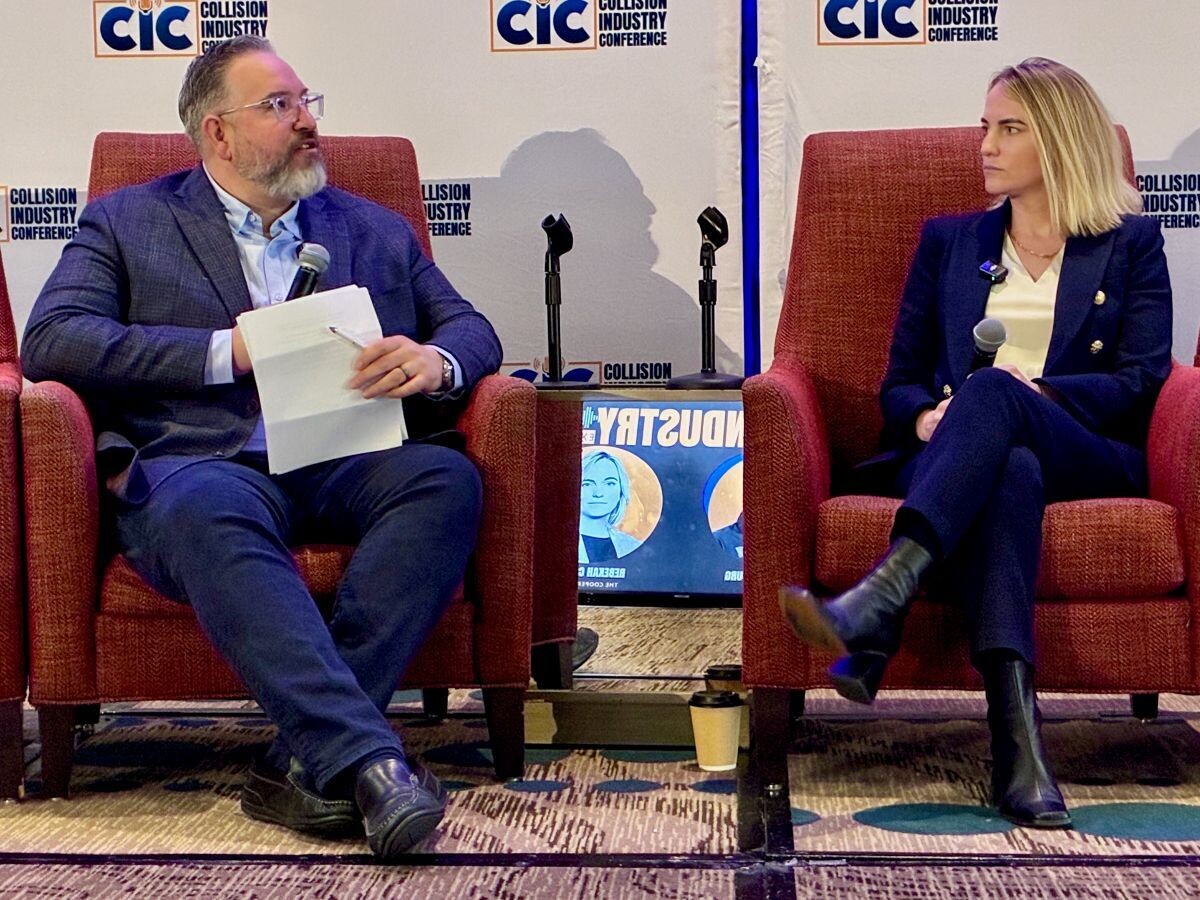
That was a question Aaron Schulenburg of the Society of Collision Repair Specialists (SCRS) posed to personal injury attorney Rebekah Cooper during an on-stage interview at January’s Collision Industry Conference (CIC).
Experience matters
Cooper’s firm handles product liability cases that sometimes involve repair shops if there’s a question as to whether a vehicle performed as it should — or didn’t because of prior service or repair work done to it. Schulenburg asked whether an automaker recommends or requires something matters, given that in either case it seems clear the document is communicating how the automaker intends something to be performed.
“In my opinion, in my experience, it does [matter],” Cooper said. “We always say, ‘shall’ is a mandate. You shall do this. You shall do that. Recommended best practices are different. They’re not a ‘shall.’ So I am not going to credibly stand in front of a jury and say, ‘They were absolutely required to do it,’ if that’s not what the text of the manual says, or if that’s not what the text of the position statement says. I will say this though: The way our system works here in America is that you end up in front of six or 12 normal people like you and me.”
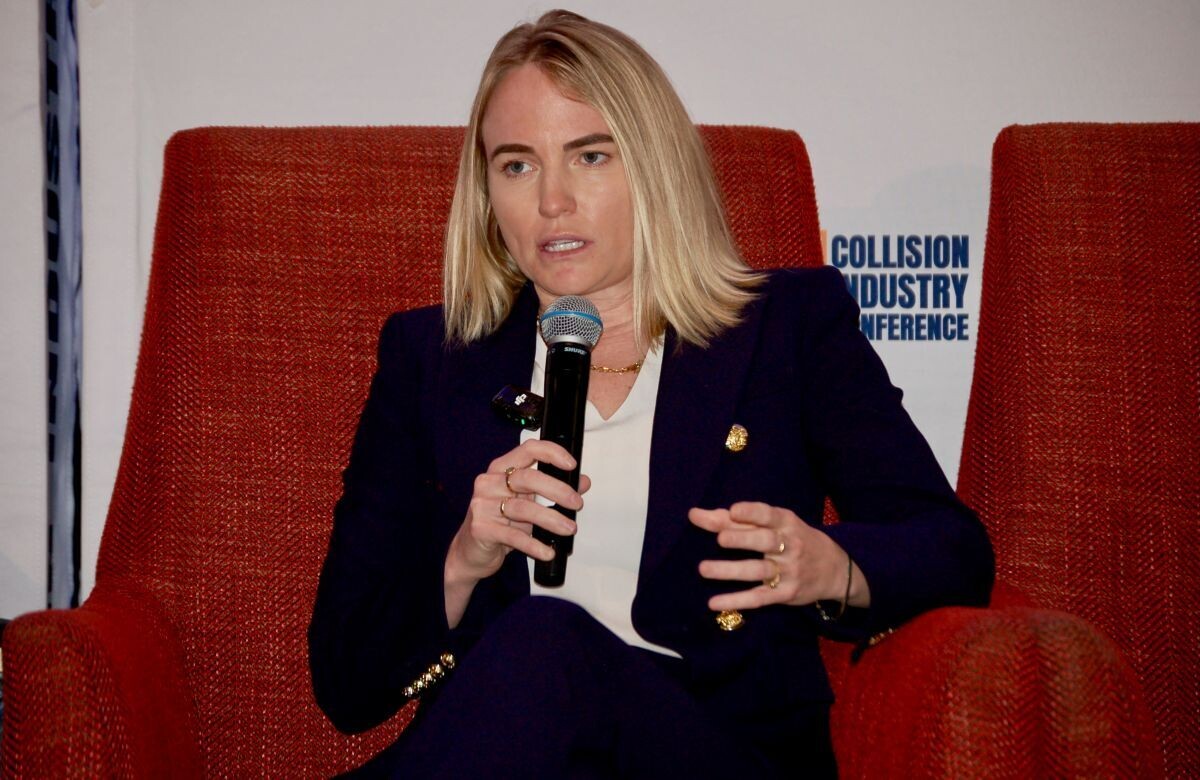 Attorney Rebekah Cooper said documenting employee training is also a good practice for shops.So Cooper said the questions is, What are those people going to think?
“If you just paid 12 people and said, ‘Well, this repair manual says here’s all the best practices. It was a suggestion. We didn’t do them. There was a mandate, and we did the mandate.’ Just as an individual and not an attorney, that’s not compelling to me. I mean, why are you in that business? Shouldn’t you try to do best practices? I think there’s a difference technically [between ‘recommended’ and ‘shall’], and we should acknowledge that. But in terms of whether you are acting reasonably, in the best interest of the consumer, both suggestions and mandates matter.”
Document training, hiring protocol
In any lawsuit against a shop, Cooper said, documentation is key.
“It’s everything. During discovery, the first thing we do is we ask what happened, and we get the repair documents,” she said. “You want to be able to explain, ‘When this vehicle came to us, here are the problems that it had, or here were the repairs needed, and here’s exactly what we did to do those repairs.’”
For instance, if there’s a work order for $2,700, Cooper said she will check if it has the name of someone who works in the shop, and the next thing they’re asking for is that worker’s training records.
“Their training should be documented. You’re hiring someone: What is your protocol for hiring them? What do you look at? What do you require? And if there’s been training, if you’ve got documented training, and you’re always in a better position than if you don’t.”
Who “owns” the repair?
“From a legal standpoint, who owns the work product for a repair?” Schulenburg asked Cooper. “Is it the repair facility that performed it? Is it the insurance company that paid for it? Who ultimately is responsible for the outcome?”
Cooper compared it to going to the hospital for a scan, and there needs to be a decision made about what treatment happens as a result of that scan.
“I want the trained medical doctor to make that decision,” Cooper said. “I don’t want [my insurer] Kaiser Permanente to make that decision. The same applies here, and that puts body shops between a rock and a hard place when the right thing to do is different than what they’re being told to do.”
If that is happening, document it, he said, Communicate it to the insurance company, your customer, and in the repair records.
“But going back to the liability thing, I’m just going to be blunt with you: A lawsuit is not going to name the company that wanted to pay less on the claim. The lawsuit is going to name the company that repaired the vehicle. I’m not saying that’s fair, but that is what’s happening.”
Subletting work doesn’t alleviate your liability for that work, either, Cooper said.
She gave ADAS as an example.
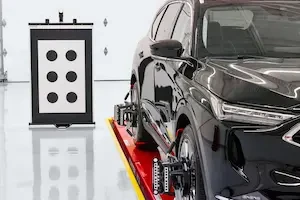
“If you are not an ADAS expert, totally fine. Don’t put yourself out there as a ADAS expert. Get an ADAS expert involved,” she said, noting that the same thing she said about training documentation applies to sublet vendors to ensure that you’ve vetted their ADAS capabilities.
“I’m sure there are a lot of companies that say they do ADAS that [shouldn’t] be doing ADAS. Figure out who those companies are, and don’t use them. Number one, that’s the right thing to do for your customer. And then two, if unfortunately you end up in a litigation situation and you say, ‘Well, we’ve used ABC ADAS shop,’ [you’ll be asked] what did you do to vet them?”




John Yoswick