


What does it take to build a collision repair business that outlasts its founder by generations? For Mike Schoonover, the answer has less to do with strategy and more to do with discipline: a commitment to quality, a willingness to invest in the right partners and actually use what they offer, and an honest reckoning with what the business needs to survive each new era of change.
Schoonover is the third-generation owner of Schoonover Bodyworks and Auto Care in Shoreview, Minn., a shop his grandfather launched in 1938 on a borrowed $50. His father modernized it through the 1970s and '80s. Now in his 41st year in the business full time, Schoonover is preparing to hand the reins to his son Matthew, the fourth generation.
He recently sat down with host Cole Strandberg on The Collision Vision to discuss what has kept the business alive and growing across nearly nine decades, and what other shop owners can take from that experience.
Longevity Starts with Culture
Nearly 90 years in business is not primarily a story about smart pivots or market positioning. Schoonover traces the shop's durability back to something simpler: a set of values his grandfather established and each generation has continued to build on.
“It's always been ingrained in us family members who've worked here, and then all of our employees over the years,” he said, describing an orientation toward quality work and customer service that has never been treated as optional regardless of economic conditions.
That culture is not accidental. Each generation has had to consciously choose to carry it forward, and each has done so in their own way. Schoonover's grandfather instilled the foundational ethic. His father professionalized it and pushed toward technical excellence. Schoonover has worked to translate those values into a modern management and operational context.
Key Takeaway: Document and communicate the core values that define your shop's reputation — quality, transparency, customer communication — and make sure they are actively reflected in how you hire, train, and evaluate employees.
Each Generation Faces Its Own Technological Inflection Point
Schoonover's father recognized early that the shift from full-frame to unibody construction in the early 1980s was not just a trend. He adopted Car-O-Liner frame equipment and Sikkens paint, both of which were considered premium European imports at the time, and built the shop's reputation around mastering them.
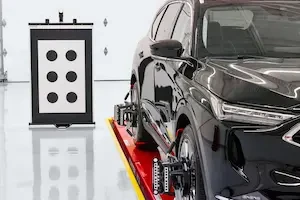
Schoonover sees his own moment as similarly consequential. ADAS calibration requirements, electric vehicle complexity, digital estimating tools, and new materials have all hit the industry within a compressed window. He's candid that he doesn't expect to personally navigate all of it. That's part of why he's bringing his son Matthew in now, so the shop has the energy, curiosity, and capacity to absorb what's coming.
Key Takeaway: Consider identifying a few technological developments most likely to reshape your market in the next three to five years, such as ADAS calibration, EV repair, aluminum or advanced material handling, and begin building capability now, before customer demand or insurer requirements force the issue.
The One-Stop Model Works If It's Built on the Right Foundation
Schoonover Bodyworks has offered in-house mechanical services for more than 20 years, and recently expanded its facility to add more retail mechanical capacity.
“Body technicians are not mechanics and mechanics are not body technicians,” Schoonover said. The steering, suspension, cooling, alignment, airbag, and glass work that accompanies a collision repair requires a different kind of specialist.
When you sublet that work, you give up control of timing, quality, and the customer relationship. Keeping it in-house means owning the outcome end to end.
Key Takeaway: If your shop regularly sublets mechanical, glass, or alignment work, calculate what that volume represents in annual revenue and assess whether bringing it in-house is operationally viable.
Premium Products and Partners Return Value Over Time
Schoonover said that choosing paint systems that save money on materials means absorbing risk on quality, retraining painters, and potentially disrupting a process that has been refined over decades. The savings on product cost rarely offset those hidden costs.
Beyond the product itself, he said that long-term partnerships with suppliers like AkzoNobel provide access to training programs, technical support, and business development resources that a lower-cost competitor simply doesn't offer.
Key Takeaway: When evaluating supplier relationships for renewal, calculate total value, not just unit cost. Factor in training access, technical support responsiveness, business development resources, and the cost of switching, including retraining, process disruption, and quality risk. The cheapest option on paper is often not the lowest-cost option in practice.
20 Groups and Peer Learning Are the Most Underused Tool in the Industry
Schoonover was candid about a pattern he sees among fellow shop owners: they know they should be getting out, attending events, participating in peer groups, and visiting other shops, but they don't do it. The daily grind of running a shop makes it feel impossible to step away.
He's been there himself. But his experience with performance groups, first through Sikkens and then through his ongoing involvement with AkzoNobel's programs, has been consistent: you come back with one or two things that change how you operate, and those changes compound over time.
“Sometimes you got to step out of your business,” he said, "because all you see is the same four walls."
The shops that are improving fastest are almost always the ones whose owners are most engaged with the broader industry. They're seeing different operations, comparing numbers, asking uncomfortable questions, and bringing answers back to their teams. That exposure is almost impossible to replicate inside the walls of a single shop.
Key Takeaway: If you are not currently participating in a 20 group or peer performance network, identify one and commit to attending the next meeting. If your paint supplier or industry association sponsors a regional group, contact them this week. The cost of going is far lower than the cost of not knowing what your competitors already do.
Vendors Supply and Partners Build
The distinction Schoonover draws between a vendor and a partner is one of the sharper observations in the conversation. A vendor relationship is transactional: you order, they deliver, you pay. A partnership is structural. It means the other party is invested in your performance, not just your purchase volume.
He describes the evolution from vendor to partner as something that takes time and has to be earned on both sides. A supplier who shows up consistently, helps solve problems, provides training, brings business intelligence, and advocates for your shop's success starts to function more like an employee than an outside company.
When that happens, Schoonover said, he starts thinking about their success too. “Our success depends on theirs and theirs depends on ours.”
Key Takeaway: Review your current supplier relationships and ask honestly which ones are actually contributing to your shop's growth and capability, not just filling orders.
Not Every Expansion Will Work
Schoonover's willingness to be direct about failures is one of the more valuable parts of the conversation. The shop invested in paint protection film retail services and ultimately pulled back. The model didn't fit. A standalone PPF retail operation required a different sales motion, a different facility footprint, and a different customer base than Schoonover Bodyworks was built to serve.
But Schoonover said it’s all part of the process. He's spent 41 years in this business and estimates the lessons from failed experiments have cost him the equivalent of several Harvard educations. But he draws a clear line between services that are genuinely adjacent to collision repair (mechanical, glass, detailing, alignments) and those that require building an essentially separate business.
The discipline to exit a failed experiment cleanly, without overcommitting resources or waiting too long to admit it isn't working, is as important as the courage to try in the first place.
Key Takeaway: Before adding a new service line, pressure-test whether it is truly adjacent to your existing workflow or whether it requires a fundamentally different operation to execute well. Set clear performance benchmarks before launch and a defined timeline for evaluation. If the numbers don't support continuation, exit cleanly and redirect those resources.
Succession Planning Requires Patience and Intentional Development
Matthew Schoonover did not walk into the business. He grew up in it, then spent his high school and early adult years running his own lawn care and snow removal operation before joining Schoonover Bodyworks full-time about a year before this conversation. Schoonover made the offer when the timing felt right, framed it honestly, and let his son make the call.
The approach to developing Matthew reflects a broader philosophy. Schoonover doesn't want his son to replicate him or his father. He wants him to bring his own style, his own strengths, and his own mark to the business. The job of the current generation is to give the next one the foundation, the relationships, and the runway they need to succeed.
That philosophy also shapes how Schoonover thinks about his own role right now. He has more experience. Matthew has more energy. Used well, those are complementary assets, not competing ones.
Key Takeaway: If succession is on your horizon, begin developing your successor in active roles now, not in an abstract future. Identify specific responsibilities you can transfer incrementally. Have honest conversations about timeline and expectations. The transition works best when the next generation has time to build credibility with employees and customers while the current owner is still present.
The Bar Is Low, and Shops That Hold the Line Win
Schoonover looked at the current state of service quality across the collision repair industry, and across most service industries, and described it as broadly low. Customers have been conditioned to expect delays, miscommunication, and inconsistency.
He said that Schoonover Bodyworks has not lowered its bar. It has raised it. And in a market where the baseline is poor, shops that deliver consistently on quality, communication, and follow-through stand out without having to do anything exotic. The competitive advantage available to well-run shops right now is real and accessible.
Key Takeaway: Audit your customer touchpoints such as intake, status communication, delivery, and follow-up, and identify where your shop's actual performance falls short of what you'd want your own family to experience. Fix the one or two biggest gaps first. Consistent execution on the basics, delivered reliably, is a more durable advantage than any single technology or marketing investment.
Building a Business That Outlasts You
The Schoonover story is not a template so much as a proof of concept. The specifics will look different for every shop, but the underlying principle holds regardless of market size, ownership structure, or where a business is in its lifecycle: lasting businesses are built on consistent values, genuine partnerships, and a willingness to keep learning.






Lisa McArdle