Collision repair shop owners have no shortage of good ideas.
They hear them at industry events and training sessions, from vendors, consultants, peer groups, and other shop owners. The bigger challenge is what happens after they return to the shop.
How does a good idea become something employees actually do every day?
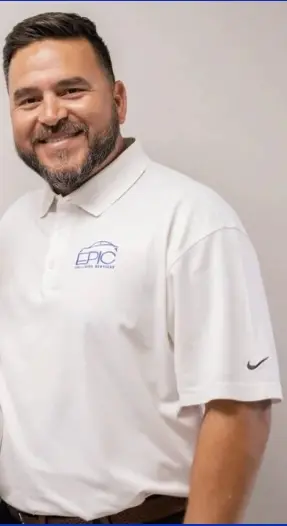
For Gilbert Ramirez, owner of Epic Auto Collision, Odessa, Texas, the answer comes down to a deceptively simple concept: consistency.
“Consistency from the management all the way down through the technicians and porters and even our driver,” Ramirez said.
At Epic, implementing an idea isn’t simply a matter of announcing a new procedure. It requires deciding whether the idea fits the business, getting the right people behind it, explaining why it matters and then reinforcing it until it becomes part of the shop’s normal way of operating.
Start With Ideas You Believe In
Ramirez said Epic gets ideas from a variety of sources, including paint vendors, tool manufacturers, and industry professionals who visit shops across the country.
Those relationships can be valuable because outsiders often see practices working successfully in multiple businesses. But Ramirez doesn’t believe every new idea deserves to become an Epic process.
Trust is an important first filter.
“There’s got to be a trust relationship with them also because we’re not going to take everything into consideration unless it’s something that, you know, we’ve earned each other’s trust,” he said.
The idea also has to make sense for Epic.
Over the years, Ramirez has adopted practices learned from other industry professionals and then adapted them to his own operation. Once something proves worthwhile, however, the challenge becomes keeping it from fading after the initial enthusiasm fades.
“It’s just making it part of your process,” Ramirez said. “It’s not giving up on it. It’s daily.”
Employees also need to understand why they are being asked to follow a particular procedure.
“You’ve got to remind, and you’ve got to work, and you’ve got to make sure that these guys understand why the process is set up the way it is,” he said.
Make the Process Bigger Than One Person
One way EPIC makes processes stick is by teaching employees how their jobs connect with the rest of the operation.
For example, new estimators aren’t immediately placed in the front office and handed customers. Ramirez said they move through different areas of the shop first, spending time in parts, production, and blueprinting.
By the time they reach the front office, they’ve seen the repair process from several perspectives and better understand why their own responsibilities matter.
Even then, they aren’t immediately put in front of customers.
“They start mirroring us,” Ramirez said.
Veteran employees help coach newer team members, allowing processes and expectations to pass from one employee to another rather than living solely with the owner.
Ramirez said it can take about a month before a new employee talks with a customer in person.
That deliberate training also supports another philosophy Ramirez emphasizes at Epic: No customer belongs exclusively to one employee.
“It’s not my customer,” he said. “It’s our customer.”
That matters when someone is sick, takes time off or has a life event that pulls them away from work. Another employee should be able to step in without the customer experience or the shop’s process falling apart.
Follow ’The McDonald Way’
Ramirez has a simple name for the consistency he wants throughout the business: “The McDonald Way.”
“Everything is done the way it’s supposed to be done daily,” he said. “There are no interruptions. There are no excuses. There are no modifications unless we all know about it.”
That doesn’t mean Ramirez wants employees running to him for every decision. In fact, he wants the opposite.
“I learned very young not to take on everything on my own,” he said. “People are so capable of doing much better or having better input than the owner or the manager.”
When an employee approaches him with a problem, Ramirez expects that person to have already thought through the situation and, when appropriate, talked with colleagues before coming into his office.
His goal isn’t to remove himself from the business. It’s to avoid creating a culture where employees fear thinking or making decisions without the owner’s approval.
“It’s hard as an owner to let go and to try not to do everything yourself,” Ramirez said. “But once you do that and you empower everybody to make their decision, and let them know that if they make a mistake, it’s not the end of the world, it’s a game changer.”
Consistency Starts With Leadership
Empowerment doesn’t mean employees can simply abandon an agreed-upon process.
Ramirez said one of the quickest ways to undermine a new procedure is for leadership to say one thing and do another.
If a manager announces, “This is what we’re going to do now,” but ignores the procedure the next day, employees notice.
That is why Ramirez believes lasting operational change starts at the top. Leadership has to buy in and keep modeling it after the novelty wears off. The same expectation applies to seemingly small behaviors.
Ramirez wants customers treated with noticeable respect. He expects managers to stay positive and recognize the technicians doing the work. Even opening a door for someone can reflect the service culture he wants EPIC employees to demonstrate.
For Ramirez, those behaviors aren’t separate from operational excellence. They are part of it.
“The level of service is ten times more important to me than fixing a car,” he said.
His point isn’t that repair quality doesn’t matter. Repairing vehicles is the fundamental job of a collision repair business. The customer experience around that repair can distinguish one shop from another.
Even when Epic makes a mistake, Ramirez wants the customer to leave feeling appreciated and respected.
Buy-In Before the SOP
Consistency doesn’t mean every idea from the owner automatically becomes an SOP.
Ramirez said Epic’s leadership discusses significant changes together, whether the shop is adding a step, eliminating one or making another operational improvement.
And Ramirez doesn’t always get his way.
“I, as an owner, I’ve brought tons of ideas to the table, and they haven’t all been approved,” he said.
That team involvement helps separate a passing idea from a process people genuinely believe will improve the business.
Once the decision is made, however, Ramirez believes leaders need to stick with it. His advice to another shop owner struggling to get employees to follow a new process consistently would be straightforward.
“Stay on it. Be consistent,” he said. “Don’t budge on what you expect from the people that are helping you.”
Ultimately, a successful SOP isn’t merely a document hanging on a wall. It becomes so familiar that employees no longer have to think about whether they’re following it.
It becomes part of the culture.
“Consistency is the key,” Ramirez said. “Consistency, and believe in it. You have to buy in – not just buy in. You have to believe in it.”