


The six largest publicly traded U.S. auto dealership groups differ in how they discuss their collision centers, but experience many of the same trends as indie body shops and MSOs. In Q2 2025 reports each filed the last week of July, words like “tariffs” and “customer pay” are common — same as for the little guy.
Groups are also growing.
Two recent deals for dealerships added significant size to Sonic Automotive Inc. and Asbury Automotive Group Inc., though Lithia Motors Inc., whose stated strategy has annual multi-billion-dollar growth by acquisition front-and-center, has been quiet in 2025. So far.
Meantime, Penske Automotive Group Inc. and AutoNation Inc. continue focusing on recognized brands in collision repair, and Group 1 Automotive Inc. scaled back on its shops.
Each of the six has more or less to say about collision repair — often the latter, in-line with operations that are relatively small compared to selling, financing and servicing new and used cars and trucks. The six have about 250 collision centers combined, but some seven times that many dealerships.
Still, 250 is a not-for-nothing number.
Trends and Events: Costs, Customer Pay, CDK
As much as can be discerned on shop performance for the six from their quarterlies, there’s unanimity in a few areas. Regulatory filings often attributed increased Q2 expenses to tariffs, commonly under cost-of-sales in repair and service, where dealership groups usually park collision repair. Similarly, several reported significant increases in customer pay for repair, including collision.
On CDK, dealer groups said money went to staff putting in extra hours last June doing what software usually does. Michigan market researcher AEG estimated losses across U.S. dealerships would hit $1 billion, telling Autobody News at the time, “the biggest single amount is additional staffing.”
Dealer groups in quarterly 2025 and full year 2024 filings reported receiving reimbursement for last summer’s losses. The six groups lost more than $150 million. AutoNation lost $60 million based on its estimated EPS hit and is starting to get reimbursed. Sonic has recognized $50 million in pre-tax income from insurance proceeds in the last three quarters. Asbury lost about $20 million based on its EPS estimate. It said it had “cybersecurity insurance coverage of $15.0 million, with a $2.5 million deductible.”
Collision centers felt the brunt of close relationships with dealers and began strengthening IT after the attacks.
Big Buying on Two Coasts by Asbury and Sonic
Georgia-based Asbury had 146 dealerships and 37 collision centers before closing on the $1.45 billion buy of the Herb Chambers Cos. three weeks after the end of its Q2. The acquisition added 33 dealerships and three collision centers in the northeast to its fold, along with $3 billion in annual revenue. This follows the December 2023 purchase of the Jim Koons Automotive Cos., now pegged at $1.5 billion, including new vehicle floor plan financing and an asset held for sale; this also added $3 billion in revenue to Asbury, as well as 20 dealerships and six collision centers.
Of Asbury’s 37 body shops at the end of Q2, it owns 29 and leases eight, a regulatory filing said. More than half of those are along the Eastern seaboard, from Maryland to Florida. Another quarter of them are in U.S. Western states, including California.
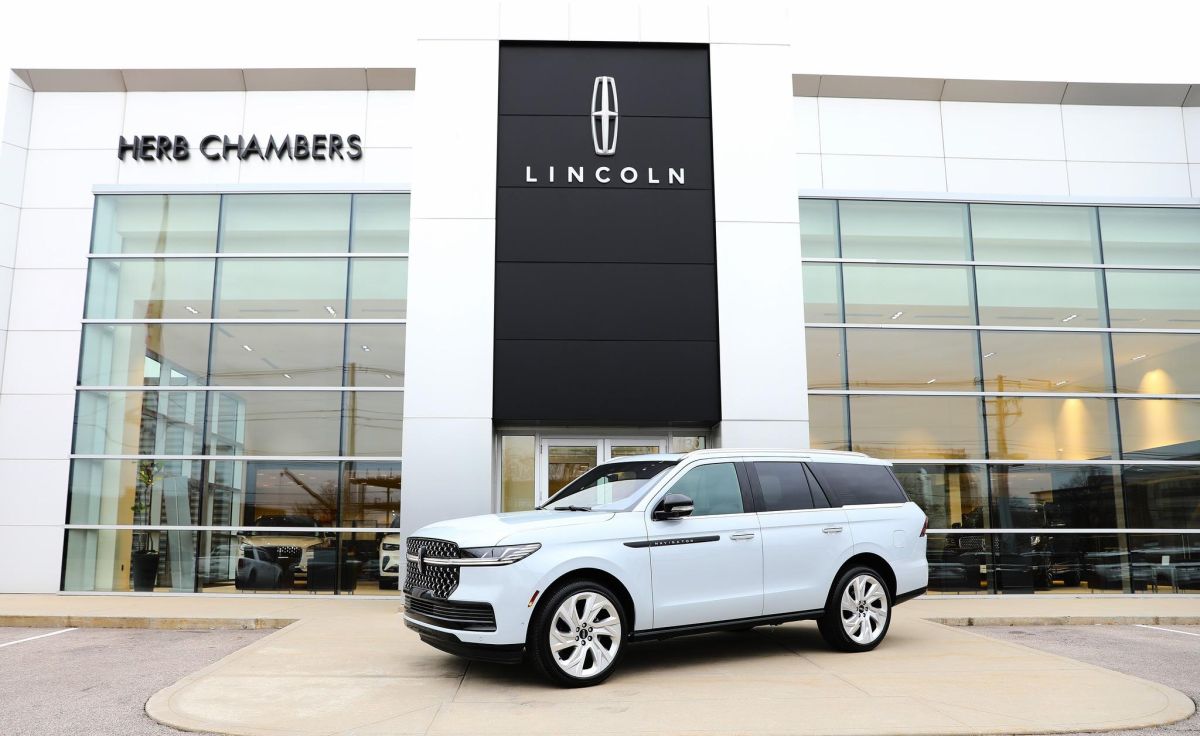 Among the dealerships acquired by Asbury Automotive in the deal was Herb Chambers Lincoln of Norwood.
Asbury breaks out collision center results in its filings. Q2 2025 revenue in its 37 shops fell 5% or $3.1 million, its quarterly report said, which speaks to revenue of about $59 million. Q2 gross profit was just north of $30 million, down 4%. Six-month revenue was down 6%, an analysis shows, to about $130 million; gross profit in collision for that period was $62.5 million, down 5%.
Full year 2024 collision revenue, reported Jan. 30, rose 2% or $6.6 million, but same store sales dropped 9%.
Body shops offer “an attractive opportunity to grow our business due to the high margins” in collision repair, and because centers get OEM parts from its dealers, Asbury said.
North Carolina-based Sonic in early July bought four California dealerships, three selling Jaguar and Land Rover, and one selling Land Rover. The acquisition is expected to add $500 million in annual revenue and brings its location count to about 115, excluding 14 powersports locations and 18 EchoPark used car sites.
Sonic runs 16 collision centers, bundling results under “parts, service and collision repair” and fixed operations. The category saw revenue excluding powersports rise 12% to $485 million for the second quarter, and 9% over 2025’s first six months to $952 million, with about 50% cost of sales for each.
Sonic’s take in its Q2 filing on growing vehicle complexity and quality said the two can counterbalance each other as these trends continue, with fewer but more complex repairs. But for collision repair, working only on vehicles whose quality has been damaged, the two work in tandem: complexity calls for training, and quality needs to be restored: better techs, rising revenue.
Collision is ‘Brand One’ for Penske and AutoNation
Michigan-based Penske and Florida-based AutoNation are somewhat unique in their collision centers, and it’s the answer to the question: “What’s in a name?”
Penske of course is Roger Penske, who retired from his brief racing career 60 years ago to focus on the business side. AutoNation is no slouch, turning 30 years old in 2026, which makes for good customer recognition and, for those with long memories — like say, the OGs of collision repair — was founded by the late Wayne Huizenga, of Blockbuster Video and a handful of other big concerns.
AutoNation has 52 branded body shops, mostly in the Sunbelt, with 244 dealership locations systemwide. Q2 2025 after-sales revenue, including collision repair, rose 12% to $1.2 billion; gross profit rose 13% to $599 million.
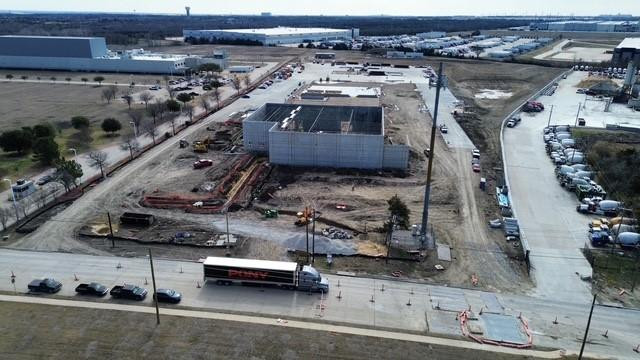 Premier Truck Group's 85,000-square-foot collision center under construction in Dallas.
Penske’s collision work comes in several forms. It has 353 dealership locations, with about 60% outside of the U.S., though revenue results reverse that ratio. Alongside 148 U.S. locations, a Penske collision repair website lists 61 body shops, including two in Canada. Body shop and vehicle preparation revenue in the second quarter declined by $600,000 or 1.2%, pointing to about $50 million in revenue for the category. The parts and service revenue overall for retail automotive was up 8% or $64 million, to $817 million, the quarterly report said.
Penske also includes 45 truck dealerships in 10 U.S. states and two Canadian provinces under Premier Truck Group, which also runs about a dozen collision centers. In Q2, a regulatory filing said, PTG service and parts revenue was about $227 million, and “collision repair represented 2.9%” of that. Body shop revenue in the quarter declined by $400,000 or 5.8%.
Penske said in last year’s Q2 truck results were touched by the CDK hack: parts and service were down then by $13 million overall and $22 million for same-store sales, or 6% to 10%, partly because of the breach.
Premier uses CDK; Penske’s auto dealerships don’t.
The Least of These: Lithia and Group 1
Lithia is the largest group of the six by revenue and location — nearing $40 billion in revenue from 448 dealerships — and consequently has little to say about its 41 body shops. A dozen of these are, as AutoNation and Penske, branded: many Lithia-named collision centers are neighbors to its Oregon headquarters in the Pacific Northwest.
The company overall styles itself corporately as Lithia and Driveway, the latter being an ecommerce buying and finance website for vehicles. Lithia’s tech focus is fine-tuned: it sold its 51% stake in a dealer management software joint venture with UK-based Pinewood Technologies Group for $76.5 million in stock in early August. Lithia didn’t in recent filings mention the CDK breach, but last year, media reports said the hack contributed to a 40% decline in its aftersales revenue during the 12-day disruption and a 28% drop in net income for Q2 2024.
Lithia doesn’t break out collision shop results; “aftersales” is a line item showing about $1 billion in revenue in Q2, or about 11% of its $9.6 billion total. But this bucket for dealers can be well shy of 25% of revenue, while contributing more than half and up to two-thirds of gross profit or net income, beside gross margins in the 45% to 60% range.
On CDK, Group 1 “recognized $10 million of business interruption insurance recoveries” last year from the breach but the “cybersecurity incident … did not have a material impact” on finances or ongoing operations.
It shows some similarities to its peers: parts and service at 12% of revenue and 42% of gross profit last year. It had 258 dealerships in the U.S. and UK, with 39 collision centers, two-thirds in the U.S., as of year-end 2024.
Seven of its Texas locations are branded Sterling McCall and two as GP1 sites, while two northeast centers are dubbed Ira Collision, a location website shows.
But the Texas-housed operator is restructuring its UK operations: in the first six months of this year, it closed four locations in the UK and terminated the franchises of eight others there. An August press release calls out a dozen UK body shops, but a website lists four collision centers there and Group 1 is moving to fewer in the U.S., too.
Parts and service sales and gross profits rose 20% or more in both Q2 and the first six months of 2025. But in both periods, this was “partially offset by decreases in collision revenues.” Collision was also down in the UK.
Group 1 said it’s “reducing our smaller collision center footprints and repurposing a portion of that space to traditional service capacity, which we expect to increase returns from the higher margin service business.”






Paul Hughes