


A lot of collision repair business owners have been asking me lately: Is what’s happening now “the new normal” in terms of the amount of work shops are seeing?
It’s my view that this isn’t really a “new” normal, but more of a return of the “old normal” we were seeing before the COVID pandemic, a “normal” that some people may have forgotten about.
But whatever you call it, what we’re seeing is the reality we need to adjust to. And unless a major hailstorm hits your market, I personally think what you’re seeing now is likely what it’s going to look like for probably the next two or three years. Here’s why.
Remember in the past when it was generally agreed that a driver was involved in an accident on average about once about every eight to 10 years? Allstate’s latest “best drivers report” said that’s now more like once every 11 years, and I ran across a recent article on CarInsurance.com that said the average driver wrecks a car only three or four times in their lifetime — essentially once every 18 years.
In any case, if you repaired a customer’s vehicle the last time they crashed, you probably won’t be at the top of their minds they next time they do.
Part of the reason for the change, obviously, is ADAS. Depending on the estimates you look at, automatic emergency braking has cut front-to-rear accidents by as much as 53%. Blind spot monitors have reduced lane change accidents by 27%. ADAS works. It’s doing its job.
The second obvious reason there is less work out there for shops is that total losses are up. And when someone’s vehicle is a total loss, they typically buy a new (or newer) car, and guess what? That newer vehicle is even more likely to have more ADAS features than the one that was totaled.
I also think that those are only two of the contributors to the decline in repairable insurance claims. Claims counts may be down even more than crash counts. A LendingTree survey of consumers in summer 2024 found nearly 2 in 5 insured drivers who had an accident chose to pay out-of-pocket for repairs. Drivers have seen such high insurance premium increases the past few years that they’re more reluctant to file a claim.
There’s also been a decline in vehicle theft — and thus a drop in theft-recovery repair work. While the numbers were still preliminary when the National Insurance Crime Bureau put them out earlier this year, vehicle thefts were down 16.7% in 2024 compared to the prior year. That results in fewer comprehensive coverage claims.
Could some of those trends reverse themselves? It’s possible. Premium increases are moderating, and some insurers are filing for premium reductions, so consumers may resume filing claims more often than they are now. The decline in vehicle theft may not be an ongoing trend. Even the inevitable long-term decline in crashes thanks to ADAS can be partially offset if the total car count and vehicle miles traveled increases.
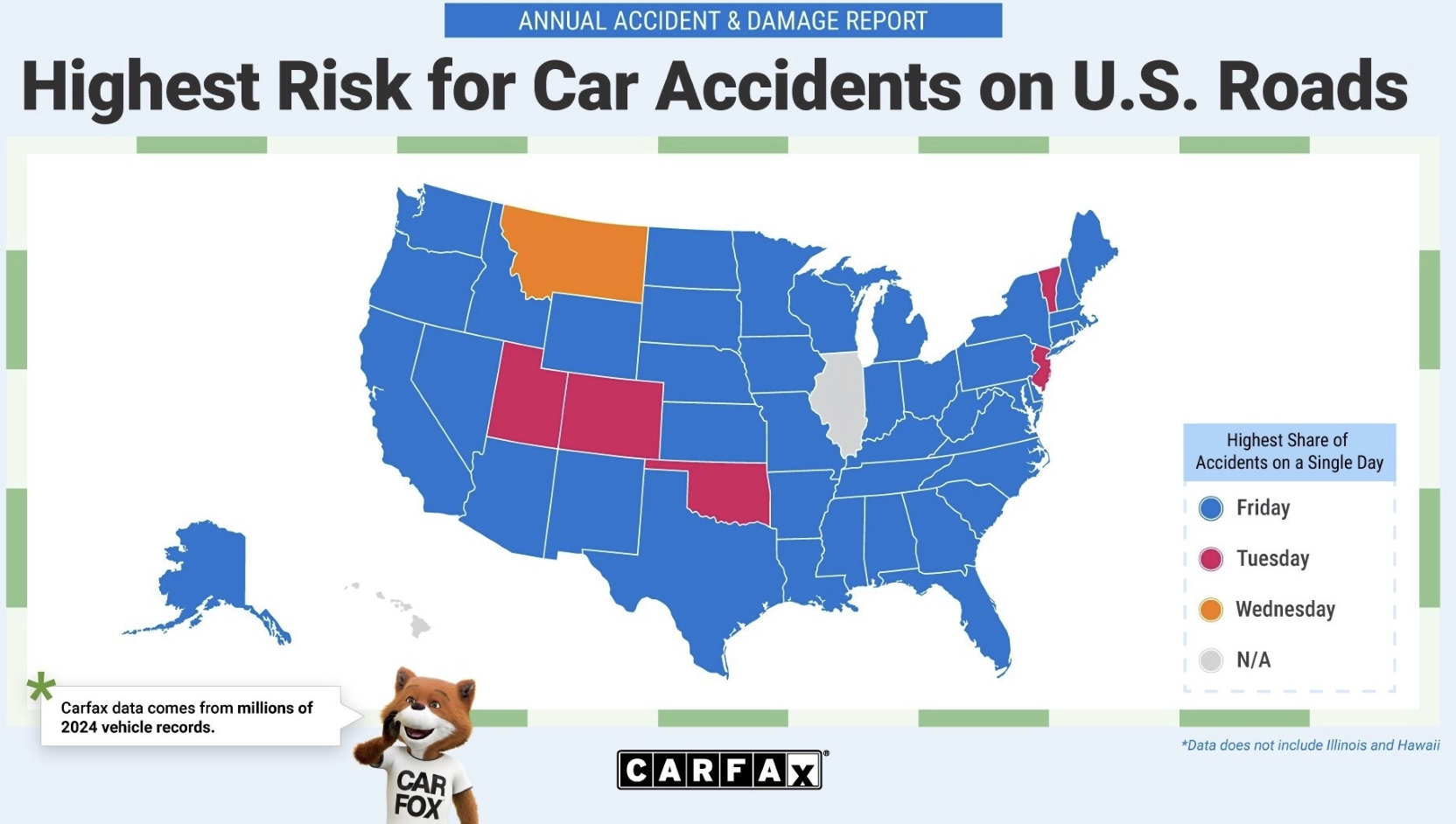 CARFAX data showing which day of the week averages the highest risk of a car accident, by state.
But I personally believe the level of work you have now is probably the amount you need to right-size your business to accommodate, whether through changes in your staffing or expenses or whatever the case may be.
I also think we may see some shops go out of business in the next couple of years. That’s certainly not something I wish on anyone. But I think some shops overextended themselves because they got COVID-era loans or employee retention tax credits. They may now be having cashflow problems because they’re not making the amount of money they were. I’ve had some wholesale parts managers tell me some of their body shop customers are falling 60 or 90 days behind on their bills.
So what can you do to help ensure you’re not in that camp? I’ve written before about making sure you position yourself to capture customers at whatever time they choose to reach you.
Data from the National Highway Traffic Safety Administration shows nearly half of all accidents occur between 5 p.m. and 8 a.m. CARFAX recently published data showing that in at least 43 states, more auto collisions occur on Fridays than any other day of the week. A lot of those customers won’t want to wait until Monday morning to start dealing with vehicle repairs. Can they reach your shop by phone or chat after hours, or schedule their own appointment online?
I will also tell you that response time matters. Whenever (and however) someone contacts your shop outside of regular business hours, are you set up to get back to them promptly? They are used to that happening from all sorts of other businesses they interact with, so they often won’t have a lot of patience waiting for your shop to get back to them. I like to say people have become like Veruca Salt in “Willy Wonka and the Chocolate Factory.” They want their “golden goose” and they “want it right now.” If you take too long getting back to them, they’re going to contact some other shop.
No one can say for certain that the business levels we’re currently seeing in the industry are the “new norm,” and if so, how long it could be before they change. But I think shops should probably presume what we’re seeing now will be the status quo for some time, and make sure they’re making the adjustments needed to succeed even if it is.




Mike Anderson