


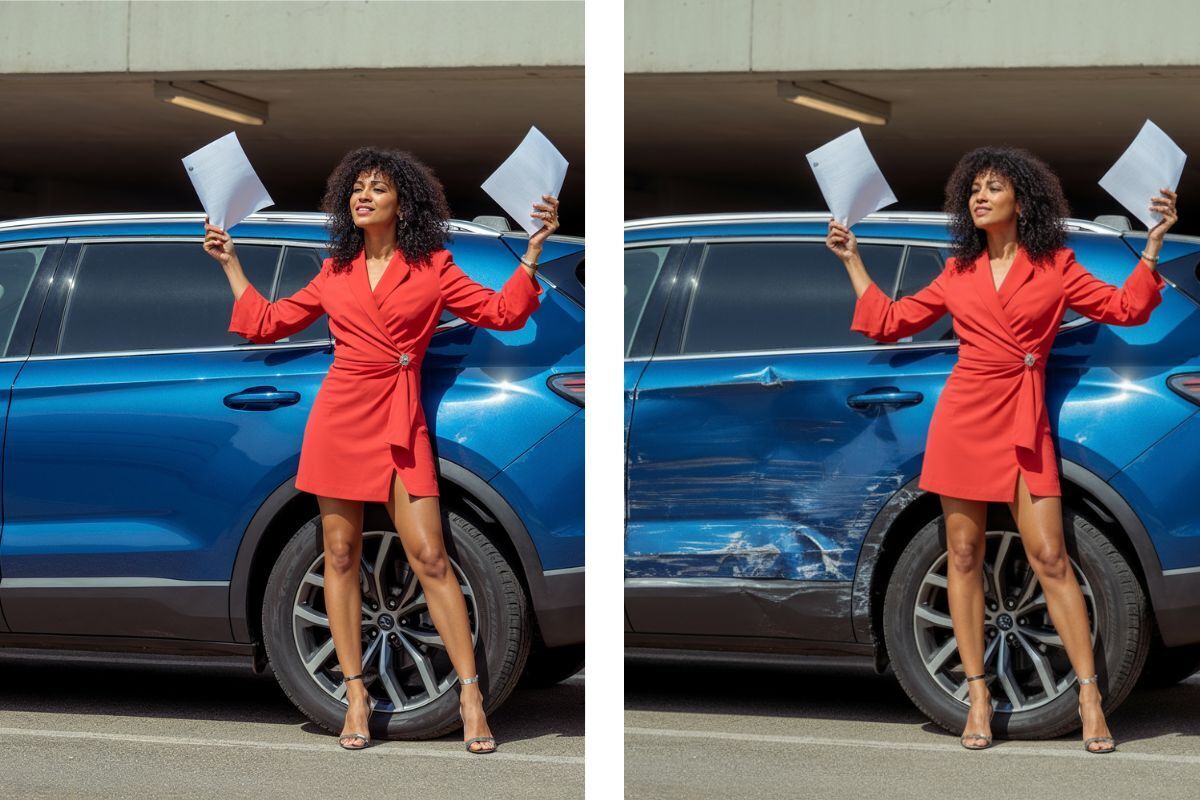
In the old days — the turn of the century — a vehicle showed up at your shop and the damage was right there. Teardowns revealed truth. That’s still the case, with much work still fundamentally unchanged.
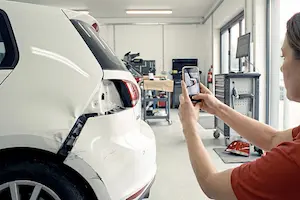
But as artificial intelligence efforts in early estimates and shop operations grow, security comes to the fore as a key issue. Photos can be quickly processed pre-repair, not to mention filling a sales funnel — and can also be doctored, by the same technology. Operations AI pledges speed and efficiency, which the industry has heard a few times before — but if true, it generates new concerns on oversight and accuracy.
Who’s watching the bot?
Collision repair vets are working on it, often at AI start-ups and by early testing in shops, including insurance companies they work with.
Shops aren’t being called upon to do anything specific just now, but eternal vigilance remains a thing. On this need-to-know basis, owners and operators are on the list.
AI Security Itself Is an Inside Job
BodyShop Booster founder Ryan Taylor told Autobody News, “Most AI security is built on the backbones” of the bigger guys providing infrastructure for AI — directly via Google, Microsoft and Amazon cloud platforms, for instance, or through middle-management products using them, like those from CDW or ChatGPT.
“We defer to their security protocols,” Taylor said.
That said, BodyShop Booster, an AI-based tools provider, “has an advisory team, where we hack our own stuff to test it.”
It’s an issue. Taylor tells of talking at an event where another presenter showed how he’d cloned his voice in a seconds — while on the plane flying into town. He did it for the humor element, a bit involving talking babies, but others could do it for other aims, and in seconds.
Shop runners aren’t depending on tech overlords alone. Ali Jakvani and several partners — all body shop vets — in southern California are building an AI "software booster" for operations while Jakvani works with Strat24, “a stand-alone cybersecurity and compliance company [with] roots in endpoint security, incident response, and building trust frameworks” that’s adding collision estimating security to a suite of services for other industries.
“The main issue we see is fraud amplified by new technologies,” Jakvani wrote via email. The “fake invoices, manipulated PDFs, and inflated estimates that look authentic and can be scaled across many shops.”
He wrote the product will “only operate within DRP, OEM and insurer rules” via something it’s making called TECP (Trusted Ephemeral Computation Protocol). “Every [estimate] action produces a cryptographic receipt … to verify compliance.”
The aim: “enforcing a neutral trust layer when AI interacts with industry standards … standardized compliance … adding transparency and helping prevent fraud at scale.”
Insurance Fraud Gets New Toys, Fresh Attention
Insurers are well into similar goals.
“We’re seeing them use AI to start trying to detect if AI was used in the manipulation of damage,” Taylor said. In presentations at shows, for potential clients, and in trade journal interviews, he includes photos of damaged vehicles — all of which, while a set of completely cooked books, look real.
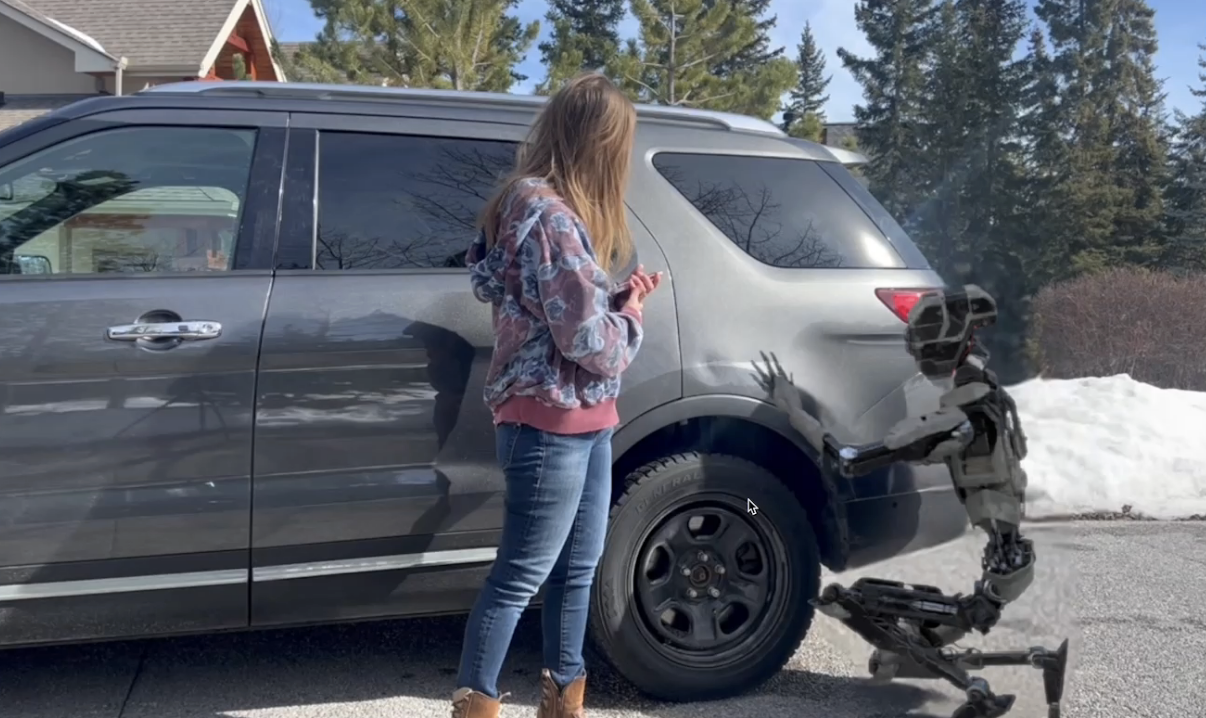 The “robot” on the right was overlayed on the image of a real person who was recorded — an example of photos being manipulated. Image via BodyShop Booster.
“Fraud is going to an all-new high right now,” Taylor said, with insurers amped up, “like ‘Hey, we gotta catch this, because we’re paying out on claims that we shouldn’t.’”
To stop this, larger insurers can integrate point-of-policy issuance photos, requiring customers to use insurance company software for estimates, collecting and collating geolocation and other metadata to track where photos are taken, and pixel-manipulation tools, including invisible digital watermarks, to flag altered photos.
That last one “gets a bit tricky, because now some camera systems use AI automatically to enhance lighting … and that’s built-in, native to devices,” Taylor said. In any event, “for now, the focus is on catching customers.”
So it doesn’t create an action item for shops, exactly, but it matters as to operator awareness and if your insurer relationships matter. What if a customer submits photos of real damage, but sharpened a badly shot photo?
Or consider elements not-yet emergent: using AI to show customers how a vehicle can look when repaired, which involves manipulating photos, getting it flagged as possible fraud. Or unscrupulous shops themselves using AI to offer up false images.
Shops’ To-Do-Today List
Non-tech practices can help shops prep for such techno-worries. Always emphasize the preliminary nature of photo-based, AI pre-estimates. City Centre Collision owner Brett Campbell said he’s never had difficulty with customers demanding commitment to first photos.
And anyway, “it’s not in the customer’s best interest to doctor a photo,” according to Ilan Mandil, founder of Los Angeles-based estimating offering Otto.
Campbell users Tractable for pre-estimates and Mitch Anderson, who was with the AI estimatics firm a shade more than three years, recently joined Symphony — a start-up that wants to train insurance estimators with AI-based software.
Meanwhile operations software including customer service tools being built by Better Collision Group and CCC for instance, aren’t bots with itchy auto-texting thumbs. The latter’s, for instance, expects to include a language translation element and curse-detection. Also, shops can get live humans involved quickly: send initial responses auto-magically on Friday night, respond in-person next morning.
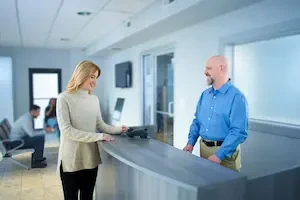
If nothing else, AI fakery will increase — and call for strengthening — face-to-face interactions. Which is what “smart shops not smart phones” wary of artificial intelligence are focusing on anyway, right?



Paul Hughes