


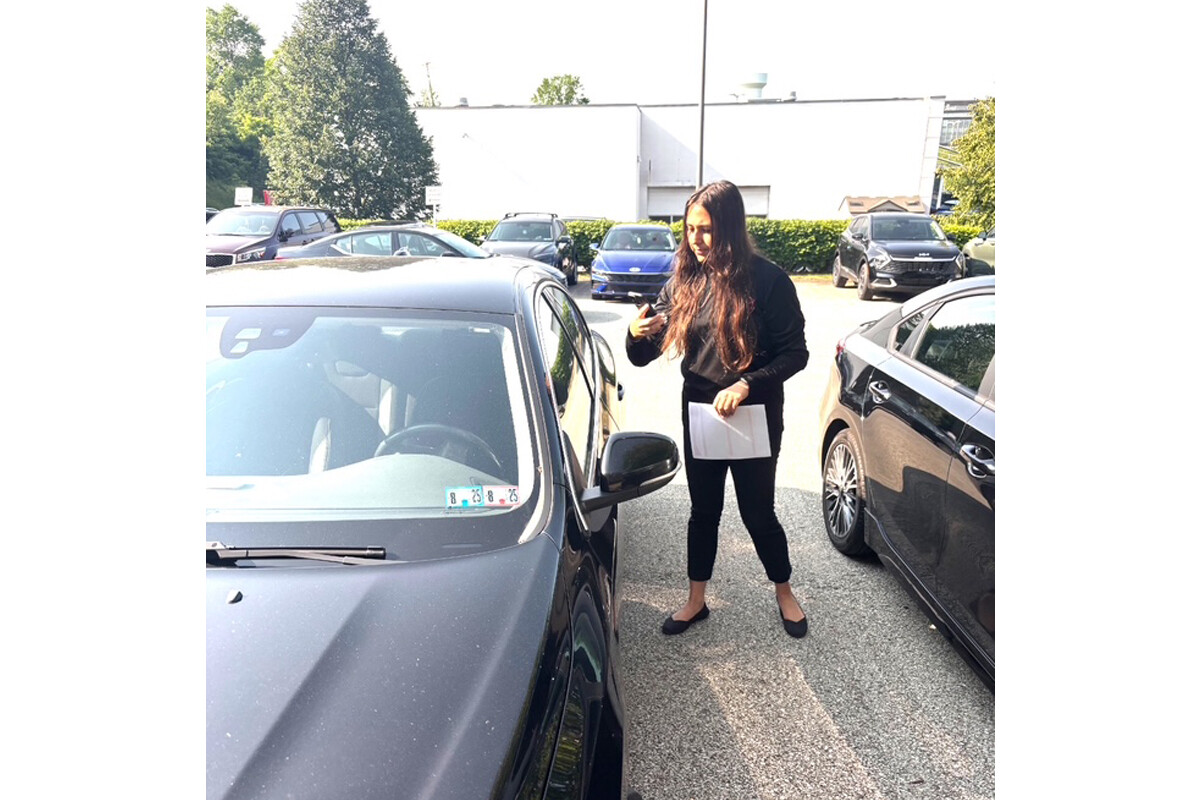
Body by Cochran is planning a systemwide roll-out of an artificial intelligence (A)I-based call center, estimating and lead generation tools at its 11 locations in western Pennsylvania and eastern Ohio after early positive results. The push is among the latest forays by collision repair owners into artificial intelligence, seeking operational efficiency from the tech.
The shops do $75 million in revenue and are part of #1 Cochran Automotive Group, with 44 dealerships in Pennsylvania.
Corporate Collision Director David Black said a pilot program of the AI began at one body shop early this year to improve how it received incoming inquiries.
“When we started it was one step above ‘press 1 for this,’” Black said. Now the system is a 24/7 virtual CSR that gathers information, gives what the customer wants, and keeps a record of every call. Work begins within minutes of a shop getting a call, regardless of whether it’s open.
Four of 11 Cochran collision centers use it; Black expects six to be running it by mid-September and all 11 by year-end, along with two stand-alone body shops the collision unit wants to buy. The group plans to have 30 in its MSO within three years.
Early Interaction and Estimating Elements
Cochran works with BodyShop Booster in Portland, OR, on the lion’s share of the AI’s skeleton and guts. Tied in with that is the Tractable estimating software, also AI-focused, and one of several such AI estimatics emerging in collision repair, along with Claim Genius and BayWatch Technologies.
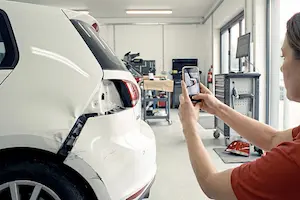
Black said AI assessments or pre-estimates are accurate and effective — that is, useful — for “anything under 25 hours of work … it’s writing a slightly better estimate” in 90 seconds, not 30 minutes.
 Ryan Taylor.
Before that, an AI “call center” receives and responds to requests that would’ve waited for the weekend to end — or simply not been made. Black said each store in the system was below 70% for responses to assignments and most were missing nearly half. AI contacts 95%.
That was “one of the big pain points,” he said. “An assignment might stay in the box for several days.” He said customers like not having to come to a location, instead scheduling an appointment and reserving a rental car.
Cochran’s capture rate nears 90% of people it contacts. BodyShop Booster’s Ryan Taylor said AI lets smaller shops compete with larger competitors who’re likely already doing something similar.
“Seventy-eight percent of customers go with ‘first responders,’” he said, nabbing hundreds of thousands of dollars a year in business previously diving down through delay gaps.
Expanding AI into Dealerships: Say Hello to ‘Amy’
Now a text goes to inquirers, including an introductory explanatory video — the first of several in a series that comes to the customer through the repair lifecycle. Cochran videos use an AI-produced virtual assistant named Amy to walk customers through and explain each part of the process from first contact to their PPG-developed paint video, to whether parts have arrived, onward to post-completion delivery, checking on 100% satisfaction and a request for referrals, Google rating and so on.
“One of the biggest issues has been keeping customers updated,” Black said. “People come to the shop and ask for her.” The system gets first follow-up which, if unsuccessful in booking an appointment, flags it to a human.
“Ninety-one percent of shops don’t do follow-ups,” Taylor said. It’s consistency. “Answer your phone better and follow-up on written estimates.”
On the parts part, Justin Kendrick, Cochran wholesale parts director, is involved, along with overseeing much of the AI IT side of things overall. Cochran shops draw from a 100,000-square-foot warehouse and $10 million in inventory.
“From a customer standpoint the videos Ryan makes helps them know what’s happening,” said Kendrick, for whom it got personal at one point. “My mom wrecked her car, lives an hour away, did damage assessment in an hour. The peace of mind is huge.”
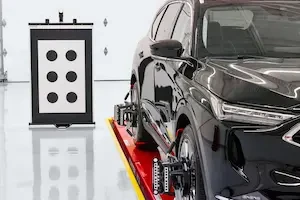
Cochran dealerships have QR codes to route customers to the closest body shop, and Black said dealerships themselves are climbing aboard the artificial intelligence work. He’s looked at a hardware estimating install — UVeye, Proov, Wenn and Ravin are among these players — but balks at closed-end proprietary systems as some of these are. The four are also Europe-based operators at early stages of U.S. entry.
“A future option is to bolt Tractable estimatics” onto a hardware system, Black said. “As the technology lands here, it’s our goal to install the hardware at dealerships.”
A two- to three-year aim is full internal integration: Kendrick’s warehouse communicating with shops ordering parts, helping salespeople with overflow, and so on. “Our goal is to connect our AI to his AI.”
He said, “That’s AI for me: here’s my problem, what’s my solution.”







Paul Hughes