


South Carolina-based Better Collision Centers has largely implemented an artificial intelligence (AI) overlay for running its regional multi shop operator of about a dozen locations. A year of work launched the effort, not fully finished but in use, and cost some $250,000 — a tab that also continues to run.
CEO Jonathon Best wouldn’t have it any other way.
“We’ve got most of it deployed and new people on the team” with big data experience to oversee it, Best said. “Originally it was just me and Sinan [Colak],” who heads marketing for Better Collision. “We’re both kinda tech guys, always pushing for innovation, and we just went down the rabbit hole.”
The “rabbit hole” image is usually used sheepishly, as if one were distracted, consumed by marginalia or irrelevance. But it’s really where — and how — Alice’s adventures began, and Best seems to say it in that better way.
“We’ve been on it about a year, and brought in the development team three to four months ago,” he said. The internal effort proved best because “we don’t trust anybody; with outsiders it’s always no before it’s yes.”
Initial costs are surely higher, and Best and Colak can attest the work is harder to go mostly alone, at least at first. Long-term though, at least two bennies, for a system and services suite dubbed “BetterX.”
The Human Side of AI
First, Best said, “it makes us all stronger together,” as a company, and in the industry. An internal committee at BCC educated itself on artificial intelligence and built buy-in organically, ground-up, not top-down. Self-taught AI — Best and Colak first used AI to learn about AI — “gave us the bones of understanding how to build what we needed” as well as what they wanted, and what’s going on behind the scenes of a visual or verbal interface, which is all most people, including employees, ever experience.
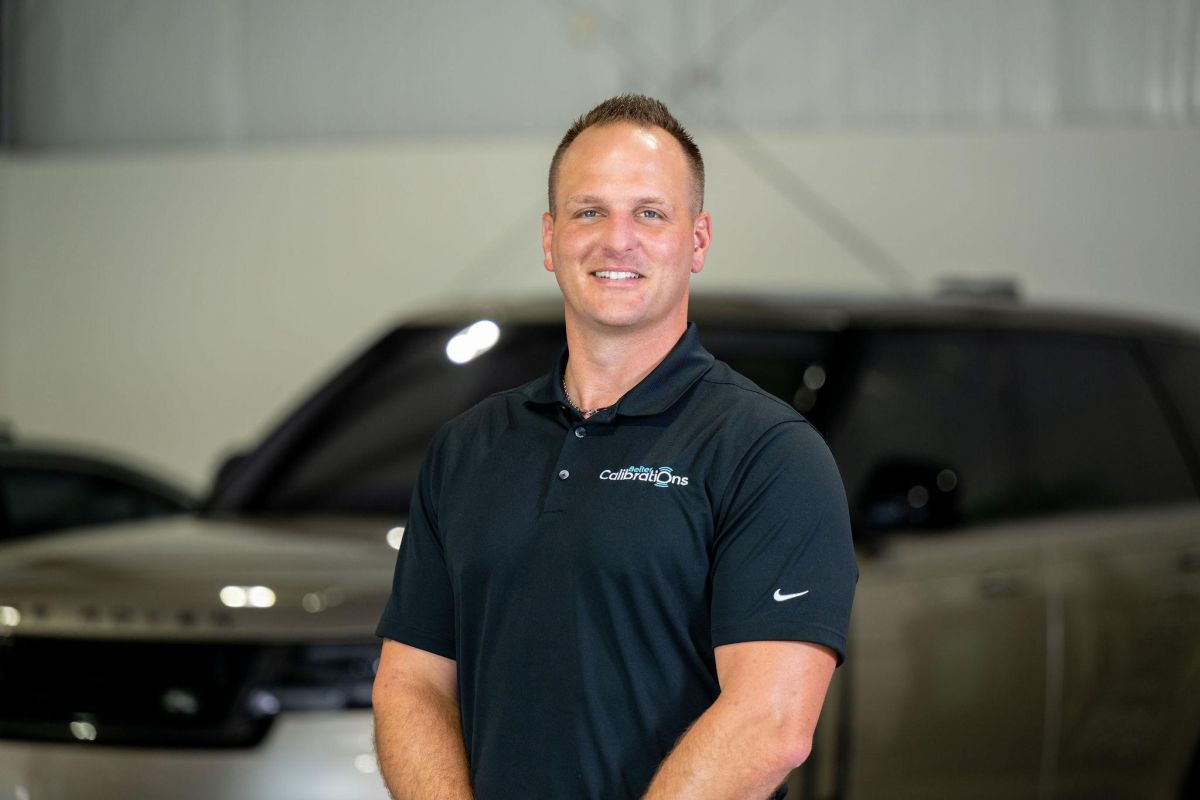 Jonathon Best.
The company always wants to be first up on tech or new practices — leadership development, for instance — but “we’d never built anything this major, for us.” The work “challenged barriers; now that we’re getting this on a cadence we’ve seen extraordinary leaps.”
Individual teams know their stuff better and believe in the new tools for having participated in making them.
“We wanted to control this,” he said. “We know what we need, where the sticking points are. We located those walls quickly, I have talked to third-party vendors and they kept trying to boilerplate us on a template.”
Second, the all-in effort eventually is likely to save money. Best emailed that an AI call center might run, say, $10,000 or more to set-up, with about half that every month ongoing, “and that’s still a great deal.”
For $250,000 invested to-date and more to come, Best said legal and regulatory elements, as well as licensing related to AI estimatics, are still being worked out. Not spending $60,000 a year for one element of full AI operational adoption made sense.
“We have successfully built our own AI call center which is far more robust and realistic,” he wrote.
Collision Comradeship, Communication, Costs
Best said the new AI overlays existing work and doesn’t require much individual training. If you know how to order parts, or what you want to happen from incoming calls, the artificial intelligence comes alongside yours, the real kind, which tends to have the necessary nuance for face-to-face friend-making — or customer service.
Two elements tie two experiences together: the customer’s and, crucially, the employees’.
An AI “concierge club” is coded to field calls, texts and web chats. On the technical needs, “it can reference collision data and company knowledge” to begin the repair process. Best said Better Collision has in the last two years used AI in every meeting — physical or by phone — along with emails; decisions, both technical or strategic; BCC policies and procedures; and external sources like I-CAR-related material and news media.
The cumulative result is “we have our own guardrails” for the kind of company it wants to be.
 Better Collision's BetterX AI program.
The concierge, for instance, asks customers calling in — who’ve after all just been in a collision — if they’re OK. “It laughs at their jokes, and picks up on tone and sentiment. If it’s not good, it red-flags it, and a person gets back with them.”
He said the front-line system is “abnormally realistic, a costlier LLM (large language model) faster and more intuitive. In testing, we went as far as cloning my voice, and my wife called and didn’t know it wasn’t me.”
Other elements of intake include checking schedules, making appointments and texting chat recaps. Estimates involve incorporating into the system work from a third-party product Best can’t yet name.
On the employee side is a “collision buddy” — an AI assistant set at the bottom of work-screens monitoring flow that can “research parts, help write estimates, reference OEM procedures, extract information, knowing best practices.” It can advise users on “what should I do in this situation?” Best said.
He said they also made this side of the work “comical and entertaining,” to keep the tone light with staff trying to complete tasks. The company is working on a voice-activated, handheld device, roughly a portable personal assistant like an Alexa or Siri, which after all, are AI-based.
AI also touches parts ordering and cost reporting, insurance compliance and preferred vendors. “We can scan invoices and accounts payable reconciliation, check for errors, extract data for reports” — which can be color-coded to “build the different items, then light up what you need to look at.”
“Advanced reporting … cuts several hours of work weekly,” said Best, who recently joined CIECA — its annual conference in September highlights technology — to get the word out on Better Collision’s work.
“We’re doing much more,” he said. “This is a scratch of the surface on what we’ve been advancing.”







Paul Hughes