

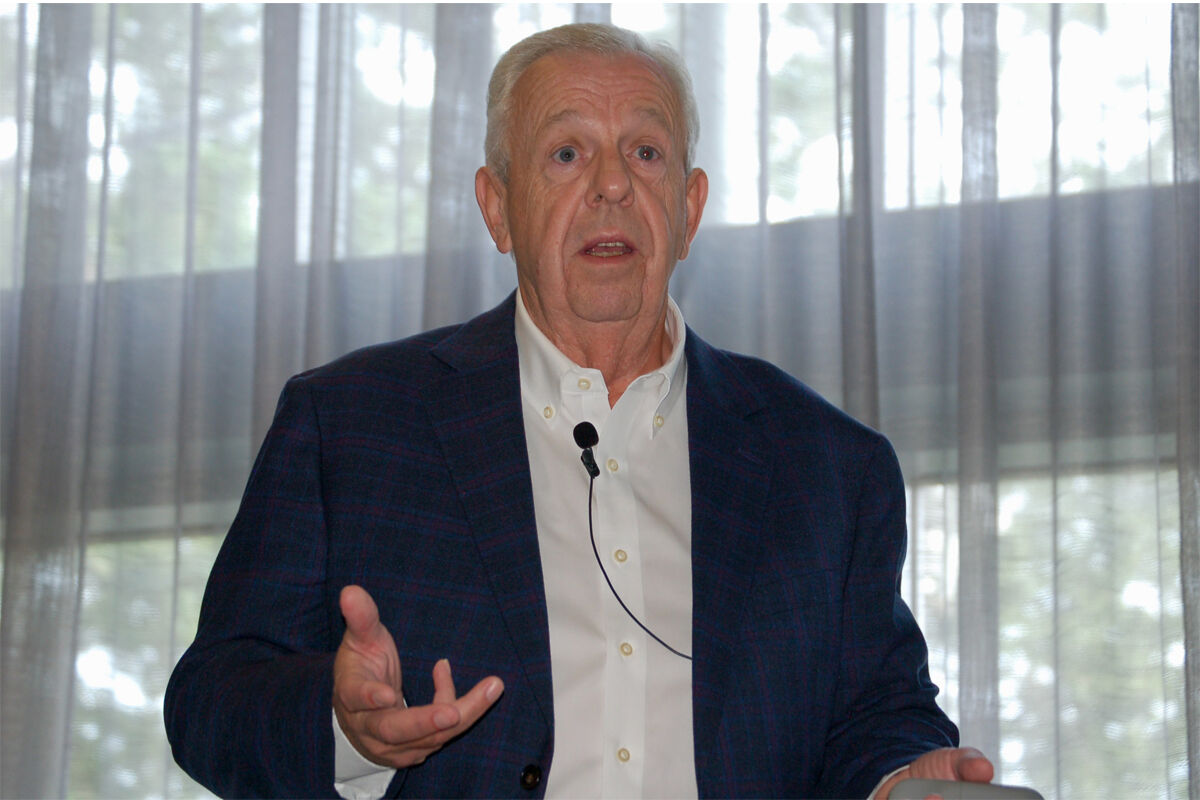
Sean Carey is seeing some “green shoots of recovery” for the collision repair industry that has experienced a “roller coaster ride” the past two years.
“My belief is we’re going to be back by 4 or 5% in 2026,” Carey, a long-time industry observer with SCG Management Consultants, told the more than 200 attendees at the Collision Industry Electronic Commerce Association (CIECA) CONNEX conference in Nashville in late September. “It’s going to be a good market.”
Carey kicked off the conference with a quick look back at the prior 24 months, in which he said the collision repair industry has experienced a downturn of about $5 billion due to COVID aftereffects, reduced vehicle sales, and aggressive insurance price increases.
“Those of you in the supply chain world have been in a world of hurt for the past year and a half,” Carey said. “Those of you in the repair world are looking around and wondering where the hell all the work went. So we are all in this sort of downturn swing and crazy roller coaster ride together.”
But already heading into the fourth quarter of 2025, he’s seeing signs of recovery. Lower new-vehicle sales during and post-pandemic mean fewer leased vehicles have been and will be returning for the next couple of years. The elimination of government incentives for sales of new electric vehicles will also push up demand for used EVs.
 More than 200 people attended the annual CIECA CONNEX conference in Nashville in late September.
That decreased supply and increased demand will drive used vehicle values up, helping reduce total losses. It will also push up the availability of fleet and dealer reconditioning work to repair used vehicles for the higher-priced used car market.
“It is those tidy little $1,000 to $3,000 repairs that never got done,” Carey said. “That's billions of dollars in money that’s going to come back to the industry first because people will start getting those fixed. And so the minor damage begins to flow back into the marketplace.”
That isn’t historically work that the large multi-shop operators have pursued, Carey said, so it will likely be the smaller independents who have diversified beyond just DRP work that will benefit from that trend.
Another positive sign: Insurance premium increases have slowed, with rates declining in some instances, so consumer hesitancy to file claims — or their inability to afford them — should ease.
“The premium [percentage] increases have gone from the 17s and the 16s and the 20s and they’re now down at 4% and 2%, and some of them are going backwards,” Carey said.
He also recommended that shops focus on customer-pay work given the more than $60 billion in unperformed repairs from recent years that could be returning as consumer practices shift.
“People have aspirations and dreams and want new cars and to change out of their vehicle,” Carey said. “And so what they thought was their $10,000 vehicle is now worth $12,000 and they think, ‘Wow, now’s the time I'm going to bite the bullet and I’m going to trade out my vehicle.’ And when they do that, that damage that’s been duct-taped on and been set aside is going to start to make its way through into the collision repair environment.”
Overall, he said, while high-volume DRP shops are likely to see low single-digit growth in the next year, independent shops — what Carey referred to as “street fighters” doing a great job in their community — that are positioned for customer-pay and fleet/refurbishment work could see growth of 8% to 10%.
“They’re shops not interested in massive growth, but their local knowledges will allow them to reach into the community, which trumps everything,” Carey said of such shops.









John Yoswick