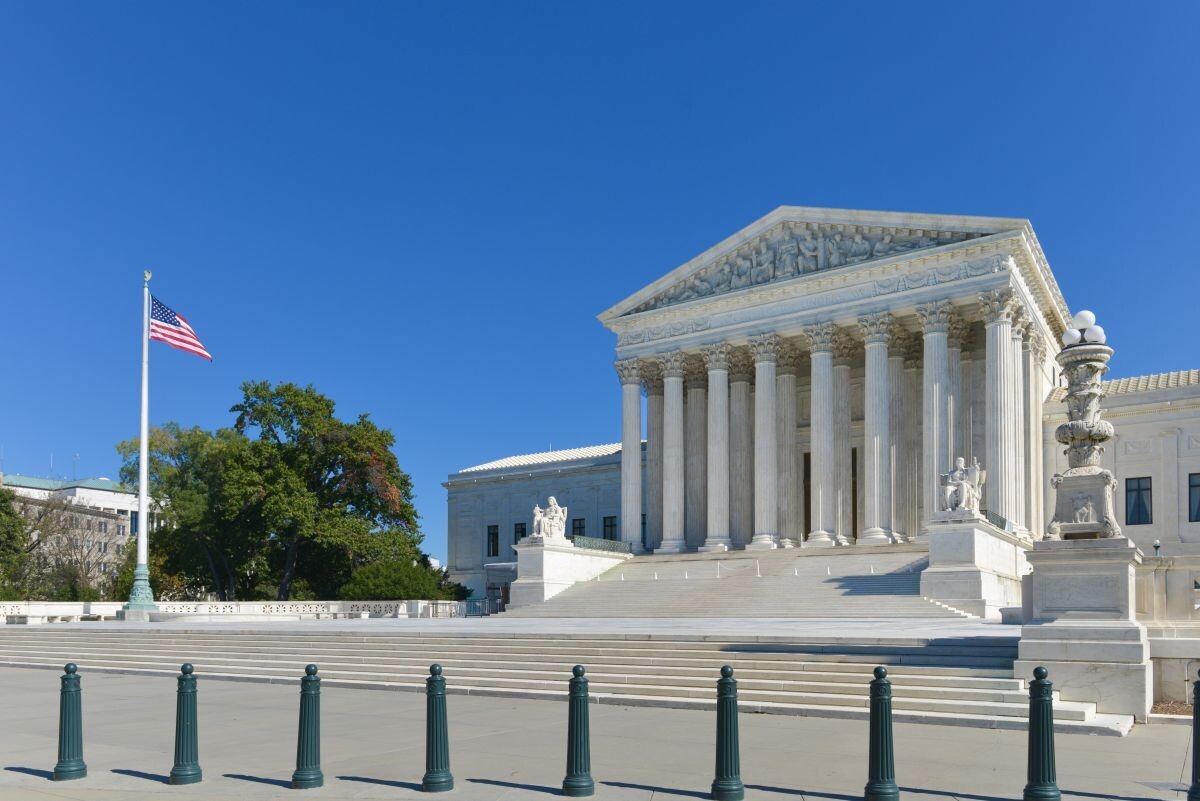
The Supreme Court handed President Donald Trump a significant legal defeat on Feb. 20, striking down most of his sweeping tariff agenda. But the ruling leaves intact the Section 232 auto parts duties that have been reshaping collision repair economics since last spring.
In a 6-3 decision in Learning Resources, Inc. v. Trump, the court held that the International Emergency Economic Powers Act, a 1977 law the Trump administration used to impose broad tariffs on goods from most U.S. trading partners, does not authorize the president to impose tariffs.
Chief Justice John Roberts wrote the majority opinion. It was the first time IEEPA had ever been used to levy tariffs, and the court ruled the administration exceeded its authority in doing so.
What the court actually ruled
The ruling invalidated the reciprocal tariffs announced in April 2025, the drug-trafficking-related duties on China, Canada, and Mexico, and related IEEPA-based actions.
The decision explicitly does not affect tariffs imposed under Section 232 of the Trade Expansion Act of 1962, the national security statute the Trump administration used separately to impose 25% duties on imported automobiles starting April 3, 2025, and on a defined list of auto parts starting May 3, 2025.
Steel and aluminum tariffs, currently at 50%, also remain fully in effect under Section 232. The majority opinion described Section 232 as containing "sweeping, discretion-conferring language" that naturally supports tariff authority, according to the Council on Foreign Relations, signaling that avenue remains legally intact.
What it means for parts pricing
For collision repair shops, the Section 232 auto parts tariffs are the ones that have been reshaping repair economics since last spring.
About 44% of OEM parts used in collision repair are manufactured outside the United States, according to PartsTrader. OEM retail prices rose 2.1% from Q1 to Q2 2025, double the rate of the prior year, with the acceleration attributed to Section 232 pass-through, according to Claims Journal analysis.
An April 2025 survey by market researcher IMR found 73.7% of shops with eight or more bays had already felt direct tariff effects. None of that changes as a result of the ruling.
What Trump did next
Rather than accepting the ruling as a rollback, Trump immediately invoked Section 122 of the Trade Act of 1974 to impose a new 10% global tariff, which he raised to 15% the following day.
Section 122 is a balance-of-payments authority that caps tariffs at 15% and limits their duration to 150 days, putting a July 24 expiration on the new levy unless Congress acts to extend it.
Automobiles, auto parts, steel, and aluminum are explicitly exempted from the new 15% global tariff because they are already covered by the Section 232 duties, according to the White House proclamation. The new tariff does not stack on top of existing Section 232 obligations for those categories.
The administration also confirmed that Section 301 tariffs, a separate statute used to target unfair foreign trade practices, remain in effect, and that new Section 301 investigations will be launched against other countries.
What remains uncertain
The Supreme Court ruling left the question of importer refunds unresolved. Legal analysts widely expect protracted litigation over whether businesses that paid IEEPA duties are entitled to refunds.
That process is unlikely to directly affect shop-level parts pricing.
The administration has also signaled it will pursue additional Section 232 investigations to expand tariff coverage in other sectors. The existing quarterly inclusions process allows domestic manufacturers to petition for adding specific auto parts to the Section 232 list.
Currently, high-volume collision parts including hoods, fenders, and bumpers are not on the list, but the next submission window opens in April. As Autobody News reported in January, if domestic producers successfully petition for sheet metal components, the pricing implications for collision repair would be significant.
What shops should do now
The practical guidance from prior months hasn't changed.
Watch for updates from parts suppliers and industry associations. The Automotive Body Parts Association has committed to tracking the quarterly Section 232 inclusions process and providing updates as new parts categories are proposed. OEM parts managers and aftermarket distributors are also likely to flag pricing changes tied to any new additions. Shops don't need to monitor federal dockets directly, but staying in contact with vendors and watching for ABPA communications will provide early warning if high-volume collision components are at risk.
Continue documenting vendor pricing communications. Maintain those records for supplement discussions when tariff-driven cost increases affect repair estimates. As Autobody News reported in February, tracking OEM guidance on pricing changes and maintaining documentation for insurer discussions remains the most practical near-term approach.
Plan for ongoing uncertainty. KPMG U.S. automotive lead Lenny LaRocca advised automakers to "continue planning for multiple scenarios and keep supply chain considerations top of mind as the trade and tariff landscape continues to evolve," according to CNBC. The guidance applies equally to collision repair shops.
Three more Section 232 inclusions windows are scheduled for 2026, in April, July, and October.