


The 2025 SEMA Show is set for Nov. 4-7 in Las Vegas, and Luis Morales told Autobody News one place to find multiple early November discussions of artificial intelligence (AI) is at its FutureTech Studio.
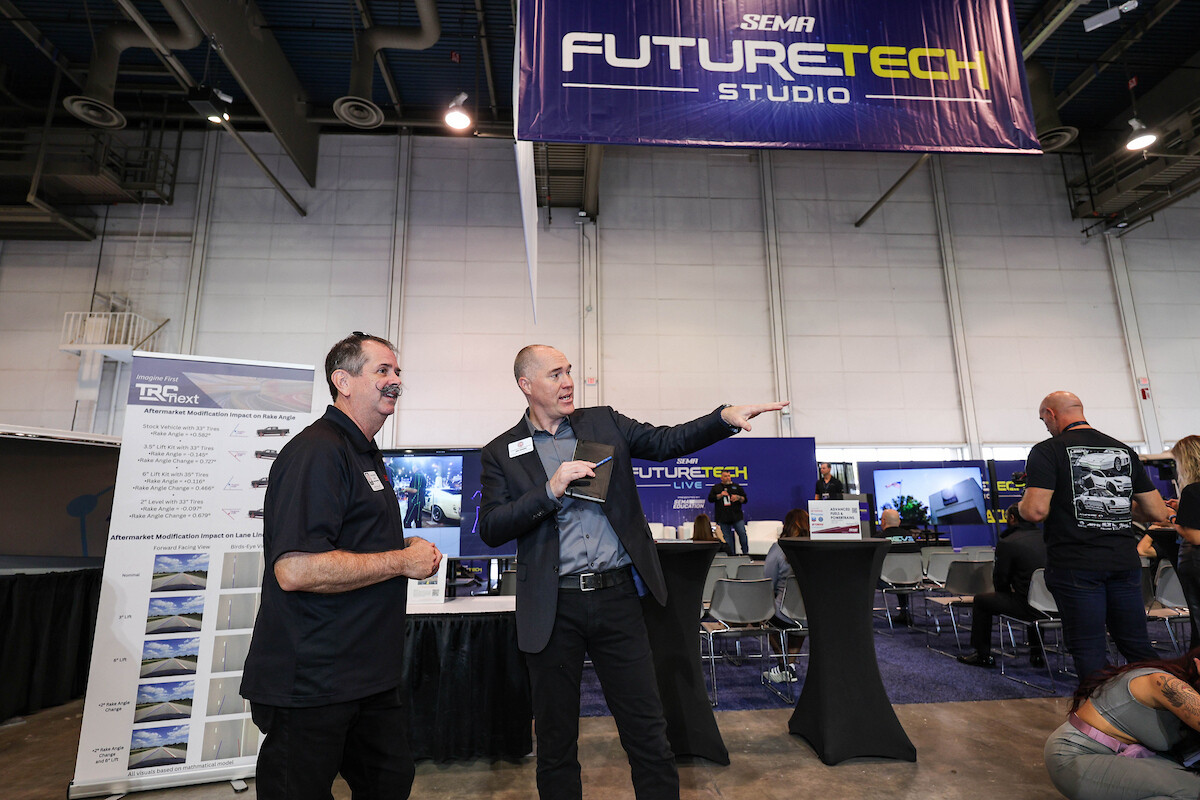
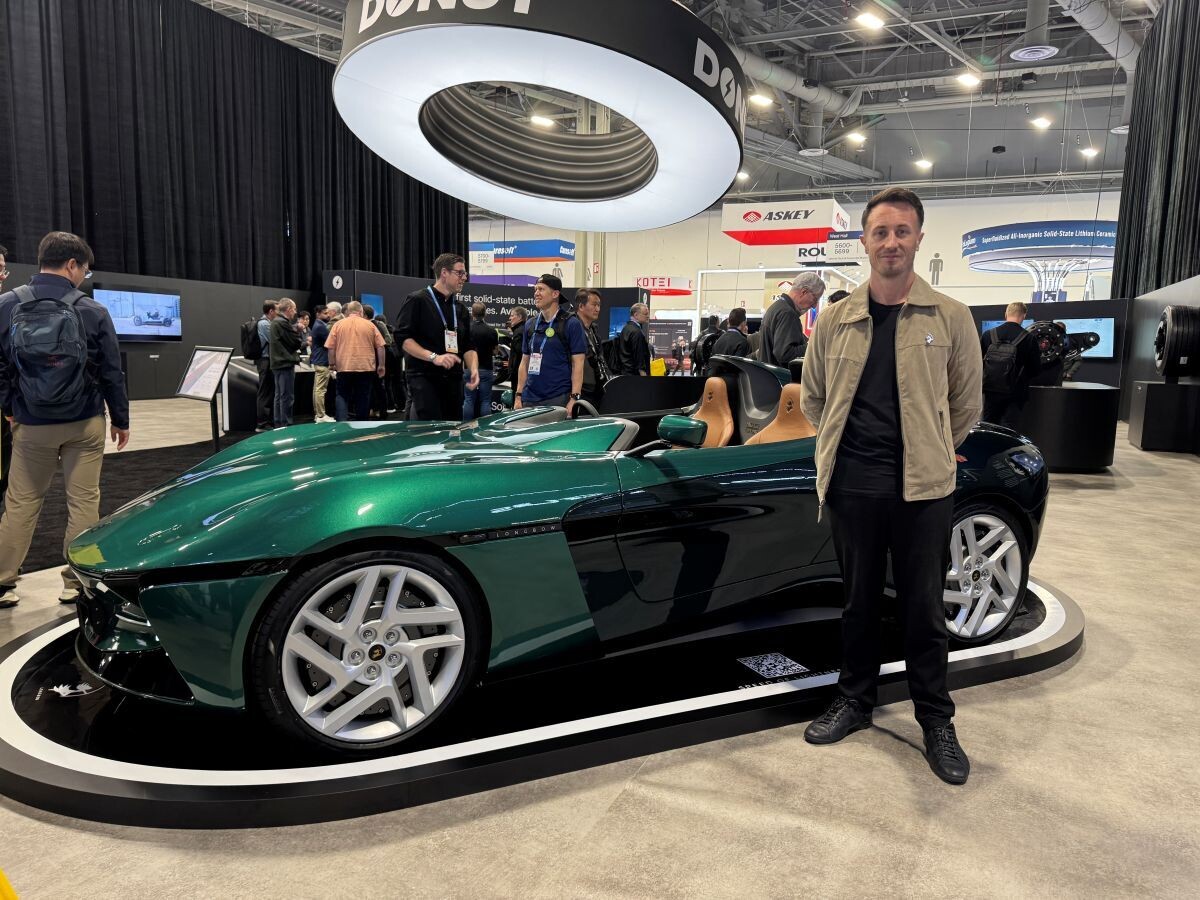
Morales directs vehicle technology and product development for SEMA, and manages and executes the FutureTech Studio — a pavilion layout in Central Hall of more than 40 exhibitors to direct attendee attention to the newer technology on display at each show.
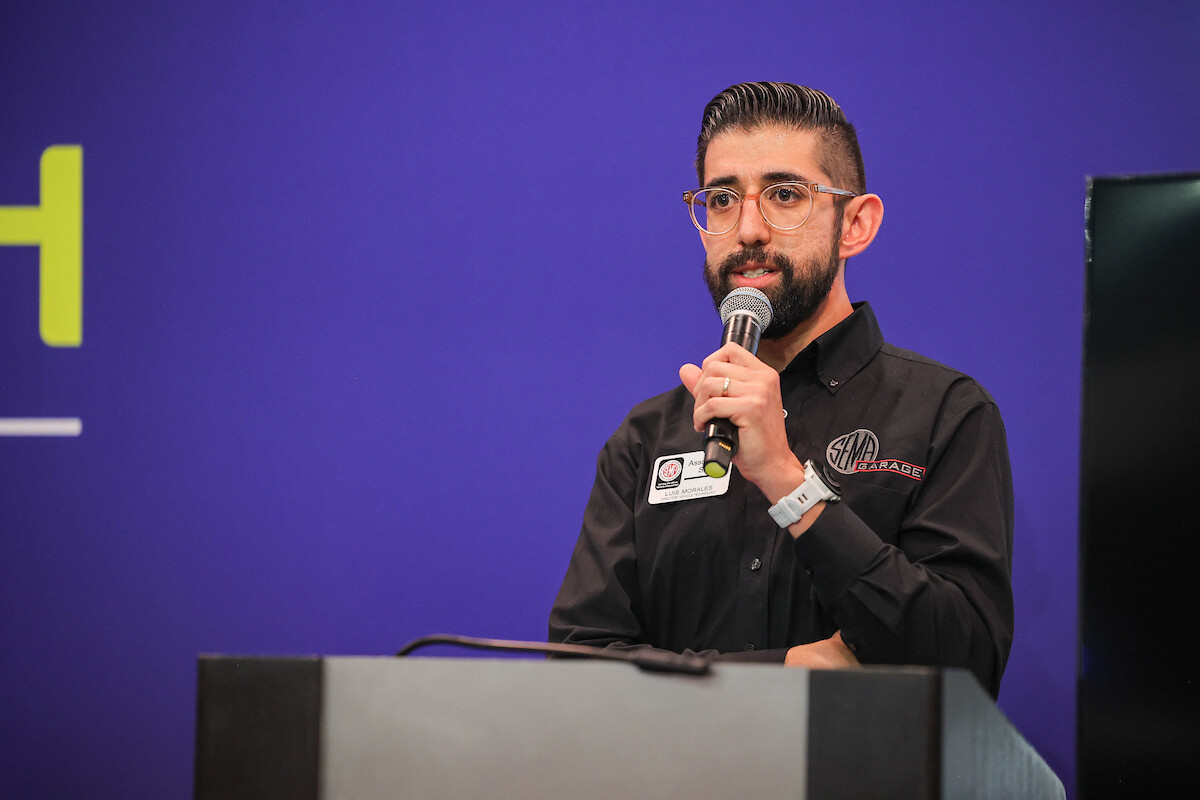 Luis Morales.
The area is “one of several featured areas of the show,” Morales said, as well as being a common media stop for press covering it — meaning the word is likely to get out well-beyond Las Vegas in mid-fall.
An open-concept design — “no internal booths, no walls” — creates a sort of single “super-exhibit” if you will, with most of what’s on display focused on direct application to physical vehicles. Morales said last year, one element of this “key display pillar, was to use it to advocate for other fuels, such as hydrogen.” Those who attended in 2024 might recall a boat SEMA brought in running on the developing technology.
Morales said FutureTech is about multiple “advanced” modes, methods and manufacturing in automotive: “fuels … powertrain … materials … [with] AI and autonomous vehicle” pavilion presenters, too.
Show materials call FutureTech a “dynamic hub for advanced automotive innovation” including live insights from individuals on its “education stage.”
AI, ADAS, Autonomy
ADAS includes AI and contributes to autonomous vehicles (AVs). It’s a key aspect, starting with and depending on one and leading to the other.
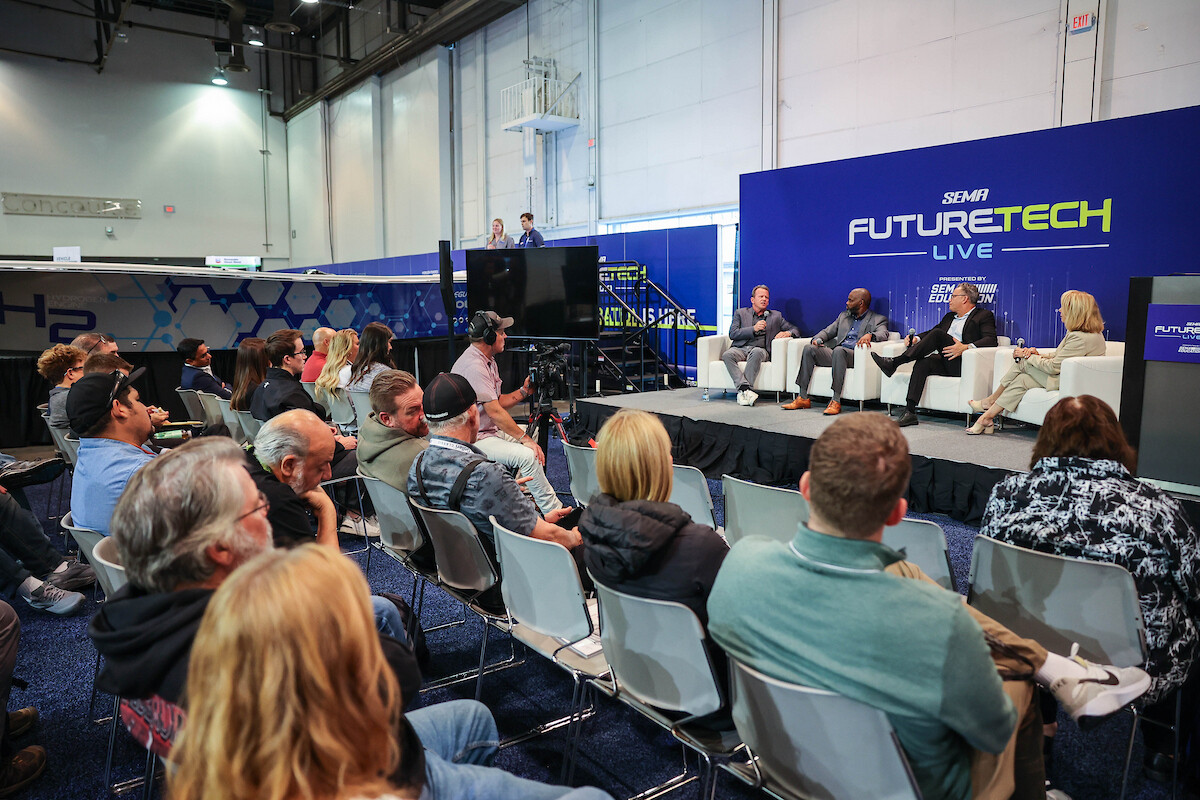 A live discussion on the FutureTech Studio stage at a previous show.
Morales noted, for instance, the “sensor fusion” question. Connections are clear enough between an ADAS sensor and its task being affected by a collision and needing correction. Sensor fusion is multiple sensors in such vehicles cooperating, which requires AI.
Individual sensors “bring information to the vehicle, and onboard vehicles with multiple elements need to decide, and make the best call. Speed of processing is so important: cars will need to make these educated decisions quicker than ever,” Morales said.
That’s happening via AI. As software developers work on this, with “traditional SEMA members making old-school stuff — suspension, bumpers” and collision shops are repairing them. All are involved in how all this ends up. It’s not going to be about just moving — or removing — a sensor because “you could present a challenge for the data processing, by removing one of the streams [the system] is expecting.”
SEMA’s working on this as an organization, and talking about it at the show.
Making AI Look Good, and Making It Happen At All
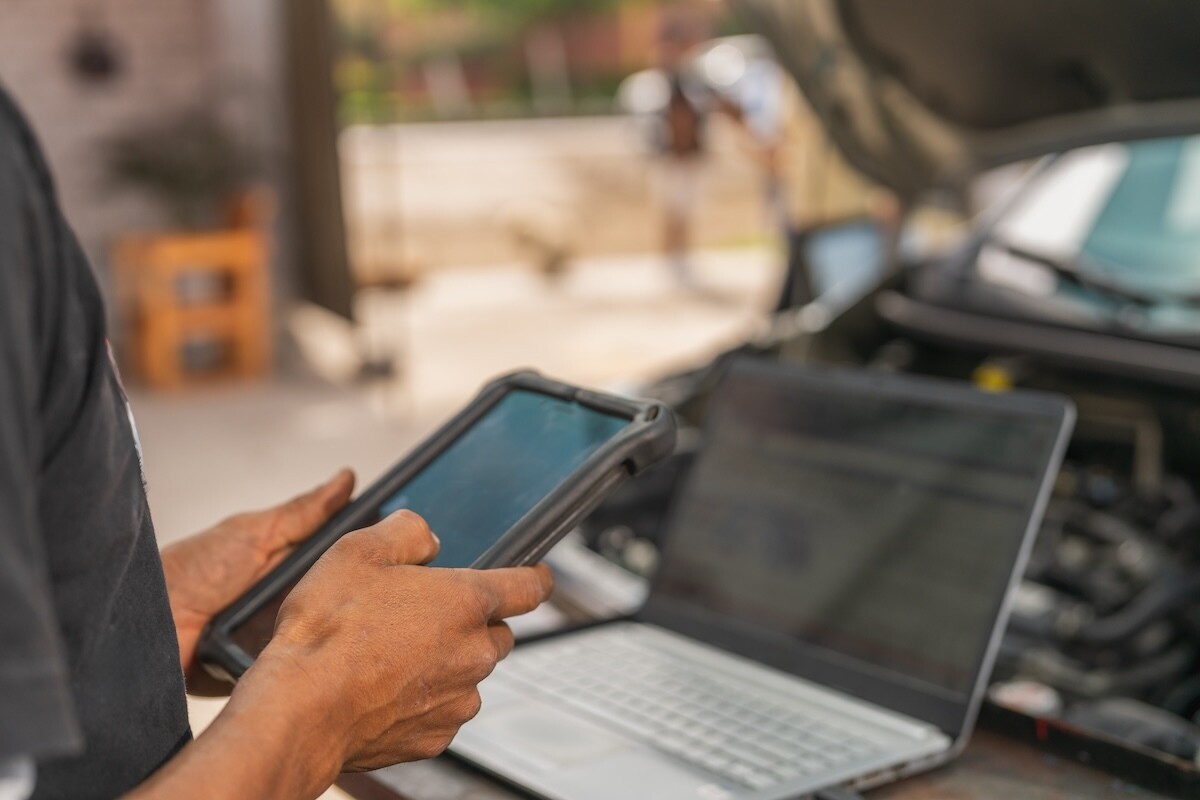
FutureTech will “spotlight the use of AI in our industry,” Morales said. Companies are working on “smart AI, relatively new aftermarket AI” in vehicle diagnostics, for instance. Commonly this is pulled from OEM tools, for scanning, for instance. What’s coming now is AI-based software that presents onboard diagnostics faster and with a better user interface.
“It can be confusing, the software structure, how it communicates,” and new products will offer information up in prettier, more accessible packages to body shops, car enthusiasts, and “really to anybody,” Morales said. SEMA Garage locations in Michigan and Southern California have been deploying AI for members, creating digitized depictions of products — “scanning the files, developing renderings” — using AI. A main purpose is helping members market those products, but another result is widely available images for anyone who needs an in-depth look.
Parts makers often “did not have images of their products,” and more often certainly not to this depth and ease, or the new use. Electronic imaging has been more for engineering, “so it doesn’t have to ‘look good,’” he said.
Morales said at the show, “the entire process we described to you: scanning, creating digital file, rendering it,” will be, literally, on display.
A Third Future-Query for AI: Energy Use
“Where we’re going right now overall,” in society with AI, Morales said, “involves a big challenge, very soon: where will these data centers that manage and process the AI” get their juice?
“There was such a big concern for the grid for EVs, and that is pennies on the dollar for AI’s need,” Morales said.
Be sure this chat on infrastructure and the grid will happen at FutureTech as well, coming soon.
The 2025 SEMA Show’s FutureTech Studio is in Central Hall, Booth 24401.






Paul Hughes