

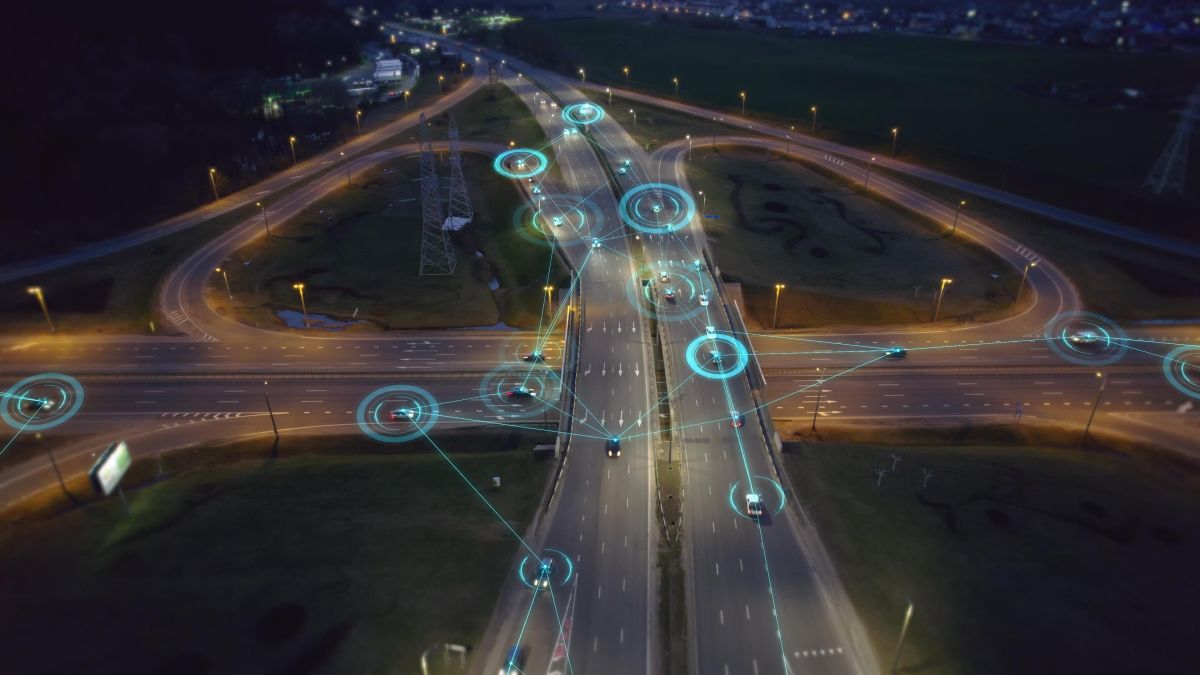
Advancements in electric and autonomous vehicles are reshaping the entire ecosystem of the automotive market for everyone from OEMs to collision repairers.
Steve Greenfield, CEO of Automotive Ventures and author, appeared on an episode of The Collision Vision podcast, driven by Autobody News and hosted by Cole Strandberg, to take a step back from the day to day of collision repair and look at the big picture.
After gaining decades of experience in automotive-related marketplaces with Manheim, AutoTrader and TrueCar, Greenfield moved into venture capitalism with Automotive Ventures. Five years later, the venture capital firm is on its third fund, averaging about 10 investments a year in companies trying to solve big problems across the mobility spectrum.
Greenfield’s book, “The Future of Mobility,” looks at the fundamental shift in how people move, and how vehicles fit into that.
“The way that we move today has been static for some time, but the pace is increasing,” Greenfield said, pointing out the rise of autonomous vehicles, ADAS features and alternative powertrains like electric, hydrogen and ammonia.
“The automobile itself is getting much more sophisticated, a lot more technology, and as a result, it's becoming a lot more complex to repair these things,” he said. “There are a bunch of downstream implications from that.”
But those new technologies are also making vehicles safer, Greenfield said, which will continue to drive down how many are involved in crashes.
“All of these technologies can be pretty intimidating, but at the same time, it's pretty exhilarating that we're seeing this confluence of all these technologies, which is unlocking all kinds of potential,” he said.
The Future of the Dealership Model
Strandberg asked Greenfield what he thinks the dealership model will look like in 10 years.
In his 25 years in the automotive industry, Greenfield said, there have been three factors that were supposed to disrupt dealerships: widespread use of the internet, Carvana’s “click to buy, driveway delivery” solution, and the pandemic, which were all predicted to drive consumers to buy cars online.
“None of it happened — 99-point-something percent of all cars in America are still bought from dealerships face to face, despite the fact there's all this enabling technology,” Greenfield said.
Buying a car is a “complex deal,” he said, that usually involves trading in another car, negotiating a price, and considering financing options. “It's the second largest investment after a home that people typically make in their lifetime, so it's fraught with all kinds of emotion.”
In 10 years, consumers will still be buying cars from franchise dealers, Greenfield predicted. The bigger question mark is what they will be buying.
“I think that dealers will offer mobility services, whether that's a monthly subscription, whether that's an EV or it's powered by hydrogen, whether the car is partially or fully autonomous,” he said.
The one exception would be people who live in very dense urban areas, who might find it more cost-effective to use rideshares on the rare occasions they need a car, rather than owning one, “if autonomy hits, drives down costs, and it's convenient and ubiquitous,” Greenfield said.
He does not think that will make a sizable difference in the volume of new cars sold annually.
“Americans still love their new cars,” Greenfield said. “It's a status symbol. I don't think that's going to change in the next generation. But you could see a substitute where if the cost per mile goes down, enough folks may just say, ‘I don't need a car anymore. I'd rather just summon a car when I need it.’”
So What Will Change?
Strandberg asked which sectors of the automotive market are seeing changes, or the potential for them.
When EVs first started gaining mass market popularity, Greenfield said, dealerships were concerned about a loss in after-sale service revenue, since they don’t require oil changes.
However, EV adoption rates haven’t reached the pace initially predicted, and the ones that were sold were often recalled, “so dealers were busier than ever,” he said.
Greenfield said as more EVs are sold, and all vehicles become more complex, he thinks it will only increase loyalty to dealership service centers.
“Where do you take your iPhone to get fixed? If there's a problem, you take it to the Apple Store. iPhones are $1,300 now; you made a significant investment. And I wouldn't trust anyone but the Apple Store to work on that phone,” Greenfield said.
For collision repair, it is becoming more difficult for insurance companies to write premiums for vehicles being built with many components that are not repairable and have to be replaced.
“The OEMs will have such sophisticated technologies within their cars that it's going to be very hard for independent repair shops to keep up and stay abreast of all these OEM certifications — the specialized technician skill needed and the specialized tools that are going to be needed OEM by OEM to work on these cars,” Greenfield said.
“So again, that can create a lot of anxiety, but I think there's a lot of opportunity for new entrepreneurs who are really innovating in this space,” he added.
The Future of EVs
In the long run, EVs will become the dominant drivetrain globally, Greenfield said, as manufacturers develop batteries that can fully charge in the same amount of time it takes to fill a gas tank, and for longer ranges. He also predicted inductive charging — like when a smartphone recharges just by placing it on a charging pad — will become more common for EV batteries.
“This is what charging of the future is going to be,” he said. “Future generations of kids are going to look back at us and see old movies with wires being plugged into cars and be like, what? Why would you ever plug a car in?”
Internal combustion engine (ICE) vehicles will one day “be relegated to some anachronism of the past,” he added.
Short term, however, there are still “massive adoption problems” for EVs, Greenfield said, as consumers are still concerned about battery range, charging time and charging infrastructure.
For now, mild hybrids that don’t need to be plugged in are “the best of both worlds,” he said. “I have longer range, so my cost of actual ownership is lower over the lifetime of the vehicle. I've got a gas engine, so if I run out of charge, I'm good. But meantime the EV runs when the gas engine isn't and extends my range, which brings down my cost of ownership.”
Hybrids are also good for those who service them, since they have “twice the complexity…you've got a gas engine and an EV in the same car. There are more things to fail and more things to repair,” Greenfield said.
The uncertainty around the adoption rate of EVs is affecting the entire automotive ecosystem.
OEMs are struggling to anticipate exactly what consumers want — and when they will want it — as they decide whether to invest in production of ICE or EVs. Similarly, parts suppliers must figure out when to prepare for an EV future.
In the aftermarket, Greenfield reiterated that dealerships’ initial concerns about losing parts and service revenue on EVs haven’t materialized, but collision repairers are facing tough decisions about when to invest in the tools, equipment and technician training needed to safely and properly fix an EV.
“If they’ve made that investment in advance, anticipating more volume, and there isn't a lot of volume,” Greenfield said, it’s hard to see the return on investment.
Insurance carriers are also grappling with their own challenges. “There haven't been enough [EVs] on the road to understand what residual values should be, what they're going to be worth three years later when they come off lease,” Greenfield said. “Replacement values on a used EV, if it is depreciating quicker, is tough to underwrite.”
The “growing pains” around EVs will alleviate over time, he said, “but it has been a challenge to folks all across the entire supply chain of vehicles, from new production all the way to collision repair in the aftermarket.”
The Future of Autonomous Vehicles
In 2012, financial services firm Morgan Stanley predicted all vehicles would be fully autonomous by now, Greenfield said, disrupting a “whole bunch of industries,” from dealerships to insurance carriers, parking infrastructure in cities — where “the cars wouldn't need to park while we're at work or shopping; they would just circulate” — and even hospitals, which would no longer need capacity to treat car crash victims.
Obviously, that has not played out — yet, he said.
“We were a decade or a decade and a half too early, but we're seeing green sprouts sort of popping up,” Greenfield said, like Waymo’s driverless “robotaxi” service running in cities like Phoenix, AZ, and San Francisco, CA.
“I think that within our lifetime now we're going to see widespread Level 4 autonomy that is going to be enabled on Uber, Lyft and other services, and [a] huge impact downstream to a bunch of industries,” he said.
“I don't think that anytime soon, not within my lifetime, are we going to see 100% of the cars be fully autonomous,” Greenfield added. But the technology being developed and perfected by Waymo and other robotaxi services will “trickle down” to the cars being built for consumers.
That technology showing up in everyday cars will have implications for repairability, he said, but it will also make the cars safer.
The continuing improvement of artificial intelligence (AI) goes hand in hand with that of autonomous vehicles, Greenfield said. It’s already enabling the technology in industries like agriculture, mining and construction, on equipment much larger and more powerful than passenger vehicles.
“AI has all kinds of implications across every single aspect of automotive, but definitely from an autonomy standpoint, as the AI models get better, we're going to find more dramatic progress around fully autonomous vehicles,” he said.
Greenfield pointed out that a single incident involving an autonomous vehicle and a human — like in October 2023, when a Cruise robotaxi struck and dragged a woman in San Francisco — is enough to erode trust in the technology, even as tens of thousands of roadway deaths related to cars driven by humans are recorded every year.
“Autonomy…promises potentially the reduction of almost all of those deaths, but we have almost no tolerance for an autonomous car killing or hurting a human,” Greenfield said. “There will be…questions around what are we comfortable with in terms of tolerating any injuries, a few deaths a year in autonomous vehicles. This will be a philosophical debate that is going to rear its head multiple times between now and widespread adoption, which will slow things down. But I do think long term, it's going to be a great thing that the cars are going to become safer.”
How to Prepare for the Future
The key for anyone in the automotive market is to “focus on the things that are controllable, and try to ignore the things that are not controllable,” Greenfield said.
To do that, business owners need to understand “very crisply” exactly what their business is and what they want it to be in the future. Then they can take information about coming technology to figure out where there may be an intersection with some it, but more importantly, what they can ignore: “The things that you have a high degree of confidence that this is either never going to happen, or never going to intersect with my business,” he said.
It can be difficult to discern “the signal from the noise,” Greenfield acknowledged. “But you, as a leader, need to make that decision consciously, and then help your employees decide what is signal and what is noise, and give them the ability to say no to the stuff that's just noisy and not going to be consequential to your business.”
Disruptors will come — they will be “other folks that are maniacally focused on making progress very quickly” — but Greenfield advised business owners to stay focused on “moving the ball down the field, and don't pay attention to what's going on in the grandstands.”
“I think the only defense is a good offense at this point, and we all need to think very clearly around how we can be more aggressive with playing a good offensive play,” he said.
“The best and smartest people in the world are constantly learning and pivoting and evolving and being students,” Greenfield added. “But the good thing is, in our industry, there's no shortage of really, really good content out there that you can subscribe to.”
Looking to the future, Greenfield said EV advancements will make charging “an afterthought,” as inductive charging will make it so EVs are always powered. Cars won’t be fully autonomous, but they will be “very safe.” They also might be a revenue generator, as they could be plugged in to sell electricity back to the grid during high-demand times.
People will still buy cars, but the combination of autonomy and electrification will have implications for what it will mean to own and maintain one, and how they will be able to “enable what we want to accomplish in life,” Greenfield said. “How great will it be when we can hop in the back seat and either play with our kids, or we can play a video game, or read on the way to work and not have to worry about the safety of the vehicle. And I think that's all within the next 10 years.”
Greenfield offered to send a copy of either of his books, “The Future of Automotive Retail” and “The Future of Mobility,” to anyone who contacts him at steve@automotive.ventures.
“Having a thesis, a hypothesis about how things might play out in the future helps me as an investor,” Greenfield said. It also fosters debate: “There are a lot of people that come up to me at conferences and don't agree with something, and that's good. I'm a student and I'm always open-minded to learn from other folks that have a point of view.
“I think everyone should look into the future and try to anticipate, as Wayne Gretzky said, where the puck is going,” he said. “I think all of us benefit from that, and I'm just trying to do my part for this industry.”



Abby Andrews