The collision repair industry is currently navigating technical, financial, and safety developments. New OEM refinishing guidelines, a major EV funding announcement, and two high-stakes safety recalls are all making headlines.
Ford guidelines target sensor refinishing and ADAS transparency
According to the latest Ford OnTarget newsletter (Vol. 1, 2026), the automaker has released updated guidelines for parking sensor paint instructions. These technical updates, also highlighted by I-CAR Repairability Technical Support (RTS), are essential for refinish teams to ensure safety systems function correctly after a collision.
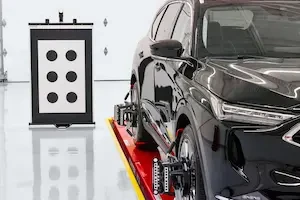
Ford states that excessive paint thickness can compromise sensor transparency, which may lead to ADAS calibration failures. For shops, this means paint thickness must be monitored as a critical step in the quality control process to ensure safe vehicle operation post-repair.
Lucid secures fresh funding and announces new CEO
Lucid Group, Inc. announced a significant financial update on April 14, securing approximately $750 million in new capital and appointing industrial veteran Silvio Napoli as its next CEO. The funding, which is a combination of investments from a Public Investment Fund (PIF) affiliate and Uber, strengthens the automaker's liquidity as it prepares for the late-2026 launch of its high-volume Midsize platform and the upcoming Gravity SUV.
This capital injection provides the necessary backing for the aggressive infrastructure goals previously detailed during the Collision Industry Conference (CIC) earlier this year. Lucid’s director of technical operations, Andy MacDonald, confirmed the brand intends to double its certified network to 200 shops by the end of 2026.
Major safety recalls for Corvette turn signals and Hyundai anchors
Shops should prioritize VIN lookups for major safety issues identified in recent days:
- Chevrolet Corvette: General Motors issued a recall and immediate stop-sale on April 14, affecting nearly 33,000 Corvettes (2025–2026 models). A software error in the lighting control module prevents the system from detecting a failed rear turn signal. For shops repairing rear-end damage, technicians must ensure the software patch is applied to restore proper outage detection and maintain FMVSS 108 compliance.
- Hyundai & Genesis: Hyundai Motor America has recalled 294,000 vehicles, including the Ioniq 6, Santa Fe, and Genesis G90, because seat belt anchors may detach during a crash. This is a critical safety check for any shop performing interior work or SRS-related repairs, as a detached anchor increases the risk of serious injury.