


With the percentage of claims involving an electric vehicle growing even as EV sales have cooled, two automakers are growing their shop certification programs for EVs this year, and other OEMs have recently added to their published guidance for collision repairers.
John Peixoto of American Honda said there are currently 25 U.S. shops that are EV-certified by the automaker since that certification launched last year.
“One of the things to note about this is that the first requirement is that you have to already be a Honda-Acura certified collision center,” Peixoto, collision repair and technology assistant manager for the automaker, said. “This is an additional certification that’s added to it. So, if you are interested in being EV-certified, you first have to do the general certification.”
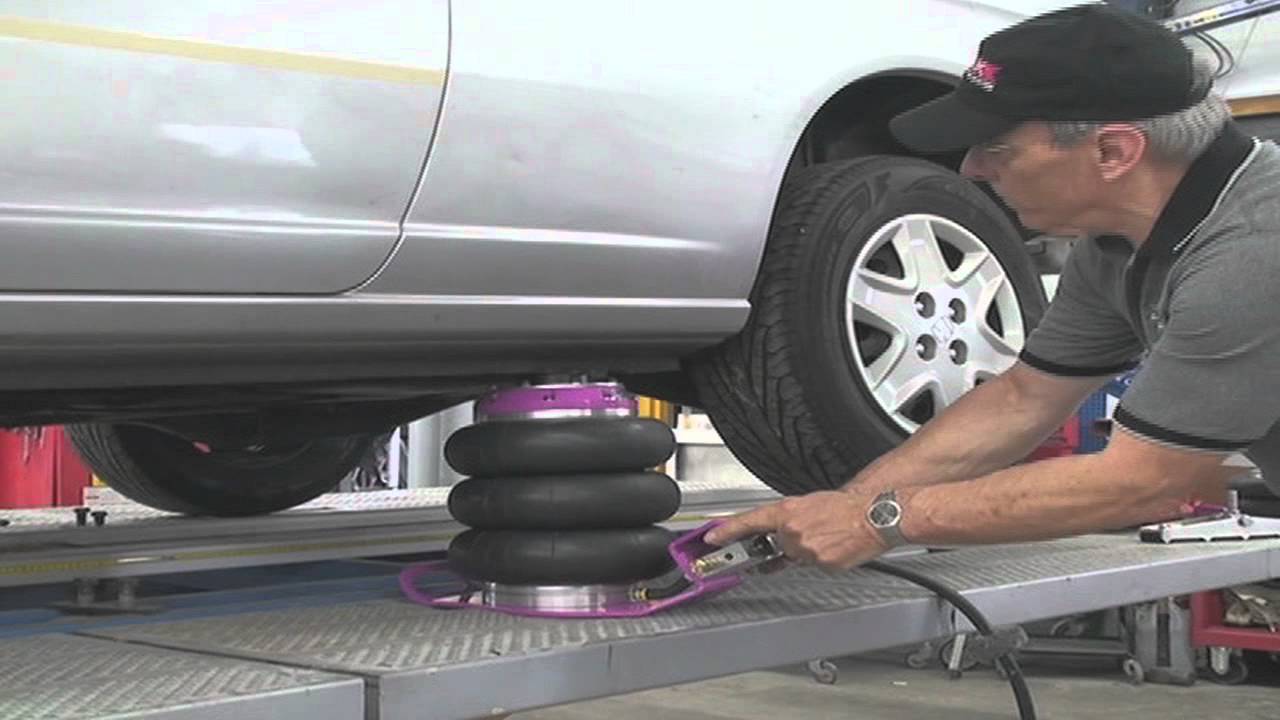
Additional EV-specific equipment requirements include a vehicle lift with 10,000-pound lift capacity, a frame bench with 9,200-pound capacity, a pull-type riveting system, and personal protective equipment such as class zero lineman’s gloves and a 6-foot to 8-foot high-voltage hook.
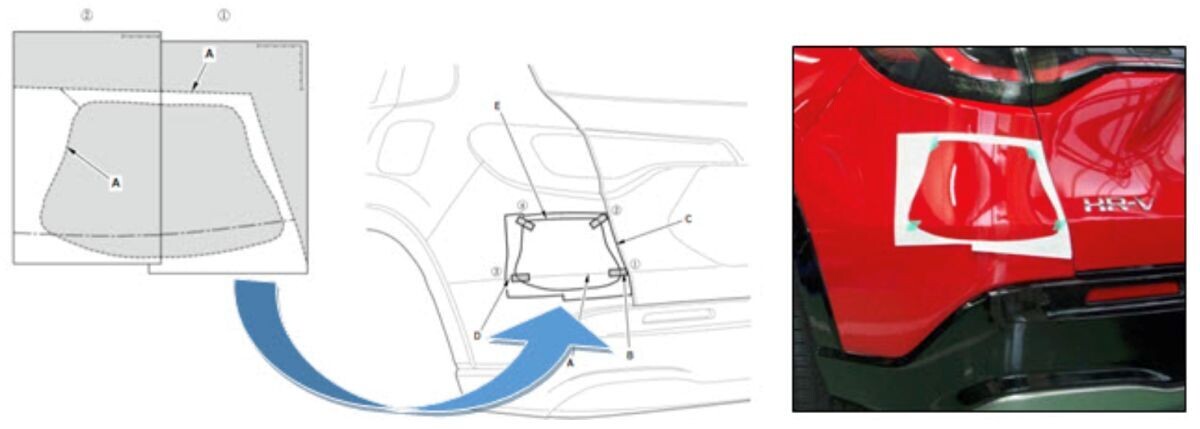 Honda offers a printable template to use to identify non-repairable areas on bumper covers for some Honda and Acura vehicles with blind-spot information systems.“We require that the gloves are tested every six months after opening,” Peixoto said. “And the [hook] handle itself — and this is where I got a lot of push-back, but Japan mandated this — has to be tested every two years. So, you’ll get the actual label that it has been tested, and we always inspect those.”
In addition to the training requirements for the general Honda certification, a five-day skills development course at the I-CAR training center in the Chicago area is required.
“At that training center, we have a Honda Prologue as well as an Acura ZDX, so you can actually get hands-on training,” Peixoto said.
He said the EV certification program will continue to evolve to support future Honda and Acura EV models.
“That includes the Acura RSX, which is scheduled to be in production later this year, as well as future models for the Honda O series because we have the SUV and the Saloon that should be coming out later on in the future.”
Peixoto said Honda is not restricting parts sales for the vehicles other than the high-voltage components, which can be purchased only through an EV-approved dealer.
Honda-certified shops interested in the EV certification can send an email to HondaandAcuraCollision@ahm.honda.com.
EV maker looking to add more certified shops
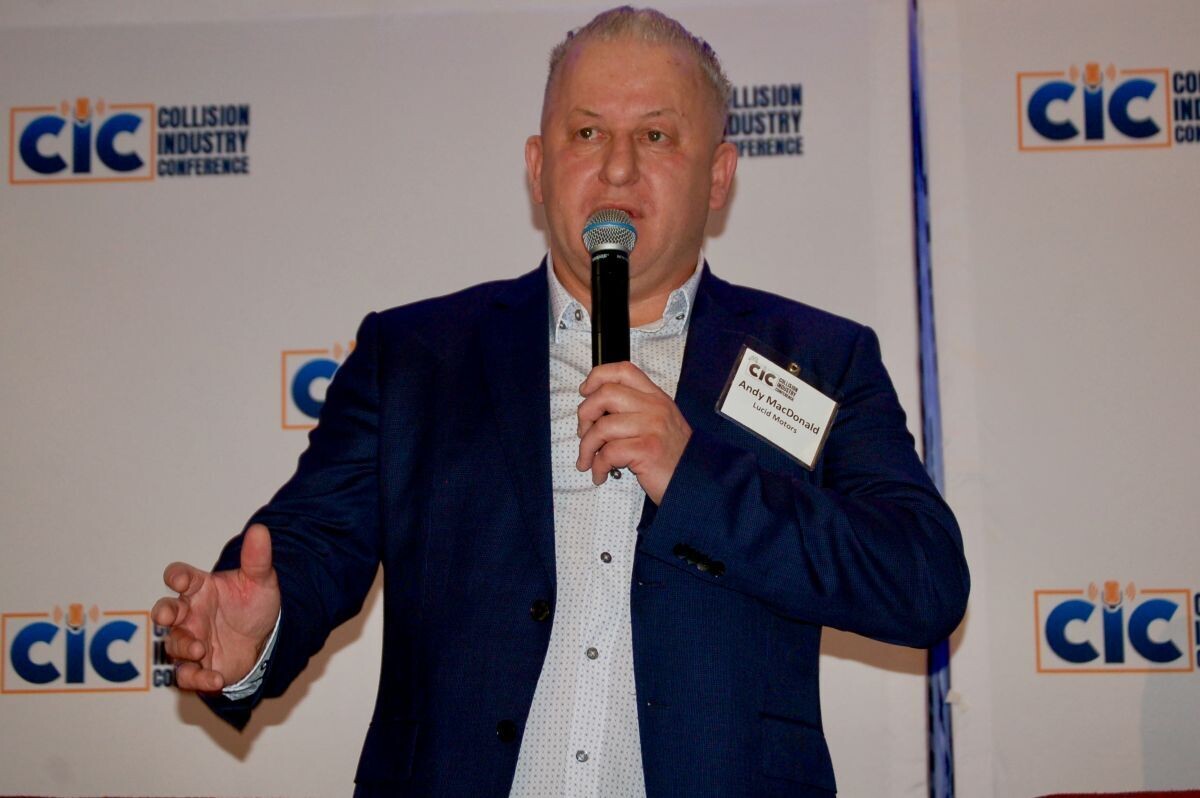
Electric vehicle manufacturer Lucid Motors currently has about 95 certified collision repair centers in the United States and plans to double that number ahead of the launch of its midsize vehicles later this year, according to Andy MacDonald, director of technical operations for the automaker.
Speaking at last month’s Collision Industry Conference (CIC), MacDonald outlined some of the costs associated with its shop certification program, including its annual fee of $4,000. Lucid has also developed about 45 of its own tools specifically for its Air and Gravity vehicles, which it sells for $40,000.
“We’re very lucky to have ex-Formula 1 tooling engineers working for us, and we’ve built some fantastic tools that speed up the jobs, make the job easier,” MacDonald said.
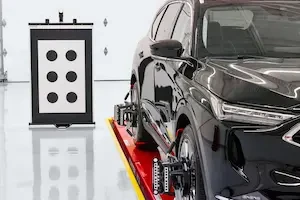
He said the John Bean ADAS setup for Lucid vehicles is about $40,000, though shops that already have that equipment will need to buy only the Lucid targets. The program requires a battery/subframe lifting table (about $5,000), and Lucid diagnostic software with a supplied laptop (about $5,000, plus an annual software subscription). He estimated the costs for Lucid technician training at about $23,000.
“We’re a big proponent of hands-on training,” MacDonald said. “We have a whole package of online and in-person training [in California]. Our training manager trains not only our body shops, but also our service technicians, so your technicians will also go through the mechanical training and diagnostic training. We equip and train our body shops to be as fully capable as our service centers.”
The number of technicians Lucid requires to have trained at each shop will vary based on the volume of Lucid vehicles in the shop’s market.
In all, he estimates the total to become Lucid certified is about $117,000, though that presumes the shop already meets another OEM’s requirements for aluminum certification and has one of the approved repair benches and riveting equipment. The certification approval process can take up to 180 days, MacDonald said.
New published guidelines for shops
Other automakers have been adding or updating their collision repair related documentation in recent weeks.
Nissan, for example, has issued an updated position statement on its bumper refinishing requirements for its Ariya electric vehicle. Position statements on the use of salvage, non-OEM or “secondary market” ADAS components have been issued by Nissan and INFINITI.
Mopar, has issued position statements related to one-time use parts, and bumper or fascia repair on ADAS-equipped vehicles.
Lucid has published a position statement on post-collision steering column inspection and replacement, and one on refinishing requirements for all Lucid Gravity vehicles.
Detailed information, including a printable template is also available related to non-repairable zones on bumper covers for some Honda and Acura vehicles with blind-spot information systems is also available. Peixoto said the template can be a useful tool when looking at damage with customers.
“You can put this on while the customer is in for the inspection, and you can say, ‘Unfortunately, that bumper needs to be replaced because the manufacturer says I cannot repair this area right here,’” Peixoto said.



John Yoswick