

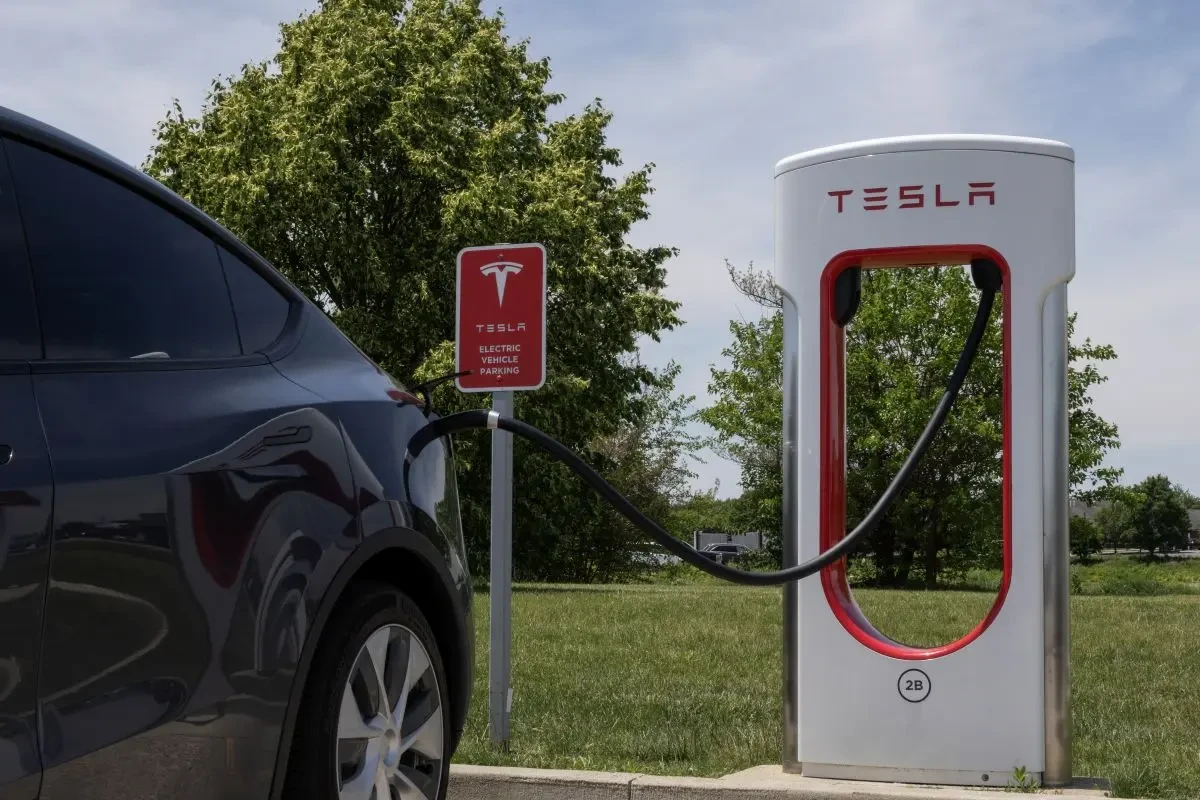
Mitchell's Q2 2026 Plugged-In: EV Collision Insights report, released Aug. 20, documents the narrowest gap the company has recorded between the cost of repairing an electric vehicle and a gas one, even as Mitchell warns that trade and supply disruptions could drive those costs back up.
Repairable battery electric vehicle (BEV) claims in the U.S. averaged $5,684 in severity last quarter, against $4,955 for vehicles with an internal combustion engine (ICE), a difference of $729 across all model years. Mild hybrids came in at $5,033 and plug-in hybrids at $5,022. In Canada, where Mitchell reports in Canadian dollars, BEVs averaged $6,645 CAD against $5,411 CAD for ICE vehicles.
The gap closed from the electric side
Mitchell's Q1 2026 report put U.S. average repairable severity at $6,042 for BEVs and $4,902 for gasoline vehicles, a gap of $1,140. At $729, the Q2 gap is more than a third smaller, and almost all of the movement came from the electric side: BEV severity fell $358 between the two quarters while gasoline-vehicle severity rose $53.
Mitchell was measured about what that indicates. "If this trend persists, it may indicate that a combination of higher total loss frequency and a maturing electric vehicle fleet are bringing repair costs across powertrain types closer to parity," the report stated.
Trade conditions could pressure parts costs
Trade and geopolitical conditions could push repair costs back up in the coming months, according to the report, which cited Middle East conflict as a source of uncertainty for energy markets, shipping lanes, and aluminum supply, and tariffs and the United States-Mexico-Canada Agreement (USMCA) review as continuing to shape where vehicles and parts get built and sourced.
"Ongoing trade and geopolitical uncertainty could put renewed pressure on replacement part costs and availability, with BEVs particularly exposed because of their greater reliance on OEM components," Ryan Mandell, Mitchell's vice president of strategy and market intelligence, said in a statement.
The report said repairers and carriers could see "greater variability in parts pricing, availability and delivery times," with electric vehicles the more exposed segment because BEVs "are more dependent on OEM replacement parts than ICE alternatives and typically have fewer parts repaired versus replaced."
BEV estimates still lean heavily on OEM parts
OEM parts made up 84.74% of parts dollars on BEV estimates, against 61.44% on ICE estimates, though Mitchell marks the BEV share down from Q1.
Estimators wrote 14.81% of parts on BEVs for repair rather than replacement, up from Q1 but still below the 16.60% recorded on ICE vehicles. First-party deductibles on BEV claims averaged $784, compared with $648 on ICE claims.
Hybrids, not BEVs, are driving volume
In the U.S., BEVs stayed at 3.32% of repairable claims, flat from the previous quarter. Mild hybrids set a record at 5.83%, up 26% from the same quarter a year earlier.
Second-quarter sales showed the same split. Mitchell cited a 33% annual drop in General Motors BEV volume, with the electric Silverado down 25.9% and projections of a decline exceeding 20% at Tesla, against hybrid growth led by Toyota, Hyundai, and Kia.
Canadian claims ran the opposite way. BEVs there hit a record 5.42% of repairable claims, up from 4.94% in Q1, with mild hybrids at 5.52% and plug-in hybrids at 1.85%.
Tesla models and Canadian provinces lead the claim mix
Two Tesla models account for more than half of U.S. repairable BEV claims: the Model Y at 31.02% and the Model 3 at 25.27%. The Ford Mustang Mach-E followed at 4.18%, the Hyundai Ioniq 5 at 3.48%, and the Tesla Model S at 3.40%.
By market, BEVs made up 9.34% of repairable claims in British Columbia, the highest share in North America, followed by Quebec at 9.19% and California at 7.02%.







Jess Fritsche