

On a recent episode of The Collision Vision, host Cole Strandberg sat down with Dan Carranza, who spent years in leadership at AkzoNobel before launching his own business advisory firm, Accelerate Growth Partners. The conversation covered how he built his career on what he calls relationship capital, what he looks for when hiring, and Collision Next, the industry conference he's launching this fall in Anaheim, Calif.
Relationship capital is the foundation, not just fluff
Carranza traced his sales philosophy back to his years in paint distribution. "I found very quickly that the way that I built my business was on relationship capital. I call that my greatest wealth asset," he said.
He contrasted that with a transactional approach to sales. "A lot of people treat [sales] as a transactional process. I don't. I treat it as value added. We've got to bring value in anything that we're selling."
Key takeaway: For Carranza, relationships aren't a soft add-on to sales strategy, they're the strategy. He argues that earning trust first is what generates credibility, and credibility is what generates clients over time.
Take action today
Carranza explained that his decision to leave corporate leadership and start Accelerate Growth Partners was accelerated by a medical scare during a routine shoulder surgery workup. "This blip that was here when I had the EKG was not here. I'm going to send you in for a second opinion," his doctor told him. The follow-up came back clear, but it changed his timeline. "I had always planned to do this. The plan just accelerated itself a little bit earlier. I decided to do it five years earlier."
Key takeaway: The scare didn't create the plan to go independent, it just moved up the date. Worth noting for any operator sitting on a transition plan they keep pushing to "someday."
“Why not today? Why not take action?” Carranza said.
He hires for attitude first; technical skill can be taught
Asked what makes training actually stick, Carranza pointed to who gets hired in the first place. "I hire for attitude and mindset. To me, that's 80% of the position that I'm filling. The 20% tactical, we can teach that. We can train that."
Key takeaway: In Carranza's framework, coachability is a hiring criterion, not just a training outcome. Shops that filter for the right attitude upfront get employees who seek out training rather than needing to be pushed into it.
Culture has to reach the shop floor, not stay in the boardroom
Carranza said the biggest gap he sees in businesses is a mission and vision statement that never makes it past senior leadership. "Part of my work has been we've got to get it down from the owner down to the GMs down to the technicians down to the janitor for that matter," he said, adding that building culture is not a one-time initiative. "That's a continuous thing. Literally every day you've got to be intentional building that culture, because if you don't lead it, it's going to build itself for better, for worse."
Key takeaway: A mission statement that lives only in the executive meeting isn't doing its job. Carranza's read is that culture forms with or without leadership's input, so the only choice is whether it's intentional.
The industry's real revenue leak is at the front counter
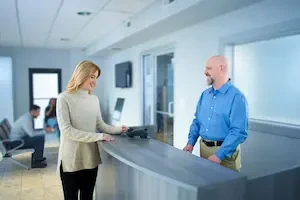
Carranza said mystery-shopping shops as part of his advisory work turned up a consistent problem that has nothing to do with the paint booth. "There is a huge sales gap that's missing from the front level counter CSRs that are dealing with customers. They're letting work go out of their shops. We're not closing those opportunities. We're not educating the consumer."
Key takeaway: Technical training tends to get the attention and budget, but Carranza's mystery-shopping data points to the service counter as an underinvested area where shops are losing approved work before it ever reaches the technician.
OEM certification is the highest-leverage move for the next five years
Asked where the biggest opportunity sits for growth-minded shops, Carranza didn't hedge. "They've got to be super intentional to get their OE certifications. I think that's ultra important. You've got to be intentional to make sure that we've got certified technicians. If we do that and continue to evolve with the complexity of vehicles, I think we'll be able to surf that wave of change."
Key takeaway: Carranza frames OEM certification less as a compliance checkbox and more as the mechanism that lets a shop keep pace with vehicle complexity rather than fall behind it.
Hands-on OEM training isn't going away, even as tech evolves
Looking a decade out, Carranza predicted the format of technical training will lean more in-person, not less, despite advances in online learning. "There's going to be a lot more OEM training hands-on, because you can only learn so much on a webcast or an LMS. These are tactical skills that have to be taught in person," he said.
Key takeaway: Online platforms are good for the fill-in work, testing and coursework, but Carranza doesn't see them replacing in-person, OE-level instruction for the technical skill itself.
Collision Next: a choose-your-own-agenda event launching in Anaheim
Carranza also previewed Collision Next, the conference he's launching under Accelerate Growth Partners. "This industry is thirsty for education," he said. "This is not a conference where we shovel people in and we have the same content over the course of a day and a half. This is dynamic. The attendee will get to choose his or her content for the breakouts. There's 16 breakouts going on. You can only go to three." The event runs Sept. 23 and 24 at the Hilton Anaheim, adjacent to the Anaheim Convention Center.
Across the conversation, Carranza's answers kept circling back to the same idea: relationships built over time are what make everything else work, whether that's closing a sale, keeping a hire long enough to develop them, or getting an entire shop aligned around where it's headed.

Lisa McArdle