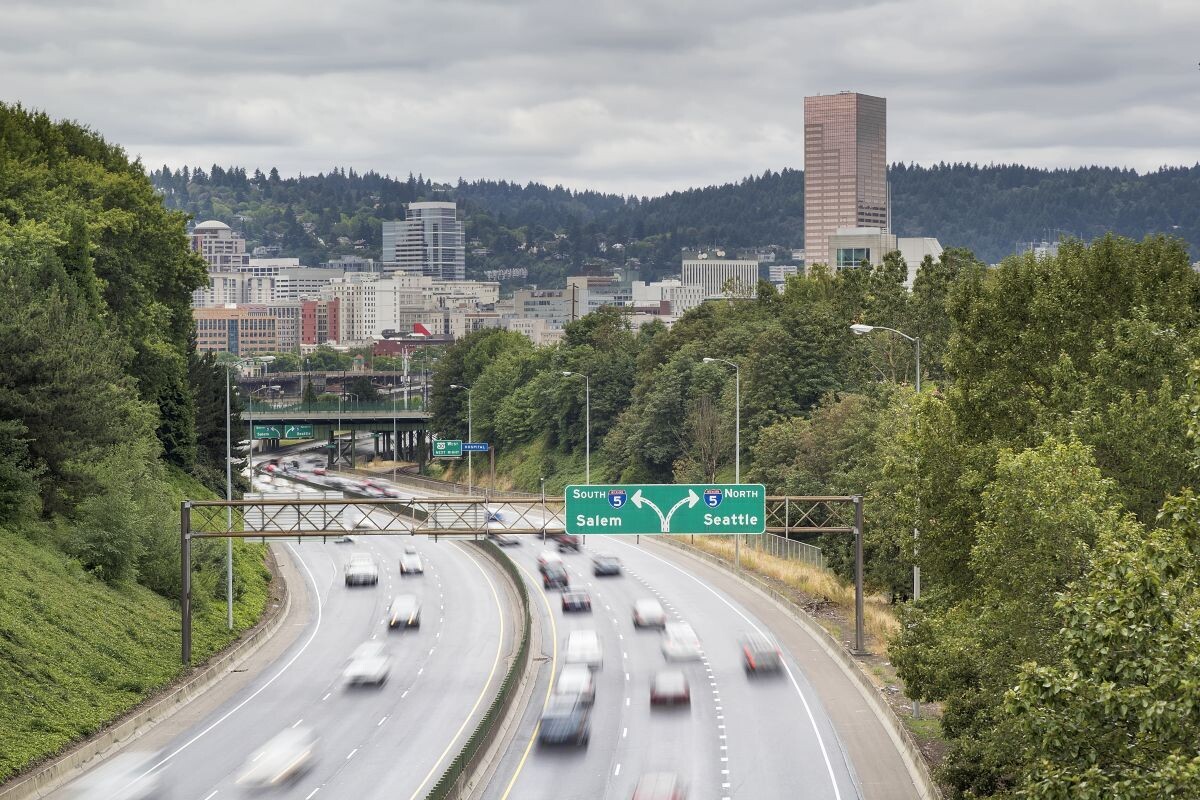
A new report claims that while auto insurance rates are stabilizing or even declining in many parts of the country, Oregon is moving in the opposite direction.
According to The Zebra’s 2026 State of Insurance Auto Report, Oregon is projected to have one of the largest increases in auto insurance in early 2026. The report forecasts that auto insurance premiums in Oregon will rise about 9–17% in Q1 2026 and around 14–17% in Q2 2026 compared with the prior period.
And, unfortunately, Oregon repairers are caught squarely in the middle.
What’s Driving Oregon’s Increases?
Beth Swanson, licensed insurance agent and insurance analyst at The Zebra, told Autobody News that Oregon’s projected increases aren’t the result of a single issue. But one major contributor, she said, is most likely population growth, particularly among younger drivers.
“Between ages 25–39, that’s the highest demographic that’s moving to Oregon,” Swanson said. “The more people on the road, the more accidents you’re going to have.”
At the same time, rising repair costs continue to weigh heavily on insurers.
“We’re looking at increased inflation, the tariffs have had a big effect, and the fact that cars are just more complex today, and that means they’re more expensive to fix,” Swanson said. “Parts have gone up significantly, especially if they’re coming from overseas.”
Swanson added that modern vehicles require more time, labor, and specialized expertise to repair.
“It takes longer to fix. It requires more parts and pieces, and so that’s going to increase the labor as well.”
Why Other States Are Seeing Relief For Now
While Oregon trends upward, Swanson cautioned that declines in other states are more likely temporary. “A lot of these states that are seeing decreases this year are maybe coming back from higher premiums in the past couple of years,” said Swanson.
Weather patterns have played a role, particularly in states with fewer catastrophic losses last year.
“2025 for example, our hurricane season was a little bit of a dud,” Swanson said. “That helped a lot of insurance companies who may have been preparing for big storms and had them the year before.”
She also noted that national insurers spread risk across states.
“Things that happen in Florida and New Hampshire can also affect rates in Oregon and California,” Swanson said. “It’s the law of large numbers.”
Swanson pointed to another Oregon-specific risk factor: underinsurance.
“More people in Oregon specifically are carrying the state mandated minimums,” she said. “It’s like 47%.”
That creates a cycle that hits repairers and consumers alike.
“More accidents… that’s going to just result in higher out of pocket costs,” Swanson said. “It becomes kind of a cycle.”
Oregon Repairers: Rates Up, Payments Down
For Oregon collision repairers, rising premiums aren’t translating into smoother claims handling.
Ron Reichen of Precision Body and Paint, which has five locations in Oregon, said rate increases have been significant and long-running.
“We saw an increase in rates. Actually, [it] started a couple of years right after COVID,” Reichen said.
The increases aren’t limited to customers. Reichen said shop insurance costs have surged as well.
“We have a loaner car fleet. We saw the coverage on those go up significantly,” he said.
Reichen shared personal examples of how dramatic the increases have been.
“My assistant’s insurance went up 75%… out of the blue,” he said. “Our production manager… his went up 47%.”
Despite insurers collecting more in premiums, Reichen said reimbursement pressures are intensifying.
“Even though they raised their premiums significantly, they came back and rolled back the prevailing rate that they pay our shops, $11 an hour went backwards,” he said.
Technology and the True Cost of Repair
Reichen said insurers underestimated how vehicle technology would reshape repair economics.
“They didn’t pay attention to what it costs to repair an electric vehicle, as opposed to an ICE motor vehicle,” he said.
Advanced driver assistance systems have fundamentally changed even “minor” repairs.
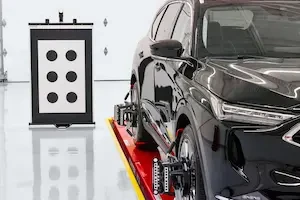
“The calibration requirements are significant. You didn't used to have to calibrate a windshield,” Reichen said. “I wrote a windshield replacement, and it had $2,300 worth of calibrations after you replaced the windshield.”
The same is true with bumpers.
“Bumper repairs seem very, very minor, right? But there's all of these sensors, there's adaptive cruise control, there's lane keep, here's blind spot warnings, there's front view cameras,” Reichen said. “All of these things have to be recalibrated once you unplug and plug a wire.”
More Denials, More Delays, More Customer Pay
April White of White’s Collision, which has six locations in Oregon, said insurers are becoming more aggressive as premiums rise.
“We’re seeing a lot more denials… just straight up denials,” White said.
Labor rate pressure has intensified.
“We’ve never seen a decrease in labor rate ever,” she said. “Now we’re seeing that across the board.”
Customer behavior is also changing. They are “choosing higher deductibles ... delaying repairs, as well as just paying out of pocket,” White said. “Cash pay goes way up in times like this.”
Reichen echoed that observation.
“There’s an absence of the small repair,” he said. “You go to Home Depot, or you go to Costco, and you look at the cars in the parking lot, and a lot of these cars have damage, but you can tell that the damage wasn't fresh, because it's rusted, and it takes a while for that rust to actually occur. ... People are postponing those repairs because they're scared. They've already had an insurance increase.”
While many states may see short-term relief, Oregon’s outlook underscores a harder reality: higher premiums don’t mean healthier claims environments for repairers. Instead, shops are navigating increased denials, compressed volumes, delayed repairs, and greater customer-pay exposure, all while repair complexity and operating costs continue to climb.
As Reichen put it bluntly: “The insurance industry never rolls back.”
The Takeaway for Collision Repairers
The challenge for Oregon collision repairers is surviving rising insurance rates while ensuring safe, complete repairs.
The shops that hold margin and reduce risk are doing the following:
- Plan for steady repair volume from delayed, everyday damage, not just storm-related claims. Higher premiums and deductibles are causing many customers to postpone repairs, leaving damaged vehicles on the road that will return later with more extensive repair needs.
- Write every estimate as if it will be questioned, delayed, or partially denied. Build estimates using OEM procedures, photos, and notes from the start so they hold up when an insurer pushes back or a claim drags out.
- Train your front office to explain costs and risks up front instead of rushing customers into “yes.” When customers delay repairs, your team should clearly explain what can worsen over time, what insurance may not cover later, and why proper repairs matter, so the shop earns the work when the customer is ready, without arguments or surprises.
- Assume this pattern is permanent. Weather volatility, wildfire exposure, and consumer delay are now structural. Shops that adapt their processes are more likely to stabilize margins.
For collision repairers in Oregon and beyond, success may depend more on internal procedures rather than chasing volume.