

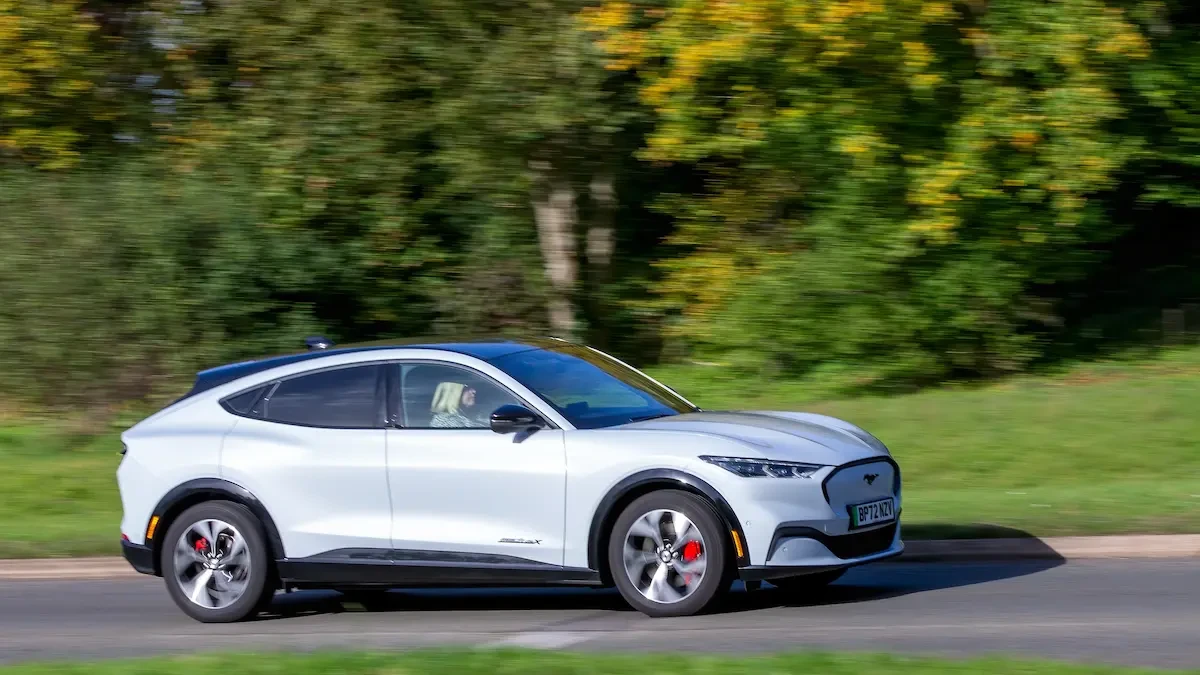
The National Transportation Safety Board (NTSB) will hold a public hearing March 31 to determine the probable cause of two fatal crashes involving Ford Motor Co.’s BlueCruise hands-free driving system, both involving 2022 Ford Mustang Mach-E vehicles that rear-ended stationary vehicles at highway speeds in 2024.
For collision repairers, the investigation comes as advanced driver assistance systems (ADAS) become more prevalent in the vehicle fleet and as federal lawmakers consider new standards governing calibration and system performance.
In addition, liability in crashes involving ADAS remains a complex and evolving issue, as responsibility may involve the driver, vehicle manufacturer, and in some cases, post-repair work. Systems like BlueCruise are designed as driver-assisted technologies rather than fully autonomous systems, with drivers expected to remain engaged, according to Ford, which describes BlueCruise as a “hands-free driving feature” that still requires driver attention.
Details revealed in the NTSB reports
The crashes occurred in San Antonio, Texas, on Feb. 24, 2024, and in Philadelphia on March 3, 2024, and both involved Ford Mustang Mach-E vehicles equipped with BlueCruise, according to the NTSB.
The NTSB said both crashes involved vehicles that struck stationary vehicles at highway speeds while operating with advanced driver assistance systems engaged.
They also released additional investigative materials, including factual reports, in connection with the hearing announcement. According to the agency, no driver-applied or system-initiated braking was recorded in either crash prior to impact.
Factual reports include vehicle data and other information related to driver behavior and system operation in both crashes.
In the San Antonio crash, a 2022 Ford Mustang Mach-E equipped with advanced driver assistance systems, including BlueCruise, was traveling on the interstate when it collided with the rear or a stationary vehicle. Data from the vehicle indicated the driver had been operating the vehicle in BlueCruise mode prior to the collision.
In the Philadelphia crash, the NTSB preliminary report said a 2022 Ford Mustang Mach-E equipped with BlueCruise was traveling on the interstate when it encountered two passenger vehicles that were stopped in the travel lanes. Vehicle data indicated the 23-year-old driver was using BlueCruise as the vehicle approached mile marker 26.8 in a 45-mph construction zone.
What it could mean for collision repair
The March 31 hearing comes as federal lawmakers advance legislation aimed at standardizing ADAS calibration and functionality.
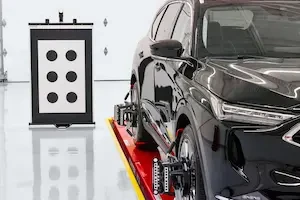
BlueCruise relies on ADAS, including cameras and sensors that require calibration after certain repairs, while federal lawmakers consider new standards governing ADAS calibration and system performance.
The ADAS Functionality and Integrity Act (H.R. 6688), which cleared a House subcommittee in February, would direct the National Highway Traffic Safety Administration (NHTSA) to establish federal standards for ADAS calibration and performance beginning with future model years.
Separately, the Right to Equitable and Professional Auto Industry Repair (REPAIR) Act (H.R. 1566) would address access to vehicle data, tools and repair procedures, including those required to diagnose and calibrate increasingly complex vehicle systems, and establish clearer standards around ADAS-related repairs and calibration.
For collision repairers, limiting liability on ADAS-equipped vehicles currently centers on following manufacturer procedures, and documenting all work performed. How that could change in the wake of this hearing is yet to be determined.
The NTSB said it will use the March 31 hearing to determine the probable cause of the crashes and consider potential safety recommendations.






Lisa McArdle