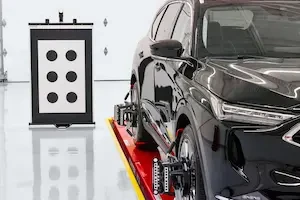
A bipartisan ADAS calibration bill that collision repair shops and aftermarket businesses have been watching cleared its first major congressional hurdle Feb. 10, passing out of a House subcommittee and moving closer to a floor vote.
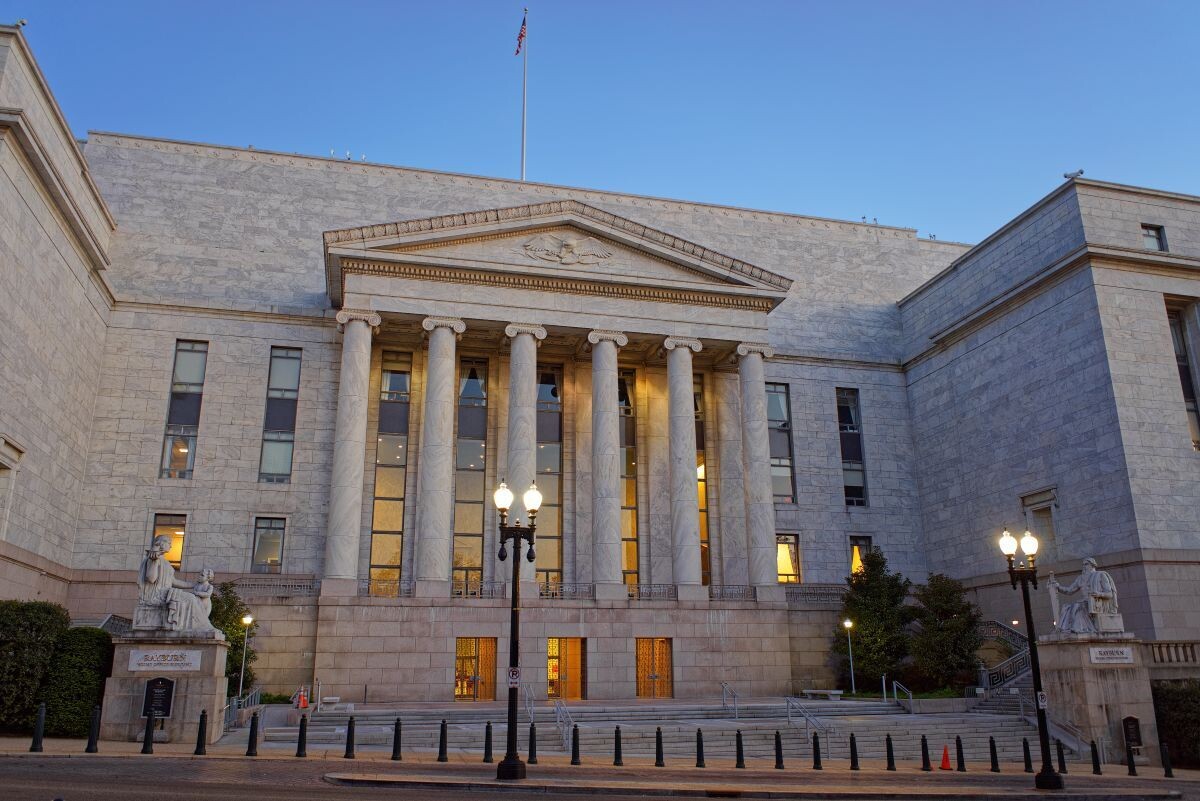
The ADAS Functionality and Integrity Act (H.R. 6688) was among 12 automotive safety bills forwarded to the full House Energy and Commerce Committee by voice vote at a markup session of the Subcommittee on Commerce, Manufacturing, and Trade, according to a press release from the committee. The session was chaired by Rep. Gus Bilirakis (R-FL).
"The twelve bills we considered address a wide range of priorities from improving vehicle safety technology to modernizing our transportation regulations," Bilirakis said in a post-markup statement. "Each of these measures reflects a commitment to keeping Americans safe on the road, while supporting the competitiveness and innovation of our domestic automotive industry."
What the bill would do
As Autobody News first reported in December, H.R. 6688 directs the National Highway Traffic Safety Administration (NHTSA) to establish standardized ADAS calibration guidelines for vehicles beginning with model year 2028. Specifically, the bill requires NHTSA to define modification ranges and tolerances that specify how much a vehicle can change (in ride height, sensor position, wheel and tire dimensions, and overall geometry) before ADAS systems fall out of spec. The bill also requires NHTSA to establish test procedures that aftermarket businesses and calibration providers can use to validate that ADAS systems are functioning properly after modifications or repairs.
The bill was introduced Dec. 12, 2025, by Rep. Diana Harshbarger (R-TN) and co-sponsored by Rep. Gabe Vasquez (D-NM), Rep. Jay Obernolte (R-CA), and Rep. Norma Torres (D-CA). The Specialty Equipment Market Association (SEMA), which worked with lawmakers to build bipartisan support for the bill, said H.R. 6688 is designed to ensure that aftermarket businesses have the information needed to properly calibrate ADAS after vehicles are modified or repaired.
Why the gap matters to collision shops
The calibration standards the bill would create don't exist today. Collision repair shops and calibration centers that work on modified vehicles — anything with a lift kit, aftermarket bumper, bike rack, or wheel and tire change — currently have no federal guidance on what tolerances ADAS systems can withstand before recalibration is required or invalid.
At a Collision Industry Conference panel covered by Autobody News in early 2025, multiple calibration center operators said they decline to calibrate modified vehicles entirely because OEM guidance is absent and the liability risk is too high. Jason "Buck" Zeise of Accelerated Vehicle Technology, a Bloomington, Minn., calibration service center, was among those who said his business refuses that work.
A second Autobody News report on the bill noted that industry sources estimate modified vehicles make up roughly 2% to 5% of calibration volume — a small share that nonetheless creates outsized complications when there are no clear rules.
SEMA has said that if H.R. 6688 becomes law, the test procedures NHTSA establishes would give aftermarket businesses, including collision repair shops, a defined standard for demonstrating that ADAS systems remain functional after a repair or modification.
"Currently, the industry lacks clear standards governing ADAS calibration," Jim Moore, SEMA vice president of OEM and product development, said when the bill was introduced in December. "Aftermarket businesses and vehicle owners need access to the necessary calibration information and procedures needed to keep modern safety features functioning."
The 2029 AEB mandate context
The legislation is timed against a known regulatory deadline. Federal Motor Vehicle Safety Standard 127 (FMVSS 127) will require automatic emergency braking (AEB) on all new passenger cars and light trucks starting with model year 2029, which means AEB will be standard equipment on virtually every vehicle entering collision shops within a few years. As that volume grows, so does the need for consistent calibration procedures. H.R. 6688's focus on model year 2028 vehicles would position industry guidance to be in place before that mandate takes full effect.
What happens next
The bill must still pass through the full House Energy and Commerce Committee, clear both chambers of Congress, and be signed into law before NHTSA would begin the rulemaking process. None of those steps is guaranteed, and any enforceable NHTSA guidance would require additional rulemaking timelines after passage.
In the meantime, SEMA has said it will continue advocating for the legislation and encouraged industry stakeholders to engage with their congressional representatives. For shops monitoring the bill's progress, the full committee markup and vote is the next milestone to watch — as is whether a companion bill emerges in the Senate.