



With SB 458 now law in Texas, the spotlight shifts from “winning the fight” to building the day-to-day muscle memory to use it well. One general manager’s playbook: hire or share a business office manager to handle claims, educate customers and keep cycle time moving.
Where We Are Now, What Changes Next
Texas’ mandatory right to appraisal law (SB 458) took effect Sept. 1. The statute requires personal auto and residential property policies to include an appraisal clause that policyholders can invoke when the amount of loss is in dispute with their insurer. The law’s intent is simple but powerful: to provide an independent process for resolving disagreements without forcing consumers to go to court.
 Robert McDorman.
“When disputes over the amount of loss arise between an insurer, the insured or a collision facility, lawmakers passed SB 458 to provide a fair and cost-effective resolution process,” said Robert McDorman, founder of Auto Claim Specialists and a public insurance adjuster. “The law ensures unbiased, industry-qualified appraisers and umpires handle these disputes. The mandatory right to appraisal (SB 458) in Texas removes the inexperienced and biased carrier appraisers and claims handlers from the process, undermining the management’s many tricks to undervalue the loss settlement and under-indemnify the insured.”
The Texas Department of Insurance (TDI) is now in the rule-making phase to clarify the mechanics, including timelines, who can invoke them, and qualifications for appraisers/umpires. The commissioner has authority to define these rules and distinguish between automotive and residential claims, so vehicle repairs aren’t trapped in a property-claims timeline.
This milestone was the result of years of advocacy by collision repairers, the Auto Body Association of Texas, Texas Watch, and public-adjuster voices like McDorman, culminating in overwhelming legislative approval.
Why Implementation Matters
For shops, “right to appraisal” is only as good as the systems you put behind it. As Manuel Rubio, general manager at Miracle Body & Paint and a board member of ABAT, told Autobody News, his first move after SB 458 passed was to hire a business office manager — someone with insurance-adjusting experience who doesn’t turn wrenches, but supervises the claim alongside the service writer.
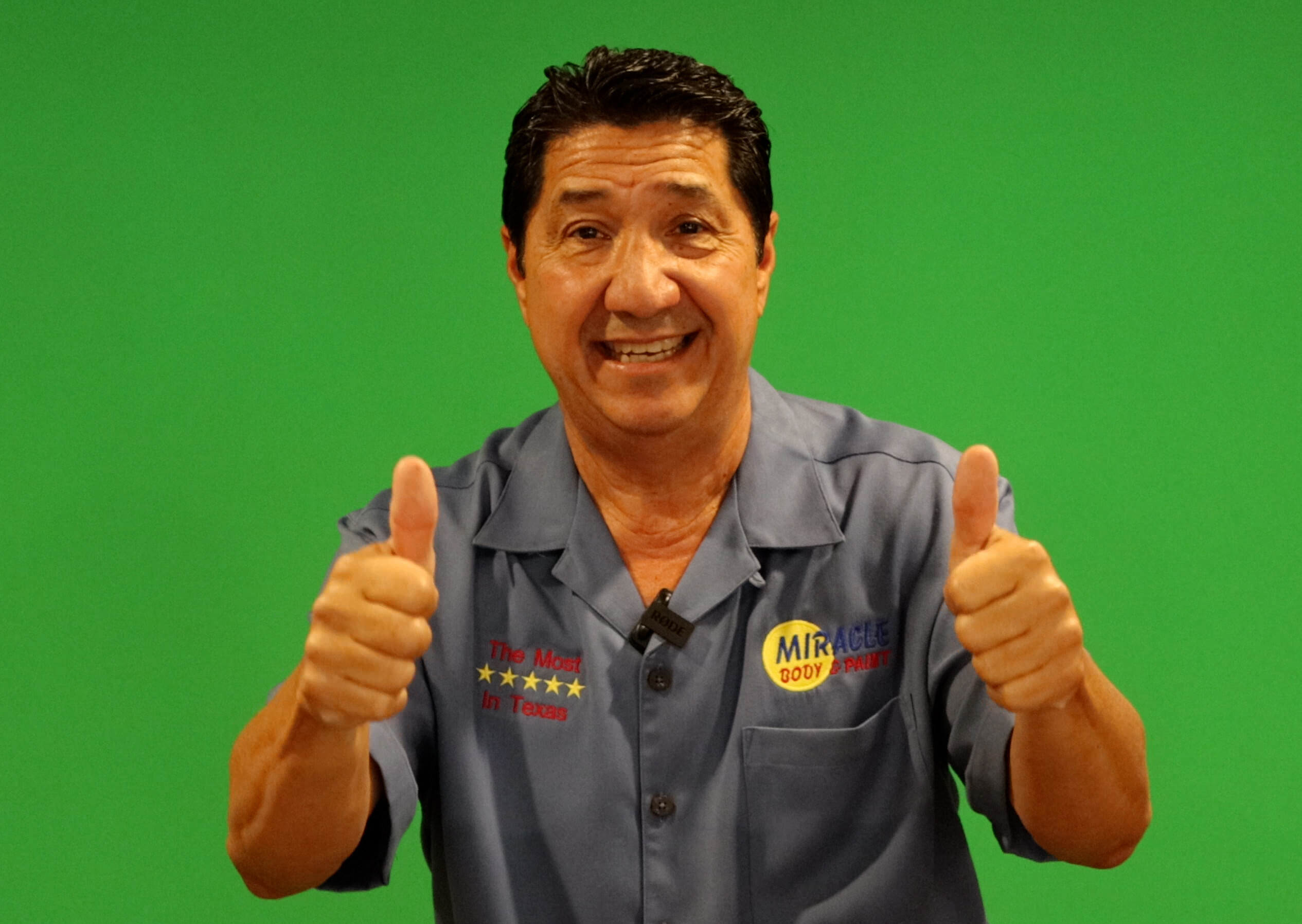 Manuel Rubio.
The goal, Rubio said, is to spot when a carrier relationship drifts from collaboration to friction — on parts sourcing, ADAS and calibration operations, labor allowances or valuation — and to pivot into appraisal quickly with a complete, photo-rich file. That keeps the repair moving, contains cycle time and, most importantly, returns the customer a safe vehicle repaired to OEM procedures.
McDorman praised Rubio’s decision.
“I commend Mr. Rubio’s pioneering approach and his visionary decision to create a financial business department at his collision facility to educate his [customers] on their financial options and how to mitigate their losses best,” he said. “The designation by Mr. Rubio to departmentalize the claims handling process at his collision facility is groundbreaking.
“The more transparent the claim process is, the better it is for all parties involved,” McDorman added. “We must always remember and keep at the front of our thoughts, ‘Safe repairs save lives.’”
Rubio’s advice to peers is simple: Download SB 458, print it, read it and start preparing your internal process now. He urges every Texas shop to do this, not just ABAT members.
Build or Share a ‘Business Office’ Function
Think of this as the claims equivalent of blueprinting:
Staffing model. Miracle Body & Paint designated a business office manager to coordinate with writers, review carrier communications, monitor rental/deductible issues, line up third-party appraisers and keep customers informed weekly. Smaller independents can share this function across two or three shops, or the owner can carve out protected time to master the process.
Documentation discipline. Treat appraisal like a sport: produce clear photos, OEM procedure links, calibration logs, sublet invoices, parts availability proof and valuation evidence. A thorough file shortens disputes.
Customer education. Appraisal is for insureds (first-party claims). If a customer is a claimant against another carrier, explain their options, such as filing under their own policy, then using appraisal if needed. Make the hand-offs explicit and close the loop with text/email summaries.
Public adjuster & appraiser bench. Build relationships now. Know who is qualified, ethical, responsive and — if TDI sets licensure/qualification rules — compliant. “Requiring the appraisers and umpires to be licensed, bonded and insured will help ensure a truly unbiased arena,” McDorman said. “Legislators have given [Insurance] Commissioner [Cassie] Brown the authority to do just this. We should do everything in our power to make sure this happens. Always, what gets measured gets done!”
Timelines: The Emerging ‘Muscle Memory’
The Texas right to appraisal law can meaningfully cut cycle time. Industry proposals suggest appointing appraisers within 15 days of demand; a 30-day window for agreement; 15 days to select an umpire if needed; and 30 days for a final decision. Compared to historical averages, those checkpoints could trim four to five months from long disputes — a major relief for insureds and shops managing rentals, parts flow and bay space.
Even before final rules, shops can internalize a Day 0 → Day 15 → Day 45/60 → Day 90 cadence and build task reminders to match that rhythm.
Practical Triggers for Invoking Appraisal
Rubio’s team looks for patterned friction, the moments when a file stops being a discussion and becomes a delay:
• Parts sourcing games.
• ADAS and calibrations under-allowances despite documentation.
• Labor rates anchored to opaque “prevailing” studies.
• Total loss valuations that don’t reflect true actual cash value (ACV) or push-to-total decisions that don’t meet Texas’ threshold.
Those are classic amount-of-loss disputes. If you’re off by $4,000-$10,000 — very common, per Rubio’s case mix — appraisal is usually the fastest path to resolution, often within 60-90 days when both sides engage.
Case Snapshot: ‘Not a Total’ Becomes a Safe Repair
Rubio cited a customer, “Ms. Rosa,” whose carrier tried to total her late-model vehicle. The shop presented ACV support showing the car was worth more than the carrier’s figure; they invoked the Texas right to appraisal, repaired and returned the vehicle, and the file settled in roughly 60-65 days — about $14,500 of receivable resolved without litigation.
He shared similar patterns on calibration allowances (e.g., $1,400 documented vs. $495 allowed) and missed operations, with independent appraisers sometimes adding or trimming items, but landing near the documented plan. Across Miracle’s files to date, Rubio said the shop recovers roughly 80% of disputed dollars once a case is packaged for appraisal.
What to Tell Customers — Plainly
Shops earn goodwill by explaining appraisal in human terms:
• “If we can’t agree with your insurer on the repair amount, Texas law gives you an independent, third-party path to settle that disagreement. It’s called appraisal.”
• “It’s not a lawsuit. Two unbiased appraisers review the facts; if they disagree, an umpire decides.”
• “There may be appraisal costs. We’ll be transparent about those and why they’re often worth it.”
• “If you were hit by someone else: we’ll talk about filing with your carrier so you can access appraisal if needed.”
This last point matters, because SB 458’s protection is explicitly for policyholders (first-party). It underscores that appraisal is a consumer-friendly option designed for insureds over amount of loss, far more efficient and affordable than litigation.
Tech That Helps: Claim-Side Transparency
While your estimating system anchors the repair plan, consider tools that streamline the claim side: document repositories, secure portals, automated updates and task checklists aligned with the appraisal timeline. The aim is a transparent, trackable claim file that an independent appraiser can digest quickly.
Action Steps for Texas Shops in Q4
• Download SB 458, print it and train to it.
• Define the role. Appoint a business office manager (solo, shared or fractional).
• Pre-build your file. Create a standard packet with OEM citations, calibration logs, comparables, photo sets and a short memo.
• Stand up your appraiser network. Identify qualified, unbiased appraisers/umpires now.
• Script the customer conversation. Provide clean language for insureds vs. claimants.
• Track the clock. Manage to a 15/30/15/30 rhythm and document every touch.
Bottom Line
SB 458 delivered the tool. The competitive edge now belongs to shops that operationalize it, turning “right to appraisal” from a headline into a habit. As Rubio put it, when you put someone in the customer’s shoes and professionally handle the claim, you lower stress, protect the repair plan and get families back on the road in vehicles repaired to design intent. That’s good for consumers, for shops and — when rules are clear and followed — for insurers, too.










Leona Scott