



It may be time to contact your local trade schools — plural. And by local, we mean regional.
States often have one centralized technical training site for many high schools, sometimes organized by district.
A single county can include multiple districts, with many auto collision programs across a wide area. Nearby counties may add more. And within those, there are several community colleges and a handful of private operators.
Why connect with them?
In recent months “the trades” — blue-collar, hands-on, skilled technical work — have been widely discussed as an AI-resistant career path. Historically, these roles have endured shifting economic trends.
When “outsourcing” was all the rage, people soon realized some jobs can’t be shipped overseas. The same logic applies to AI, which even depends on certain trades for its own growth.
Collision repair isn’t excluded. Crash Champions CEO Matt Ebert has has spoken in the media about the value of the trade. A recent, widely circulated Wall Street Journal article highlighted white-collar workers moving to blue-collar labor.
What do you seek?
People, of course. But more precisely, signs of life — as in rebirth and growth.
Public entity trade schools respond to local workforce needs and funding cycles. Renovation and expansion projects take years to execute.
Pay attention to everything from financing and development discussions by local school boards to state budget talks referencing automotive.. Funding for mechanical and collision training is often bundled together.
‘The future is water-based’
Columbiana County Career and Technical Center in Ohio broke ground Dec. 1 on an expansion that will grow its automotive teaching space from 16,000 to 20,000 square feet. The $6.7 million project includes new equipment. Superintendent Jeremy Corbisello told local media that the goal is a “modern space to provide real world learning experiences.”
“Our job is workforce development,” Assistant Superintendent Jordan Williams told Autobody News. “We’re seeing our enrollment increase. Our automotive has been very sought after.”
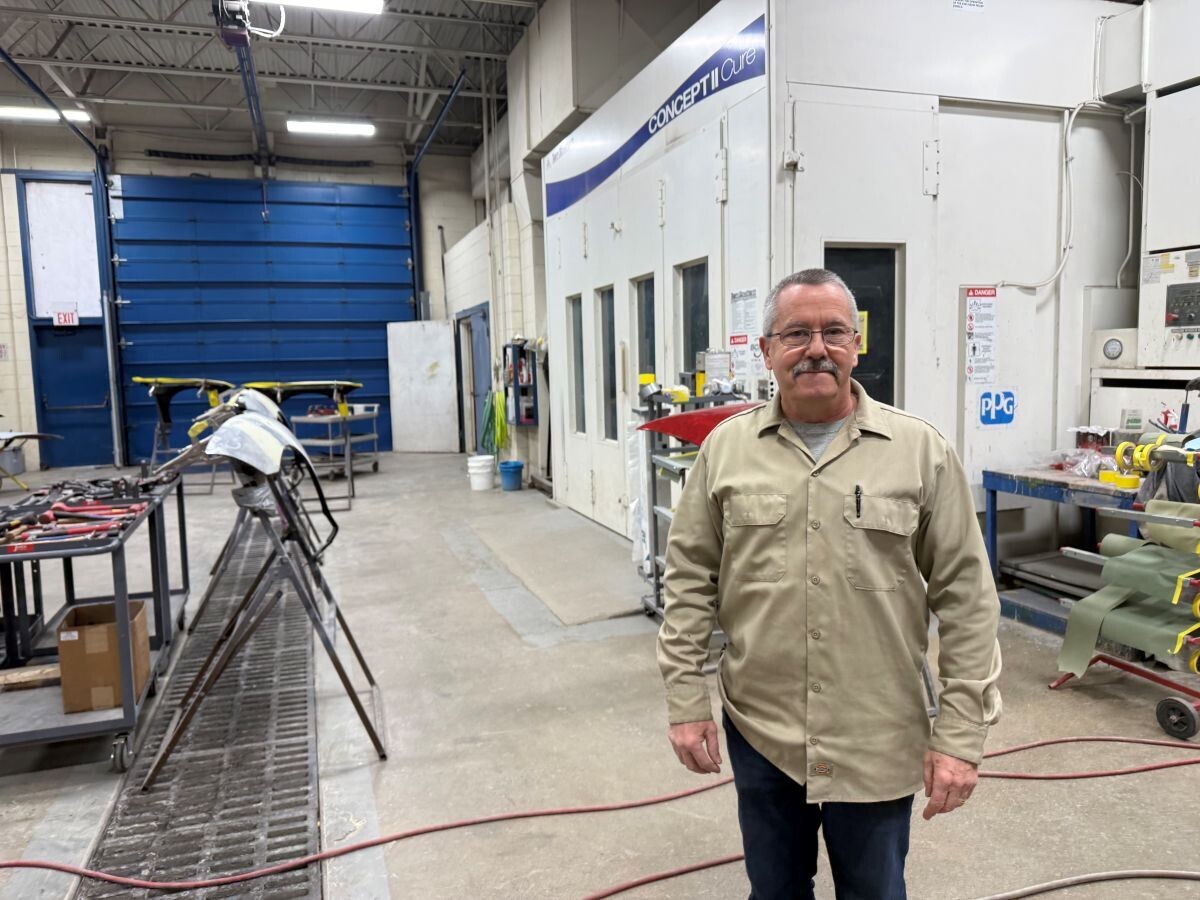 Rick DeSalvo, collision instructor at Columbiana County Career and Technical Center, says the expanded facility will focus on core repair fundamentals, including waterborne paint and modern frame scanning.The center serves several schools. Its transportation teaching can expand to 100 students from their current 80, split between mechanical, under Brian Neff, and collision, under Rick DeSalvo. That represents 20% of the 450 to 500 kids at Columbiana. Other trades, including a welding program, may move into auto’s old, refurbished space.
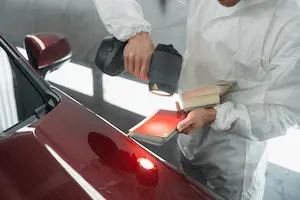
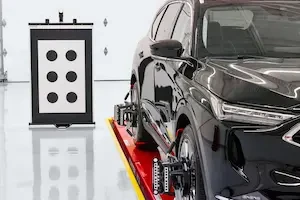
Curiously, considering the hype we hear over emerging technologies, new equipment will focus on the fundamentals: a new paint booth, mixing and blasting rooms, frame scanning, spot welder for multiple materials, and lifts.
DeSalvo noted a “downdraft baking paint room, mixing room built right of it [and] designated for waterborne paint.” He noted, “We still spray solvent but the future is water-based.” For other training, he utililizes Collision Hub and 3M.
Students work most of the week in body shops, including at larger regional dealership group Body by Cochran. Williams said the new facility, expected in early 2027, will mirror the layout and workflow of a dealership and its service center and collision repair.
Growth and expansion are market-specific
Ohio, in general, appears to be active in automotive generally, which includes mechanical. Western New York reports future growth as well, with Vincent LaVerdi telling Autobody News the full program at SUNY-Erie plans an expansion that, depending on how it plays out, could add 12,000 square feet to the 25,000 it uses now.
He highlights the Erie program’s “robust advisory boards [and] letting industry drive where curriculum goes.” Recently, it received $1 million from West Herr Auto Group. The program is also heralded for women in tech.
Growth is not limited to traditional industry regions. There are reports of growth in tech training or in mentorship programs in Gainesville, Ga.; Bethesda, Md.; and Hawaii.
Like your own business and customer base, talent development is market-specific.
So look around, check-in, track the money, then connect. Renovation and expansion projects are prime opportunities to get involved with high school and community college vocational programs. Introduce a teacher to reputable equipment vendors and help shape the curriculum.
Complaining about apprentice quality doesn’t accomplish much. So change it. Schools are having their moment. Go get yours.


Paul Hughes