



“There’s always someone in mentorship here,” said Ronald Delano Jr., who owns Ron’s Collision Center in Somerset, PA. One worker who started at the shop out of vocational school, within two years became Delano’s lead painter. “True mentorship is working side-by-side.”
This isn’t “‘oh, they’re in the back there, in training,’” Delano added. “You sit at the feet, and the mentor has to be disciplined to let him, you know, someone has to take that risk, and they fail.”
Two guys doing the same thing, and one of them doing it wrong. Yes, a true mentorship program will cost — same as a new paint booth would.
“This is an investment,” Delano said.
Sure, you start ‘em small — a quarter panel, say. “But the mentor is right with them, by their side. Eventually, mentees move out on their own and mentors become, Delano said, more like consultants. A teacher people go back and visit at their old high school, or even call for counsel as young adults in the working world: the shop.
But we’re ahead of ourselves. First, as Tug McGraw said of the ’69 Miracle Mets: “Ya gotta want it.”
Moonshots and Toilets
An anecdote-now-motivation-legend has President John F. Kennedy at Cape Canaveral in 1962, asking a guy with a broom what he does there. Says the guy, a janitor, “I’m helping put a man on the moon.”
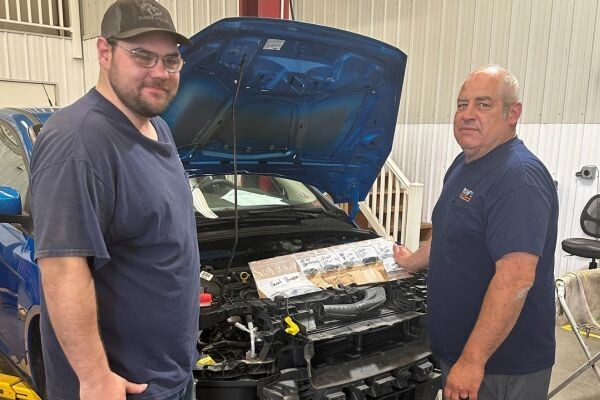 Also at Ron’s Collision Center, Scott Mitchell guides Aaron Trulick in the repair planning department on how to set up parts bag boards.
What he didn’t say, of course, was “I clean toilets.”
Delano tells that tale to illustrate the mentoring mindset for mentor and mentee. “The guy who wants to put men on the moon, he’s part of a bigger mission, one with dignity.” True mentoring isn’t technical training.
“It’s not a quick, how-to fix; it’s way bigger, deeper than that,” he said, including “culture, mission, coaching, expectations. It’s who you are and ‘why am I here?’” he said. Hiring and mentoring come after. “Answer those questions first, you’ll have a blast.”
Delano in the mid-1980s bought an existing shop of about 6,000 square feet. First alone, and gradually adding staff, six to eight guys. In 2001 he bought commercial land and built a shop twice the original size, and felt he had to think about how to get his money back out of that investment, that expense.
For 10 to 15 years he was in that mode — “trying to do it like everyone else, better than everyone else.” It was wearying, and wearing on Delano and his staff, which today totals about 25. “It’s lot of stress and anxiety.”
Delano was still cleaning toilets.
“We had to leave that safe place,” he said.
Soul-Searching and Some Specifics
The full account begins with research: Delano read “The Culture Solution” by Matthew Kelly and “Who” by Geoff Smart and Randy Street. The first is about building a daily dynamic people want to be part of, where they want to come to work and do great things. Among other elements it elaborates on the Kennedy-Canaveral anecdote, describing the difference between “laying bricks” and “building a cathedral” — and saying nearly nothing about pizza on Fridays. The second hits hiring, with Delano describing it as: “Not ‘what’s wrong,’ but ‘who’s wrong.’”
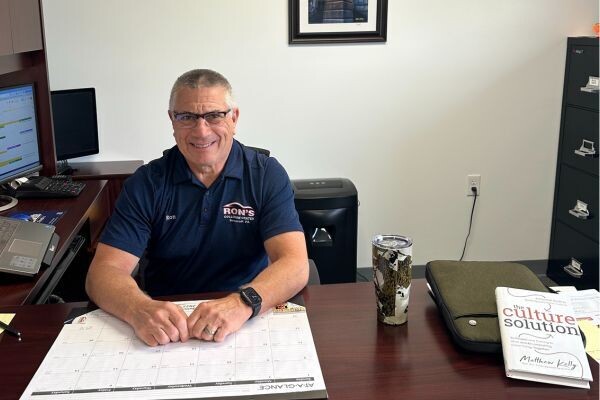 Ron Delano with his copy of "The Culture Solution" by Matthew Kelly.
The first person to “hire” is yourself.
“It’s an internal change: you can’t change other people, only yourself,” he said. But once that begins, when you “decide who you want to become we can interact with others, and they’ll work on us and we’ll work on them.”
So shedding safety includes internal work, then specific elements such as the kind of place your shop is and the people in it. An irony out there is big MSOs taking flack for their practices as supposedly indie shops mimic all of them.
“I experimented with pay plans, driving performance,” Delano said. “Huge mistake.”
Instead, “Ten to 15 years ago, we went from being in the car business to being in the people business.” Down from a dozen DRPs — he now has two. He seeks the “career path and purpose for employees. Dignity: what’s their ‘working geniuses.’”
Seeking and Finding Help and Resources
“All these led to a mentor program evolving from trying to care about people more,” said Delano.
He met collision repair consultant Matt DiFrancesco on a plane — discovering they live about 30 miles apart, that they both had years of experience in the industry and, more importantly, were both “trying to figure things out. We had a passion to help people,” whether that was owners or employees or customers.
They didn’t want to lay bricks.
DiFrancesco’s work through his company, High Lift Financial, focuses ultimately on exit strategies for owners, but is like a shop where profit starts with people. You need to know when or even whether to sell, and how your company should be — not just look. For mentoring, he’s talked on his podcast with Brandon Eckenrode, executive director of the Collision Repair Education Foundation (CREF), and mini-legend mentor Stan Russell, for counsel and contributions.
Among other efforts, nonprofit CREF develops apprenticeship programs. Amber Ritter, CREF director of marketing and project management, who has also worked with Collision Career Institute, affirmed Delano’s dedication to people and place. And the two are united by this: finding the right fit.
Potential apprentices like CREF scholarship recipients should research shops to “ensure it’s the right fit before you even go. Do you see other people being mentored, what is the culture, ask the right questions, during your interview,” Ritter said. This extends to type of shop too — “mom-and-pop, midsized MSO, consolidator.”
This is the mirror image of shops looking for the right people, and being the right place for them.
Collision centers should “get involved with school advisory committees, see how students work: how do you pair the right people for mentorship? It might not be the ‘most productive’ techs,” she added. “Shops need to do the groundwork to be ready.”
To Start Mentoring, Look Inside and Out
Part of Delano’s aim here is team chemistry — for instance, a “person who doesn’t say no, and who suggests [to customers], ‘let’s pull it in and take a look.’” These aren’t boxes on a checklist, they’re “byproducts of us caring about people.” Other markers: “Don’t hand off incomplete work, do the next right thing.”
Ritter’s tune could also be a duet with John Melendez. The peripatetic Chicagoland shop operator is as active outside the shop with the next generation of painters and techs as he is on the inside with what’s happening today.
He’s also a big booster of I-CAR’s apprenticeship efforts, including, for example its Academy. This can, as a side benefit, get a shop tax breaks through the U.S. Department of Labor, but more fundamental is the integration of owners doing “schoolwork” — for instance, the advisory committees Ritter noted. Meld mentoring within the shop — Melendez’s JDM Collision has a lead painter with teaching experience — with I-CAR work, and get involved with other shops to grow these efforts.
To find possible newbies who can come aboard under your shop’s mentoring crew, stay alert. If you’re eating out or shopping at the mall, watch servers and retail staff interact with customers. Look more for “how” than precisely “what” and you’ll discern some “why.”
Observe young people’s behavior on social media. A recent post by a 2021 high school vo-tech grad was brief, direct, personal and polite. It noted collision repair as a “top pick,” family connection of working “alongside my grandfather,” some resume (running a detailing business, working at two body shops), then certifications (OSHA, I-CAR) and skills “I know how to paint…disassemble…prepping, sanding and more, and I have my own tools” with — notable for social media — not one single word of complaint.
Where Can Mentoring Take Techs?
“Mentoring to me is a lifelong commitment,” said Stan Russell, who runs collision tech training at Franklin High School in Williamson County in Tennessee. Russell has 41-plus years in the business: owning a shop by age 25, then for nearly a decade following; a VP role with Service King; and teaching — really, mentoring.
“I’ve taken a completely different approach,” Russell told Autobody News. “My philosophy going in was if I could help just one person…”
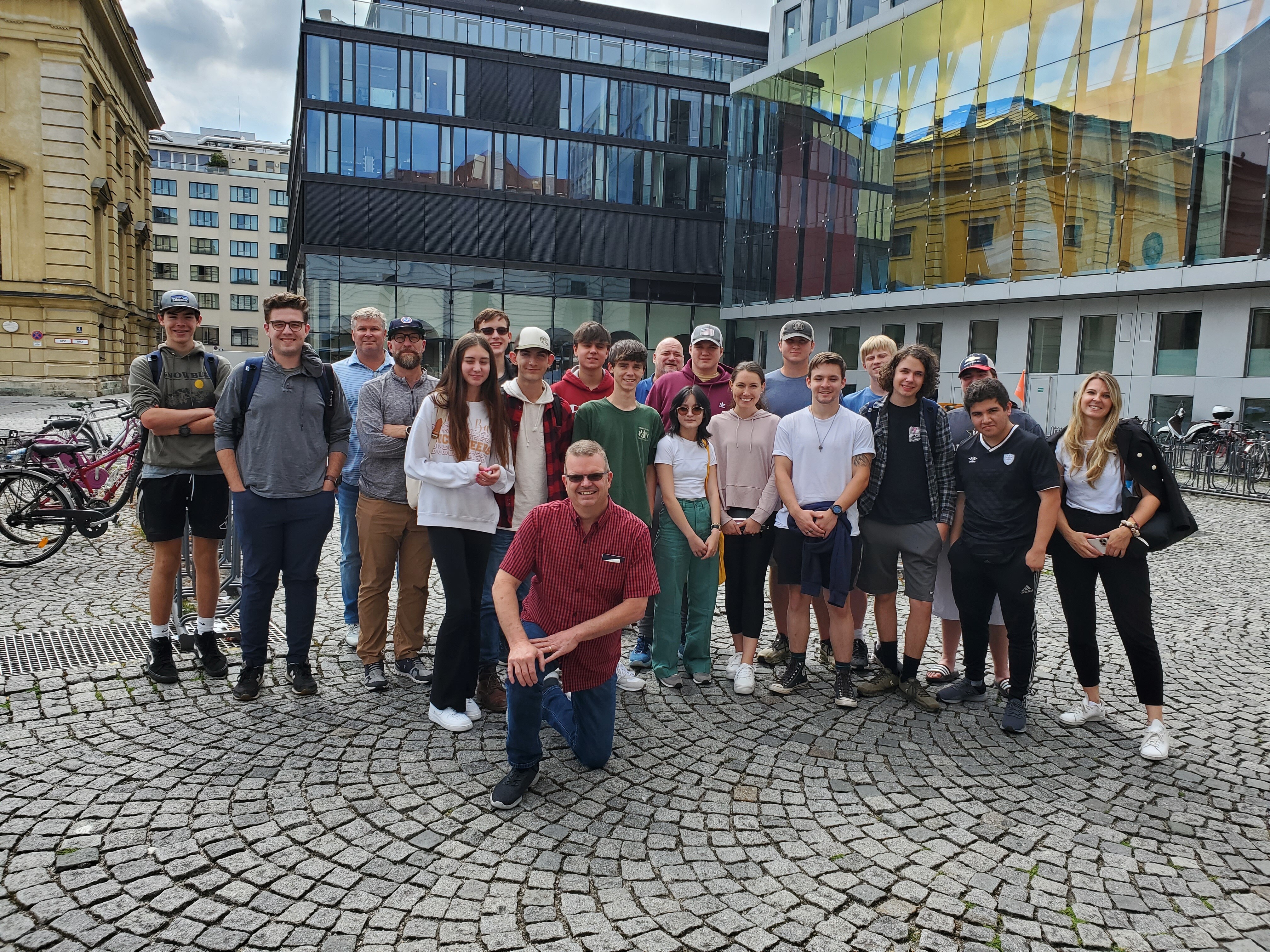 Stan Russell and students in Europe.
He’s helped more. Hundreds of graduates over the years, 60 students annually at Franklin, still talking with 20 former students, including some from his earliest years, with an occasional wedding invite. Next year he plans to begin consulting as well, to extend his work.
He took a group of students to Germany and Italy in 2021, visiting carmakers including Mercedes-Benz, BMW, Lamborghini and Ferrari, and academic and historical sites. Then it all returns to the local work, dovetailing, as it happens, with what Melendez, Ritter and Delano say: it isn’t about getting bodies and sticking them in a job.
“I’m not trying to convince you to be a technician. My goal is to expose students to the endless opportunities in automotive on a global scale,” Russell said.
“There are hundreds of ‘jobs’ connected to all we do,” he said. Learn what a student wants — that investigative process from both sides Ritter mentioned — and help them find somewhere do it.
“I’m not training future employees, but businesspeople,” he said. If it’s just a job, “they’re not going to stay.”
There’s “no micromanagement” at Franklin, Russell added. “Students work on their own cars,” which doesn’t have to build commitment because it’s already there, coming from within. The kid you want graduating is one you don’t need to motivate.
“Had a kid who disassembled an engine, he had his motor scattered all over the stinking shop,” Russell recalled. “He figured out how to do turbo off a diesel engine, he’s there explaining to me how he figured out barometric pressure, all this complex figuring, and it was done by actually doing it.”
The Second-Best Time to Start Mentoring
As with planting sequoias, the best time to begin is yesterday; the second-best time is today. Collision center owners treat an operation as a financial entity, but Delano considers it more a “creative display of who I am.”
He knows it costs time and money, a truth Melendez echoes. Delano realized early into the effort, “If we want to grow our own people, our pay plan was counterproductive.” Flat rate is out, if someone’s going to mentor. Hourly or salary with incentives and rewards replaces it; better yet, find what fits your shop.
“Start rewarding different things,” Delano said. “Don’t reward performance; a good culture and SOP provides performance. Incentivize ‘how do we follow procedures?’” for instance.
And any system costs. The pain of working out or the pain of poor health. Education is expensive, but how much is ignorance? Do we “pay the price” or do we enjoy the returns?
“Other shops try to fill empty slots; we have a system that produces people,” Delano said. “Chaos is out. You walk in, there’s a relaxed feeling; everyone buys into the mission and what we’re trying to do.”
Delano mentors — his succession partners, including one now in his mid-30s who’s spent nearly half his life at the shop. And when he bought the shop 40 years ago, “that guy helped me get my start. He carried paper on the deal and was a guy I could lean on. I had a mentor.”
None of this means it’s easy. Anything worth doing can hurt like hell.
“Learn by the school of hard knocks, trial-and-error, find new ways. We don’t hoard what we’re doing because we don’t want someone else to grow,” Delano said. “It’s complex, building a system where we care about each other. It’s what the world needs.”



Paul Hughes