


When Helfman Collision Center in Houston prepared an estimate for a 2020 Jeep Grand Cherokee, the total came to roughly $12,200, and the shop believed the vehicle should be declared a total loss. They shared that opinion with both the customer and the insurance company. The customer believed it, too, and went out and bought another vehicle.
Then, about 12 days later, the insurance company approved only about $7,100 in repairs and ruled the Jeep repairable after all. The shop submitted a supplement at the customer’s request, but the carrier budged only slightly. Even after the customer spoke with the insurer himself, the vehicle remained on the repair track.
The shop did the work. The final bill landed at roughly $12,300 — almost exactly what Helfman had estimated from the start. The insurance company eventually raised its approval to about $9,500, but the customer was still staring down close to $2,700 in unreimbursed repairs, on top of his deductible.
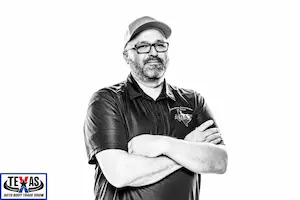
That’s when he picked up the phone again … this time pushing back directly on the final invoice. According to Greg Luther, collision director at Helfman and chairman of the Auto Body Association of Texas (ABAT), the carrier ultimately agreed to cover additional charges it had previously refused to cover.
“The outcome changed when the customer got involved,” Luther said. “Had he simply accepted the insurance company’s original position, he likely would have been left paying much more out of pocket.”
It’s a story Luther keeps coming back to, because it captures something he’s seen play out again and again. In an increasingly complicated claims landscape, the customer is sometimes the only one with enough leverage to get a fair outcome.
“Customers are often in a better position to fight for their own interests than we are,” he said. “When they understand the facts and get involved in the process, they can sometimes accomplish things a repair shop can’t.”
A shift away from the old model
For years, collision shops tried to make the repair process as easy as possible for customers. If an insurer questioned a repair procedure, challenged a labor operation, or refused to pay for a needed part, shops often handled the dispute quietly, behind the scenes. The goal was to properly repair the vehicle while sparing the customer the stress of dealing with their own insurance company.
Luther said that the approach is becoming harder to sustain.
“As an industry, we’ve spent years trying to take care of everything for our customers,” he said. “The problem is that many of these disputes directly affect the vehicle owner, and they need to understand what's happening.”
That’s partly a function of how much the relationship between shops and carriers has changed.
“There was a time when shops and carriers worked together for the mutual customer,” Luther said. “Over time, it became more about controlling costs.”
As OEM repair procedures have grown more demanding and ADAS have become standard equipment, repair costs and complexity have climbed. At the same time, many shops continue to face pressure to hold costs down through alternative parts, labor limitations, and reimbursement disputes. For years, repairers absorbed much of that gap rather than pull the customer into it.
“We did everything we could to take care of our customers,” Luther said. “But eventually we realized we couldn’t continue absorbing those expenses and still operate a healthy business.”
Luther believes one of the costliest mistakes a shop can make is trying to satisfy both the vehicle owner and the carrier when their interests no longer line up.
“You can’t serve two masters,” he said. “At the end of the day, we have to remember who we’re working for.”
Getting customers involved earlier
Rather than waiting for a dispute to reach a breaking point — as it nearly did with the Jeep — Luther encourages shops to bring customers into the conversation early.
Many vehicle owners assume their policy will cover whatever is needed to restore their car to pre-accident condition. Few understand the gap between what a manufacturer requires and what a carrier is actually willing to pay for.
“Everyone thinks they have full coverage until they start seeing what is and isn’t being paid for,” Luther said.
Walking customers through OEM procedures, parts requirements, and repair documentation gives them the context to understand — and question — the decisions being made about their vehicle.
The goal, Luther stressed, isn’t to manufacture conflict.
“This isn’t about fighting with insurance companies,” he said. “It’s about making sure customers understand what their vehicle needs and what's happening throughout the repair process.”
Setting expectations from day one
Luther believes that education should start well before repairs begin. At Helfman, the repair authorization process has evolved to spell out clearly what the shop and the vehicle owner are each responsible for.
“A simple two- or three-sentence repair authorization no longer cuts it,” he said.
Clearer documentation helps customers understand potential costs, potential claim challenges, and payment responsibilities before any surprises arise later in the process. Luther also encourages shops to take a hard look at their labor rates, understand their true cost of doing business, and work with legal counsel to make sure their repair contracts actually protect the business.
“Shops need to know what it costs to operate and make sure they’re charging fairly for the work they’re performing,” he said.
Remember who the customer is
As more states explore consumer protection measures and vehicle owners become more aware of their options when disputes arise, Luther returns to one principle that hasn’t changed for him.
“The biggest lesson I’ve learned is remembering who I work for,” he said. “I work for the vehicle owner.”
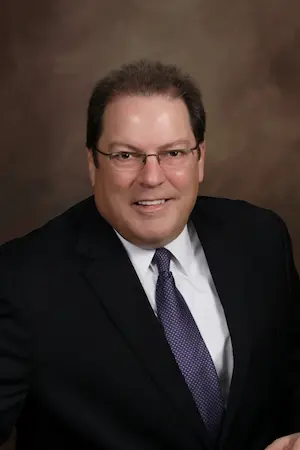
Tools like Right to Appraisal can give consumers another avenue when disagreements happen. That option has only gotten stronger in Texas: Robert McDorman, founder of Auto Claim Specialists, and ABAT recently claimed victory in a modern-day David-versus-Goliath battle, with the right to appraisal now mandatory in every personal auto policy sold in the state.
McDorman sees that win as part of the same larger point Luther is making.
“I would just echo Greg’s message that transparency and education are priceless and should never be short-stepped,” McDorman said.
Luther sees the bigger opportunity is in helping customers become informed participants in their own repair, from the first conversation to the final invoice.
“If more shops represented vehicle owners and helped them understand the process,” he said, “I think we’d all be in a better place.”




Leona Scott