



Work smarter, not harder.
That’s the bromide — now with bite.
Adding revenue streams like wheels, paintless dent repair, sales, and rentals might not be top-of-mind, but it should be. Accepting less than your work is worth, no; cutting costs in efficiency, not slashing services or payroll, sure.
But look for more ways simply to make more money. The benefits aren’t one-to-one or one-and-done.
Cars, cars, cars
Montrose Auto Group in Ohio added car sales, while B.A. Krom in upstate New York has been selling used Subarus for years. Timothy Lynch in Wisconsin runs Lynch Auto Body Inc. — 5,100 square feet at one site — while not far away, on a separate parcel, he also owns two buildings totaling 7,600 square feet, he told Autobody News. He sells cars.
Dave’s Auto Body in Illinois has rented vehicles for four decades, a recent item in the trades said. Tim Paap in Illinois has run a Hyundai rental fleet. A shop in Texas is considering it.
Why not two cupcakes?
A rental fleet eventually produces vehicles you can sell. Or perhaps rentals are a courtesy to draw business or a charge on the invoice that can be comped if needed without affecting repair pricing.
Or, you could even call dealers in your area to gauge their taste for an even grander plan. Would they make loaners available with models strikingly similar to those you’re fixing, but newer? Would those dealers further see the value in putting a driver behind the wheel who already likes that make and model? On average, don’t people dump a collision-repaired vehicle within 18 months?
In any event, simply consider how often customers have had to figure out a rental, and how much easier it is for them to return it to the place where they pick up their repaired vehicles.
This is not just glass and hail and rims and space for detailing — though don’t say it like it’s a bad thing.
Car guy-adjacent
Thomas Jefferson had a lot of ideas. A big one: the entire University of Virginia, which he designed. A better-known one: the Declaration of Independence, 250 years young in 2026.
John F. Kennedy called a gathering of Nobel laureates the greatest accumulation of knowledge in the White House “since Thomas Jefferson dined alone.”
Be like Tom.
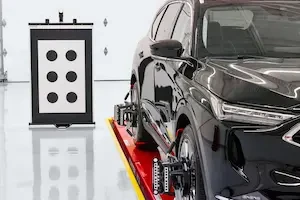
Or at least like Drew Bryant, who looked at the land and buildings available at the second location in Florida for db Orlando Collision and seeks an independent ADAS op for the second one, way in the back. It’s where his shop will do its own work of that sort and be the outsourcing source for other shops in the area.
Mark Gentile’s family in Michigan did the same thing.
Or at least like Jonathon Best, who, in working the AI angle at Better Collision Centers in South Carolina for his own regional MSO, ended up starting a second independent business to sell services to other shops. It could be considered a high-tech version of car detailing and rims, or the old-school hail and dent repair mentioned above. Or the rental and car sales, which are two things that flow into each other.
Here’s another: A custom shop operator in Arkansas sells vintage parts on the side and has $2 million in inventory.
The car rental and sales you just launched should be a separate operator anyway, right?
Body shop-adjacent (literally)
The point is: think about what you have and what you might do with it.
Drew Bryant could consider an independent ADAS op because his real estate shopping revealed the chance, and “chance favors only the prepared mind,” as Louis Pasteur famously said.
If you don’t prepare, it won’t happen.
Though it could come without your cooperation. Owners and operators find that if a thing’s going to happen, some good can be made of it. Trouble and tension bring new rewarding wonders.
Look at the size of your building and the lay of your land.
Do you have “more than enough” for what you’re doing? Have you found more real life from scaling back during a slowdown, and now you can codify and solidify that? Bring in or begin a mechanical repair offering or consider sharing space. A shop in Oregon did that.
Find a use for that land. It could pay off. Multiple shop listings, often for operations as scrappy as shortstops at under 5,000 square feet, cite side hustles, on-site tenants, or several acres of land. Sometimes there’s all of the above, including glass replacement truck parts, towing, RV or general storage, a used car license, and permitting in place for expansion.
When you want to sell, extra effort now draws attention later.
What can brown dirt do for you?
Depending on the condition — grass, asphalt, or grass growing from asphalt — at least build goodwill and market your shop, making space available to community groups for picnics, charity car washes, and more.
Expand your view of expansion.
Don’t laugh. It’s everywhere.
Jody Sipple in rural Kentucky put two trailers near his 3,200-square-foot Country Boys Auto Body. “I had two rental properties, and I sold one of them,” he said. One was a cash infusion; the other is still an income stream.


Paul Hughes