


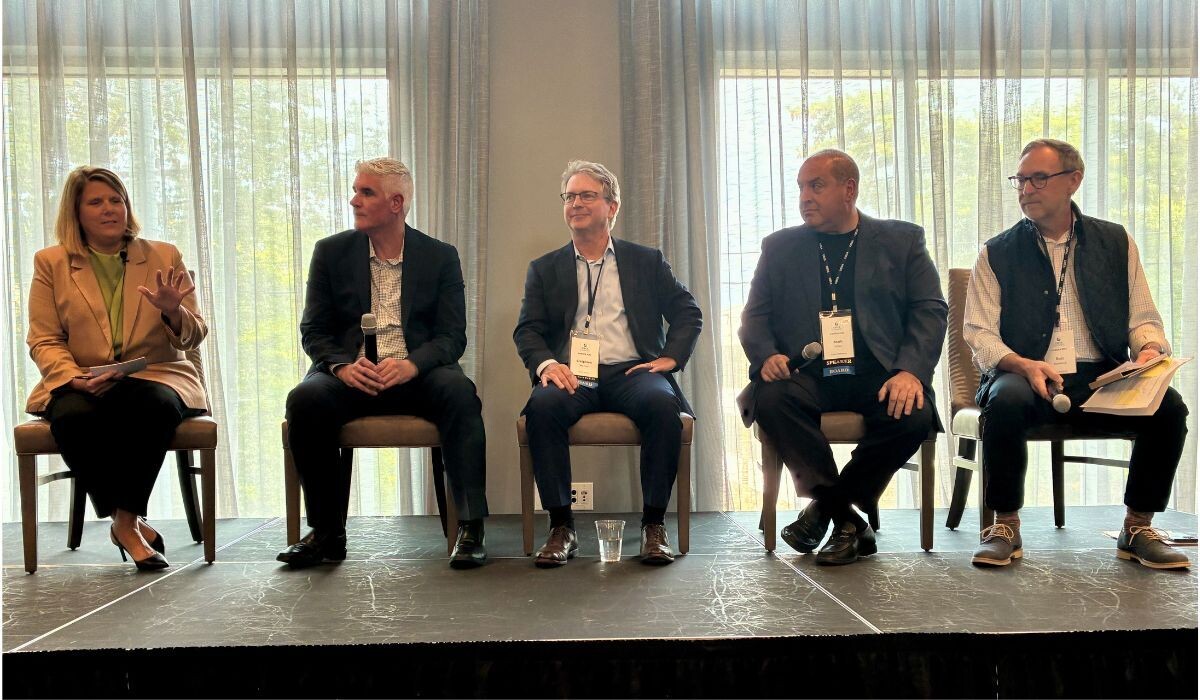
What role artificial intelligence (AI) is playing in the collision repair industry — and efforts to strengthen the systems tying shops to their parts suppliers, insurers and other trading partners — were among the key topics at the CIECA conference in Nashville.
“There’s just a wild amount of noise that exists in this space today around AI,” Ryan Alley, chief information officer (CIO) for Classic Collision, which operates more than 300 shops in 20 states, said during a panel discussion featuring CIOs from five collision repair business.
“A lot of it is speculation or really great marketing, and there were months and months of, ‘AI is going to fix every problem,’” Alley said. “And then over the last few months, there’s been a whole other kind of argument that, ‘Nope, it all fails. Every dollar that anyone put into AI, they didn’t get anything back.’
“The reality is neither of those things are true,” Alley continued. “There is a massive amount of opportunity that can be unlocked through AI, if you know what you’re trying to achieve, and you have pretty clear objectives going into it.
 Ryan Alley of Classic Collision said the promise of AI is sometimes overblown and sometimes dismissed — and neither extreme is accurate.
“If you look at opportunities to really unlock the value of the people within your organization, allowing them to spend more of their time doing the things that they’re good at and doing the things that add value, and offload things that are more repeatable and further upstream, there is an incredible amount of value that can get [achieved] within the organization,” he said.
Another panelist, Mark Miller, CIO for Crash Champions, which operates more than 600 shops, said he views the applications of AI as “almost limitless” within the industry.
“We’ve worked with a lot of our partners on using AI estimatics,” Miller said. “Taking the human component out of writing an estimate is a huge productivity gain. And that’s really the basic premise of AI. A lot of people think it's to eliminate jobs. It’s when you couple it with the human component, it actually yields more productivity.
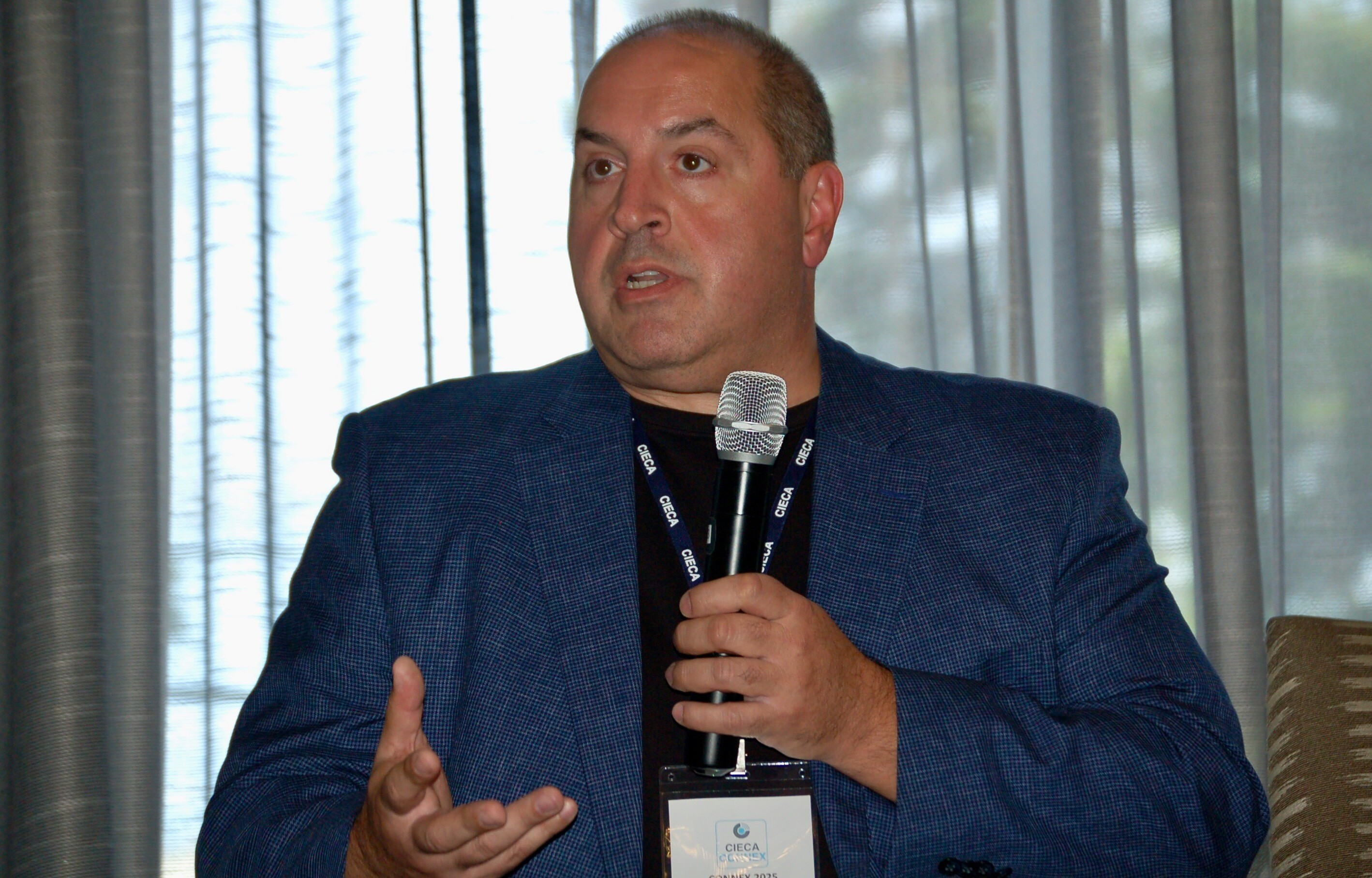 Mark Miller of Crash Champions said AI is proving effective at generating initial estimates.
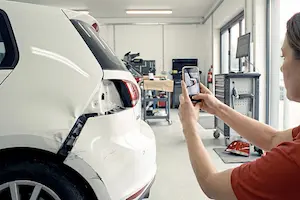
“So we work with a lot of vendors on let’s get to the point where we take the human out of the early part of the supply chain,” Miller said. “So when you do intake, you’re doing photos and you are sending it right to the estimatics tool to start to write some of that estimate for you. We’ve been watching it for about four months and there’s no hype to it. It actually works.”
Miller was asked whether he sees AI being used to create an actual repair plan, or just an initial estimate of repair costs. Miller acknowledged the systems aren’t writing complete estimates.
“We are working with models that are writing 60 to 80 percent of the estimate, and then we become the auditor,” Miller said. “So it’s no different than if I received an estimate from an outside source, say, one that I got from a carrier. My job is to then audit that estimate. It’s really the same thing here.”
He said his organization is looking at other ways to use AI to reduce the growth of fixed costs as the organization grows.
“I can do that by offloading the things that don’t require a human to AI, and then have oversight into what the AI is doing,” Miller said. “You would manage it just like any employee. So when we use it in our call center, you're still listening to the calls, you’re still coaching it and you’re training it just like you do a call center person. We’ve had a lot of good luck with it.”
Working on Four Key Areas
The panelists discussed four key technology areas which they are working on jointly to improve.
“We came up with four areas that we think are table stakes, that we’re not going to compete on [in order] for our industry to get to what we consider base level technology in 2025,” said Creighton Warran, CIO of Boyd Group, parent company of Gerber Collision & Glass.
He said the first one is open integration.
“The predominant way we share data among stakeholders is a [1994-based] EMS data pump, and that’s pathetic. It’s not appropriate, it’s not modern and it can be done much, much better,” Warran said.
Russ Steinbeck, CIO for Joe Hudson’s Collision Center, said web enablement is another one of the four areas the MSOs are working jointly to improve.
“Right now, for example, estimators may have to work on two different platforms,” he said. “We have to train them in two different ways. They have to know two different ways of processing things. So what we want is not only seamless integration between the solutions, but even seamless integration within a solution. So that I’m able, for example, to just stay on my phone and do everything on my phone. I don’t have to stop, go to the computer and come back to the phone. And key to that, I think, is the open transfer of information between systems.”
Miller said data security is the third area the group is focused on.
“We work in a vast ecosystem, and we need to protect that investment, because if we take the steps to protect it, everybody wins,” Miller said. “If there’s an outage in any part of the ecosystem — let’s say we have an issue with a procurement provider and we can’t get parts — everybody suffers.”
“Once we have this ecosystem in place, it is critical that we have the controls and the protection in place to ensure resiliency,” Alley said of the fourth area on which the MSOs are working jointly.
“Over the last couple of years, we’ve seen a number of different examples of how the interoperability and the reliance across the ecosystem has a cascaded effect, whether that’s CrowdStrike or CDK or weather-related events,” Alley said. “There are a number of different factors that can impact one piece of that chain and have a cascading effect throughout. So it is really incumbent upon each of us to push forward a system that has a high degree of resiliency so that we can maintain the benefits that come from that ecosystem.”
Benefits for Rest of the Industry
The panel was asked whether the work they are doing on the industry’s technology systems will benefit shops beyond large MSOs.
“We’re all using the same systems, we’re all using the same applications,” Miller said. “We’re all buying our parts from similar vendors. So a win for an MSO is going to be a win for the rest of the industry. We don’t want to differentiate [ourselves with this work], we just want to improve. And when you improve a process, you improve it for everybody that’s in the ecosystem.”
“I would say raise your hand here if you want the systems that you use to be less resilient,” Warran said. “Who here wants to use systems that are less secure? Who in 2025 wants to work in an environment where your applications are not web-enabled? And who would not like the integration of data between all the ecosystem partners to work better together? This is like motherhood and apple pie stuff. Yes, it’s going to help us, but it’s going to help everyone that is in the ecosystem as well.”





John Yoswick