Gross profit per repair is the metric collision shop leaders tell us they most want to improve. For the operators furthest along with AI, the gains are showing up before the car ever reaches the bay.
Taylor Moss, vice president of strategic development at Quality Collision Group (QCG), doesn't see AI changing the production side yet, though he's quick to say that isn't his area of expertise. "I don't think we're that close to having real solutions that help make things faster and stronger," he said. "We're not just making widgets in a collision repair facility."
Jinal Dalal, a director of engineering at Google who leads AI and machine learning infrastructure, puts physical AI in the shop about three years out, and expects it to start as narrow tools that help a technician with one task. "It's a very messy environment, it's a hard problem to solve," he said.
Jonathon Best, who grew Better Collision from one shop to 10 and is founder and CEO of BetterX, found the payoff by looking past the obvious. Cutting labor costs is the move that's "pretty obvious for everybody," he said, and his shops do automate administrative work. But they led with revenue. "We focused on the upside of it, not a labor costing scenario," he said.
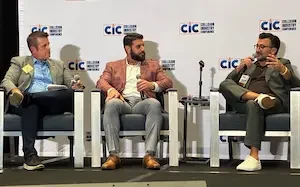
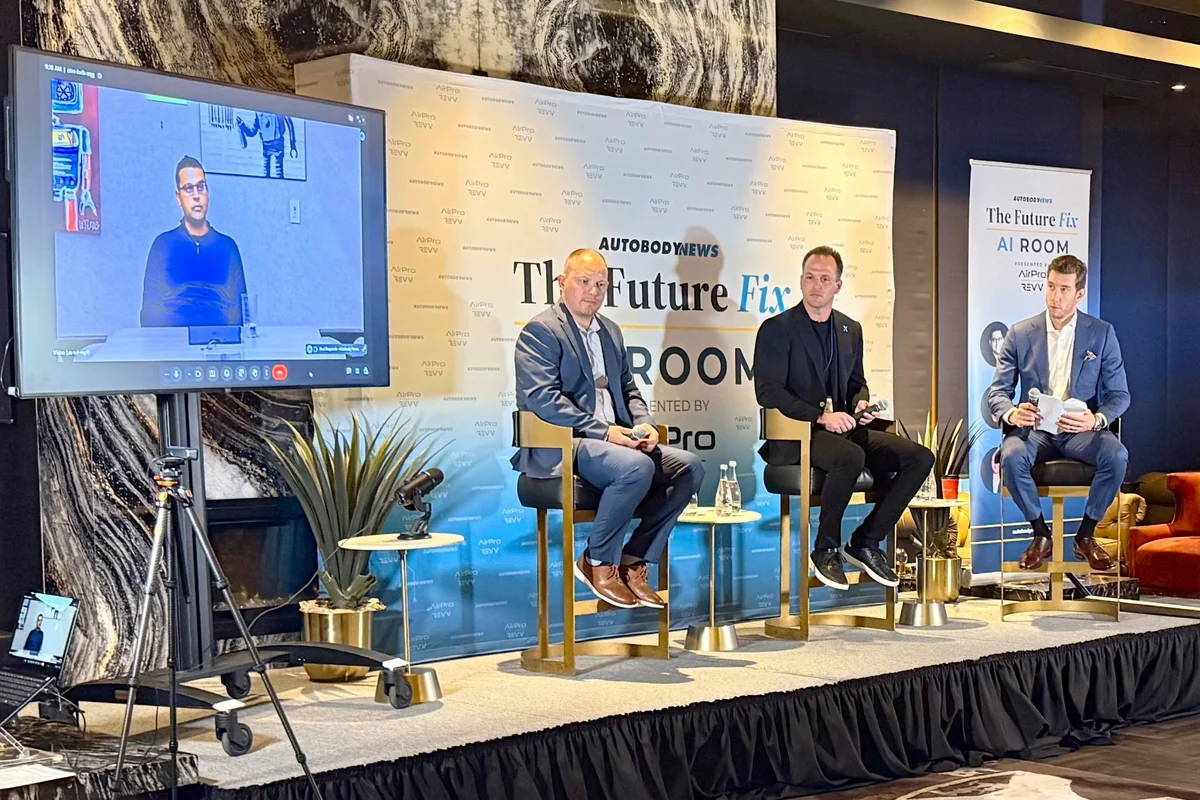
Moss, Dalal, and Best unpacked what they've learned on a panel at the Autobody News Future Fix AI Room in Las Vegas. The session was framed around a single question: whether AI can move gross profit per repair enough to matter. Their experience suggests it can, though not where most operators are looking, not for as long as they might expect, and not without a kind of commitment few have budgeted for.
The margin is around the repair, not in it
For now, AI is earning its keep before a car ever reaches the bay, starting with a number most shops aren’t tracking.
At Better Collision, the upside was hiding in revenue that slipped away unnoticed. "Phone capture ratio. That was a metric that didn't really exist, that nobody was looking at in the industry," Best said. "What we found was pretty shocking." In the shops Best's team measured, more than 80% of inbound calls were status updates, which says as much about how shops communicate as it does about how they answer the phone.
QCG reached a similar conclusion. "We are not great at answering the phone all the time," Moss said. The group now runs millions of dollars a month through AI-answered calls, though Moss is careful about what that figure does and doesn't prove. Both groups have since built systems to close that gap.
The phone gets more repairs in the door, and QCG's second focus is what happens to each one once it's there. Every estimate the group writes is now audited by AI, and the system is turning up repair work worth hundreds to thousands of dollars. It's the most direct line from AI to gross profit per repair, and the estimator still makes the final call.
The edge won't last, but something else will
Moss starts from cost. People are the biggest expense in the business, he said. When it comes to margin, though, he puts revenue ahead of savings. "Saving a little bit of money in the production is not going to move our bottom line much," he said.
Best sees why in his own market. Claim volume is falling and collision sales in his region are generally declining, but Better Collision is growing. "We're taking advantage of our competitors not utilizing these tools," he said.
That kind of advantage has a shelf life. Gains that come from a competitor's slower adoption last only as long as the competitor stays slow. Best expects the competitive picture to change once everyone catches up, which makes waiting for the technology to settle a risky choice.
Dalal doesn't see the advantage in the AI models themselves. Asked whether the largest consolidators should build their own frontier models, the large AI systems underneath today's tools, Dalal said the cost makes it a poor business case.
"It's not a very prudent thing to do from a cost standpoint," he said. The models themselves are getting cheaper and more widely available. Dalal put the right data ahead of capital and speed when it comes to what matters most to be competitive.
Whether a shop builds or buys, AI isn't a one-time purchase. "You're not going to go invest into a button and then now you have the button," Best said. "It's a lifelong commitment for your company." He said that his team has built, broken, and rebuilt its own system for more than a year.
Google goes through the same cycle. "You would think that Google, being Google, we got everything right the first time, even for internal use cases," Dalal said. "We actually don't." The cost teams most often underestimate, he said, is testing whether a system actually works, and it can push a project well past its original timeline.
Who should build, and what the job becomes
Research from MIT found that AI projects built in-house succeed far less often than those bought from vendors or built with a partner. Moss was frank that building isn't the right call for every group, and Dalal drew similar lines. Scale, data, and a particular kind of leader all factor in. Best was more bullish. "I don't think anything's off limits," he said.
For groups that do build, the economics have shifted. "I think we built more in this past year with my time at QCG than I built my whole career in a dozen years before that," Moss said.
The harder part is deciding what to build, and that part travels to any size. "We have hundreds of things that we could work on with AI, but it's like which ones move the needle enough to actually invest in," Moss said. Moss uses a stacked ranking method to decide, built on the assumption that most bets will return only a fraction of what they promise. It works as well for a single shop as for a group of 100.
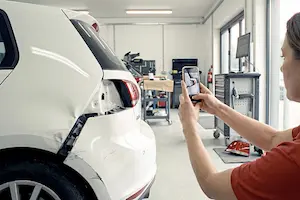
The same discipline is changing who does the work. Asked what an estimator does in 2029, Best boiled it down to four words: "Just take the pictures." Better Collision is already testing the technology behind that answer with its own staff.
Moss and Dalal paint different pictures of the same shift. People move from doing the work to supervising it, and the customer relationship moves to the center. Dalal's experience in software engineering points to where the biggest gains may come from: the hours of work surrounding a task, more than the task itself.
The decisions operators are making now
None of the three panelists put a single figure on what AI has done to gross profit per repair, and the operators were candid that some returns are still hard to pin down. Their experience is still useful to anyone deciding where to begin. It shows where the returns show up first, how long they hold, and what it takes to keep them.
The timing is what makes those lessons urgent. "The AI journey's like drinking through a fire hose," Best said. "There's a twenty-year problem today, and tomorrow by lunchtime it was solved." Dalal's advice was to experiment anyway, because the economics keep improving. "I think we have to try everything with AI, even if it is expensive today," he said. Steps handled manually today, he said, could be agent-driven within about six months, at significantly lower cost.
For operators unsettled by that pace, Moss' advice was to make small bets now rather than large, unwise ones. "It's got to be as soon as possible. It's got to be now," he said.
Every operator now faces the same questions: which losses aren't showing up in any report, how much money is being left off the estimate, what data the business is already sitting on and whether AI can use it, who owns a system after it launches, and whether the shop will be ahead on capture or just getting started when competitors catch up.
The panelists' answers were earned inside working operations, and none of them describe the work as finished. Best put it plainly: "It will never stop."