



An Oklahoma collision repairer is taking a stand for consumer safety and shop owner rights. On Oct. 30, Bell Auto Body announced the filing of a lawsuit intended to protect vehicle owners’ right to safe, manufacturer-approved repairs — and to defend independent repairers from laws they say undermine their ability to operate fairly.
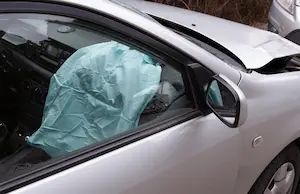
“This is about protecting families and making sure that when a vehicle is repaired, it’s done right,” said Peyton Bell, owner of Bell Auto Body and a member of the Oklahoma Auto Body Association (OKABA). “Imagine a vehicle that’s been in a front-end collision. The seatbelts, airbags and structural components are all designed to protect the occupants in another crash. If those parts aren’t repaired properly — if we’re forced to use inferior parts or skip critical safety steps — lives are at risk. It’s that simple.”
Challenging Laws That Limit Safe Repairs
The lawsuit targets recent legislation that restricts repair shops from insisting on OEM-approved repair procedures and limits their ability to pursue fair compensation when insurers underpay. According to Bell, these laws interfere with both consumer safety and the professional judgment of collision repairers.
“We have a responsibility to make sure that every safety system in that vehicle will work as intended if there’s another accident,” Bell said. “When insurers refuse to cover the full cost of safe repairs, it’s the families on the road who pay the price.”
Bell emphasized that the case is not just about business operations — it’s about preserving a driver’s right to have their vehicle restored to its pre-loss condition without compromise. “These laws tie our hands and prevent us from holding insurers accountable,” he said. “We’re standing up for the right of every Oklahoman to drive a safely repaired vehicle and to know that their family is protected.”
Broader Impact on Repair Facilities
While the lawsuit has consumer implications, it also addresses what shop owners view as an erosion of property rights and business autonomy.
Recent state measures, such as Senate Bill 641, have capped the charges that repair facilities can impose for vehicle storage while insurers deliberate on claims or delay payment. Many Oklahoma shop owners say this effectively allows insurers to occupy their property without fair compensation.
“For shop owners, this is more than just a regulatory issue — it’s about survival,” said one OKABA representative. “By capping storage fees, the state has essentially authorized insurers to use private business property without paying market value. That can translate to hundreds of thousands of dollars in lost revenue each year and could push smaller, family-owned facilities out of business.”
The association argues the case could set a critical precedent by reaffirming that collision repair shops are private enterprises, not extensions of the insurance industry. “We perform highly skilled work, maintain specialized equipment, and carry the liability for vehicle safety,” Bell noted. “It’s only fair that we be compensated accordingly.”
Role of Assignment of Benefits (AOB)
The lawsuit also highlights the impact of House Bill 1084, which effectively eliminates a long-standing legal mechanism — the Assignment of Benefits (AOB) — that allowed repair facilities to advocate for customers in payment disputes with insurance companies.
In an AOB, the vehicle owner assigns their right to insurance benefits to the shop, which then handles payment disputes directly with the insurer, whether through negotiation, supplemental demand or small-claims action.
The process spares customers from having to fight their own insurance company and ensures repairs meet manufacturer specifications.
Without the AOB, shops must bill customers directly for unpaid balances, leaving vehicle owners to pursue reimbursement from insurers on their own — a process many find confusing, expensive, and time-consuming.
“Most vehicle owners don’t know how to argue for OEM repair procedures or understand what’s at stake,” Bell explained. “Now, they’re either paying out of pocket or accepting unsafe repairs.”
Protecting Oklahoma Families
OKABA is closely watching the outcome of Bell’s lawsuit, viewing it as pivotal for both the repair industry and the driving public.
“Our mission is twofold,” the association said in a statement. “To protect consumer safety and to defend the constitutional property rights of Oklahoma’s repair professionals. Shops are not utilities — they’re private businesses dedicated to doing the job right. This case will help ensure they can continue to do so.”
For Bell, the issue is deeply personal. “At the end of the day, it’s about people — not politics, not profit,” he said. “When someone brings their car to us after a collision, they’re trusting us with their family’s safety. We owe it to them to do the repair right, and this lawsuit is one way of making sure we can keep that promise.”


Leona Scott