

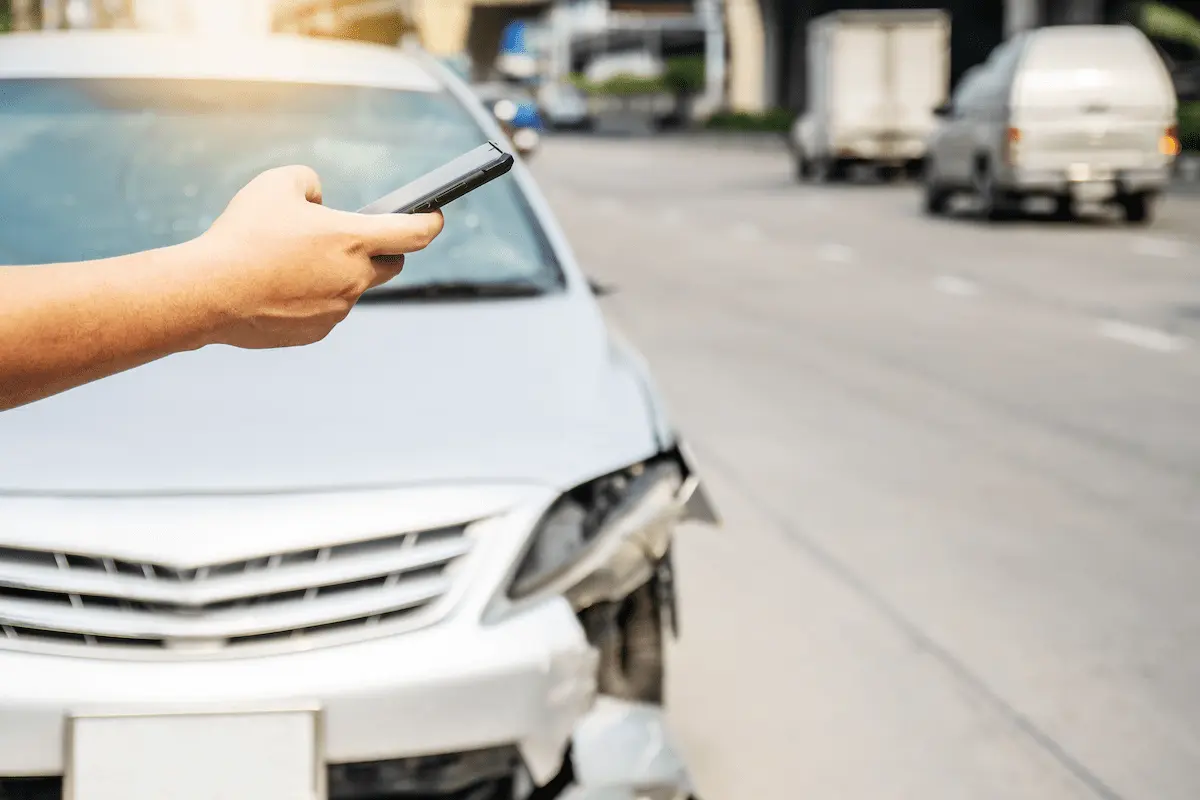
When a driver is involved in an accident, one of the first questions is where to take the vehicle for repairs. Traditionally, that decision has often been influenced by an insurance company’s direct repair program (DRP), a friend’s recommendation or an online search.
But what happens when the driver asks ChatGPT instead?
Mark Zoba, who spent 28 years at Nissan and helped establish the Nissan and Infiniti Certified Collision Repair Networks, believes artificial intelligence could fundamentally change how consumers find collision repair facilities.
Zoba, now with Assurity Certified Solutions, sees an opportunity to address a longstanding industry challenge: connecting consumers with shops that have invested in the training, equipment and certifications necessary to repair their vehicles properly.
“The market is changing and the industry is still operating as if it’s stuck 20 years ago,” Zoba said. “Now drivers are making real decisions before they ever call a shop, and increasingly, they are making their decisions with an AI assistant.”
A new way to find a repair shop
Consumers are becoming accustomed to using AI for everyday decisions, from restaurant recommendations to shopping advice. Zoba believes collision repair could naturally extend that behavior.
He pointed to J.D. Power’s 2026 U.S. Auto Insurance Study, which he said found that 32 percent of auto insurance shoppers used AI tools during their search. Those consumers were more than 1.3 times as likely to switch insurers.
Although the research focuses on insurance shopping rather than choosing a collision repair shop, Zoba sees it as evidence of changing consumer habits.
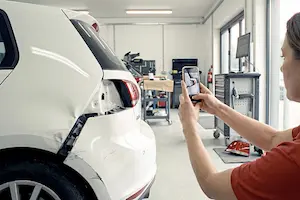
Instead of typing “collision shop near me” into a search engine, a driver might ask an AI assistant which nearby facilities can repair a particular vehicle, whether the damage could result in a total loss or why OEM parts matter.
AI assistants can respond to conversational questions and summarize information from multiple sources, potentially influencing which businesses consumers investigate.
Zoba said several AI platforms, including ChatGPT, Gemini, and Microsoft Copilot, already cite his company’s collision repair locator. While that doesn’t establish how often consumers act on those recommendations, he believes it illustrates an important shift.
Consumers may be forming opinions about repair options before they ever contact an insurance company or collision repair facility.
Could AI change the influence of DRPs?
Insurance companies and their DRP networks have long directed consumers toward repair facilities.
Zoba doesn’t expect AI to eliminate those relationships. Instead, he believes it could change how much information consumers have before discussing their repair options with an insurer.
“AI won’t eliminate DRPs, but it changes who has the information at the moment the decision gets made,” he said.
A driver who has already consulted an AI assistant may arrive at that conversation with a preliminary understanding of repair costs, the possibility of a total loss, the importance of OEM parts and the qualifications of nearby repair facilities.
“The driver is no longer choosing blind,” Zoba said.
He emphasized that this shift isn’t necessarily unfavorable to insurers or DRP facilities, many of which maintain OEM certifications and meet demanding repair standards.
However, it could create opportunities for qualified independent shops that might otherwise be overlooked.
Think of it as a trusted assistant delivering a consumer-focused DRP across a Certified Collision Repair Provider (CCRP) network. It can give the consumer and the repairer a preliminary estimate, total loss thresholds, policy coverages, and rental options, all in one place. And it’s built on a foundation of OEM Certified Networks 16 years in the making. With real AI behind it, that foundation becomes the payoff and a far better way to do business.
An independent repairer with verified OEM certifications, appropriate equipment and clearly documented capabilities could potentially reach consumers outside traditional referral channels.
The challenge, Zoba said, is making sure those qualifications can be found and verified.
“The warning: a shop that AI can’t find or can’t verify is effectively invisible, no matter how good its work is,” he said.
The missing link in OEM certification
Zoba’s perspective is shaped by nearly three decades at Nissan, where he helped develop certified collision repair networks.
He believes manufacturers and repairers have made substantial progress establishing repair standards, but the industry has been less successful communicating those qualifications to consumers.
“We built the qualification side but never fully built the connection side,” he said.
Thousands of collision repair facilities have invested in OEM certification programs, sometimes spending six figures on training, tooling and procedures.
Yet earning certification doesn’t automatically translate into repair referrals.
Consumers dealing with the aftermath of an accident may not think to visit a manufacturer’s website and search its certified repair facility locator.
“The second thing we overlooked is that certification is static. It’s a credential on a list,” Zoba said.
He explained that drivers really want to know which nearby shop can properly repair their particular vehicle.
That question requires more than a list of certified facilities. It requires understanding the vehicle’s make and model, the type of damage, and each facility’s repair capabilities. “Our AI solution isn’t just another online locator service; it is a two-way connection between the capable Certified Collision Repair Provider and the consumer in need,” said Zoba.
Zoba believes AI could bridge the gap between the industry’s certification infrastructure and consumers seeking answers.
For shop owners, the bigger question is whether consumers and the digital tools they use can readily access information that demonstrates their qualifications.
What makes a shop visible to AI?
Zoba said AI assistants gather information from online sources to answer consumer questions.
That creates challenges for shops whose websites contain little more than general descriptions, certification logos and customer testimonials.
For example, a website might display an OEM certification badge without explaining which vehicles or repairs the certification covers.
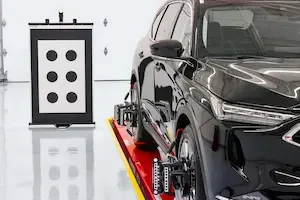
Similarly, a statement such as “we repair all makes and models” provides less specific information than descriptions of aluminum structural repair capabilities, electric vehicle battery handling or in-house advanced driver assistance systems (ADAS) calibration.
Zoba identified several factors he believes can help AI systems find and evaluate repair facilities: clearly described certifications, specific repair capabilities, consistent business information, relevant customer reviews and independent verification of credentials.
“To an AI, a certification is only as valuable as its verifiability,” he said.
That doesn’t mean AI systems evaluate every source or credential in the same way. Their responses can vary depending on the platform, available information and wording of a consumer’s question.
Nevertheless, Zoba believes collision repair businesses should consider how easily online audiences can understand and verify their qualifications.
Three steps shops can take now
For collision repair business owners wondering how to prepare for AI-driven searches, Zoba offered three practical recommendations.
Clearly describe your capabilities online
Rather than relying exclusively on certification logos, Zoba recommends creating website content explaining each OEM certification, the vehicles covered and the facility’s specific repair capabilities.
He also advises keeping business names, addresses, telephone numbers and hours consistent across websites and online listings, including Google Business Profile, Bing Places and other directories.
Make credentials independently verifiable
Zoba encourages shops to ensure their certifications are current and can be confirmed through independent sources.
He also recommends encouraging customers to write specific reviews that identify the vehicles repaired and describe their experiences.
A review that mentions a specific vehicle and repair may provide more useful context than a generic statement that the customer received good service.
Find out what AI says about your business
The simplest recommendation is to run an AI search.
Zoba suggests opening ChatGPT, Gemini, Perplexity or Copilot and asking the kinds of questions a prospective customer might ask.
Shop owners should check whether their business appears, what information it presents, and which sources it cites.
If details are inaccurate, they can check the source and correct them where possible.
He recommends repeating the process monthly because AI-generated answers can change.
Turning qualifications into opportunities
For Zoba, the rise of AI highlights an opportunity to address a problem that has existed since OEM certification programs began expanding.
Repairers have invested heavily in demonstrating their qualifications. The next challenge is making sure consumers can discover and understand those investments.
His current work at Assurity focuses on making verified repair qualifications more accessible through digital tools, but the broader challenge extends beyond any single company or platform.
“The bottom line for shop owners: you’ve already invested in being qualified,” Zoba said. “In an AI world, the next step is making sure that qualification can be found, verified, and recommended.”
As consumers experiment with new ways to research repair options, collision repairers may need to pay as much attention to how they communicate their capabilities online as they do to the credentials displayed inside their facilities.

Leona Scott