

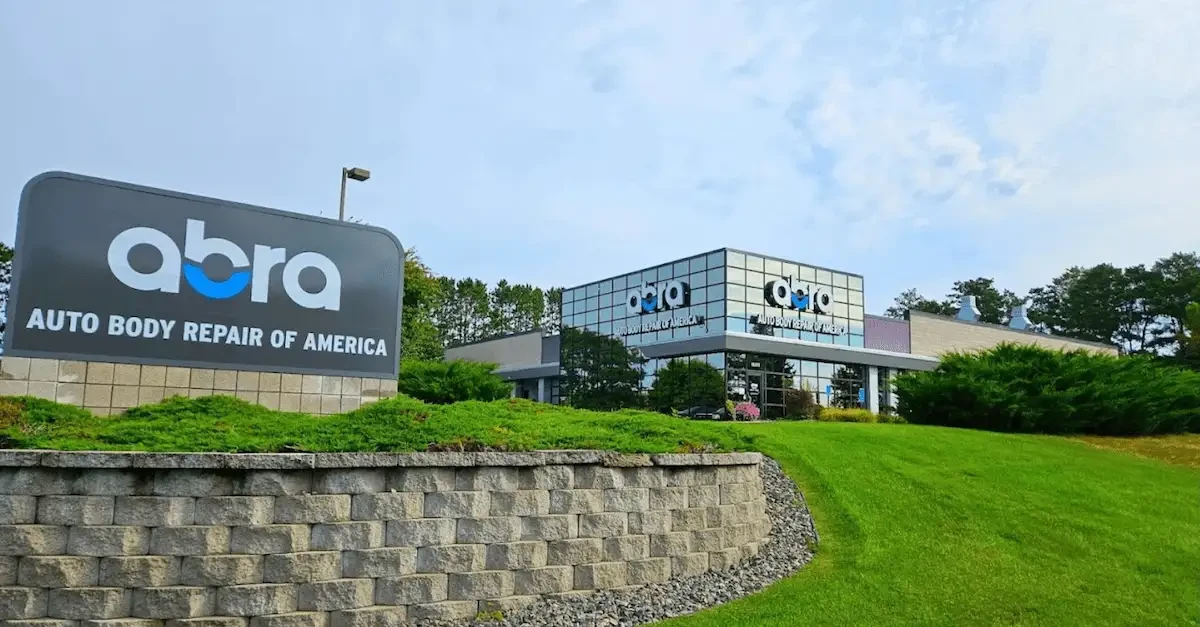
When Deanna Dahlheimer walked into Abra Elk River in Elk River, Minn., she brought no background in auto body repair. What she did bring was 27 years in emergency services, dermatology, and cardiology, including clinical research, and a skill set that has translated directly to the collision repair front office.
Dahlheimer now works as a customer service representative, the first face customers see when they walk through the door.
"I love people," she said. "Whether I was working in research or whether I'm working front desk here, you still have to engage with people, and you have to be comfortable with that."
While the technician shortage has drawn the most attention, shops have increasingly recognized that administrative and customer-facing roles are equally critical to a shop's performance and customer retention.
Documentation, Compliance, and Consent
Dahlheimer ended her medical career in cardiology research, a field she described as built on integrity, precision, and documentation. Those habits followed her to the shop floor. She also draws on her experience obtaining informed consent for clinical research studies.
"Knowing the legal aspects of consenting a customer on an authorization form — that is a big deal," she said.
The instinct for thorough documentation is directly applicable in a collision environment where insurers, customers, and shop operators all rely on an accurate paper trail throughout the repair process. Shops investing in front-office training have increasingly pointed to communication, documentation, and customer interaction as measurable drivers of performance.
Empathy as a Job Skill
 Deanna DahlheimerYears of working alongside patients and families in high-stress medical settings gave Dahlheimer a frame of reference that she applies daily with customers.
"Some of those total losses are exactly what it is — it's a loss," she said. "I always say, I'm so sorry for your loss, because it is."
She also draws on her experience as a mother of four sons who were athletes. When a vehicle is in the shop for one to two weeks, she said, she understands the downstream impact on families trying to manage work, school, and activities.
"You have to be able to put yourself into those positions and really understand what they're getting put through," she said.
The Learning Curve
Dahlheimer acknowledged that the transition was not without friction. The area she found most unfamiliar was the insurance side of the business.
"Learning how the different insurance companies do it different ways... that was a big component of learning the industry," she said. She also noted that communicating accurate vehicle completion timelines to customers required adjustment.
Abra Elk River's patience during her onboarding made the difference, she said. "They gave me a chance. They didn't tell me I was overqualified."
She said it took at least nine months before she felt fully comfortable in the role, and said it took closer to a year to feel truly confident. The shop's management, she said, maintained patience throughout that window.
The Front Office as the Shop's Other Half
Dahlheimer pushed back on any framing that treats front-office roles as secondary to production staff.
"I would say it's the other half of it," she said. "We're the middleman between the customer, the estimator, and the vehicle. The CSRs are the first ones that give customers their first impression."
She described the return of a completed vehicle as an occasion that should feel meaningful to the customer. "You want to make them feel like getting their vehicle back is like coming home," she said. "Because that's exactly what it is."
Multi-shop operators and training providers have similarly emphasized the front office as a driver of customer retention and overall shop performance, with some MSOs developing dedicated training curricula for customer service roles.
What Shops Should Look For
When asked what qualities make someone well-suited to a front-facing collision repair role, Dahlheimer kept her answer practical: "You have to be curious. Genuine. Detail-oriented. And you have to have a sense of diplomacy with the customers as well as the company."
She also emphasized real-life experience as an asset that formal credentials alone cannot replicate. "Someone who has real-life experience, who can be candid with someone in a tactful way.” That, she said, is what shops should be looking for.
For herself, a year and a half in, she said she plans to stay. "Whether it's a human patient or a car patient, we're here to support. It's really no different."
What Career-Changers From Other Industries Can Bring to Your Front Desk
- Front-office candidates from healthcare, social work and other high-documentation, high-empathy fields may carry skills that transfer directly to a CSR role, including experience with compliance documentation, patient communication, and high-stress client management.
- Onboarding patience matters. Dahlheimer estimated it took her at least nine months to feel comfortable and a full year to feel confident. Shops that give career-changers adequate runway may see stronger long-term retention.
- Insurance processes and industry-specific terminology represent the steepest learning curve for outside hires. Structured onboarding around those areas can shorten the adjustment period.
- Front-office staff are often the primary point of direct contact between a shop and its customers. Evaluating candidates for communication, empathy, and genuine engagement may matter as much as prior industry experience.
- When recruiting, shops may benefit from widening their search to adjacent service industries rather than limiting outreach to candidates with prior automotive backgrounds.





Lisa McArdle