


Processing total losses is becoming increasingly complex for body shops in part because of concerns related to data privacy and security, electric vehicles and other issues highlighted in panel discussions at this summer’s Collision Industry Conference (CIC).
The CIC committee focused on data-related issues raised the question of what happens to the customer’s personal information that’s stored in their vehicle if the vehicle has been declared a total loss.
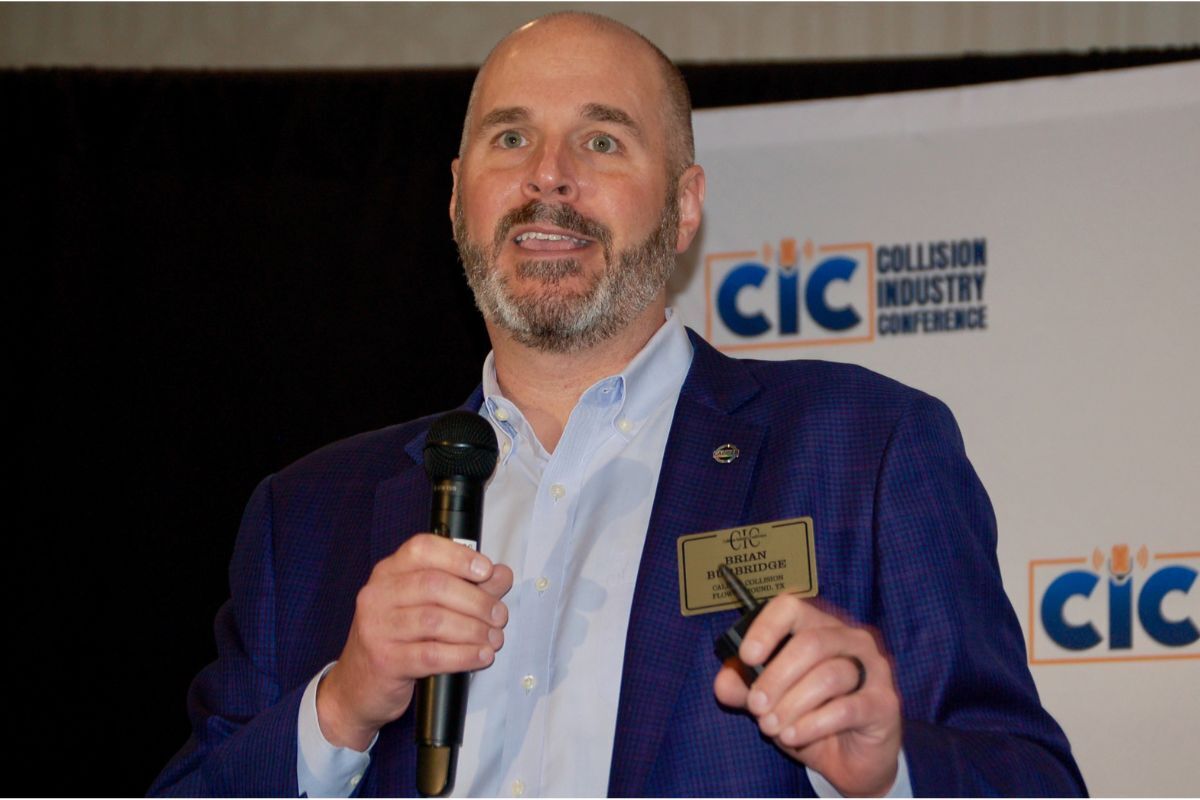
“I think back to my last car that I had before my current car: I’d logged into my Google account [through the car], so it had all of my Google information, my maps, all that,” committee co-chair Brian Burbridge said. “Contacts, call history, text messages. Home and work address. It knows everywhere you go, it knows how long you were there. It knows how to get into your phone through Bluetooth. It can connect to your home WiFi in a lot of cases. It definitely can open your garage, and some of the cars have access to your home alarm system, to your Amazon Alexa account.
“If you have a Ford or a GM or any other connected vehicle, it’ll have a lot of your service information, a lot of your personal information there,” Burbridge continued. “Stored video recordings: If you have a video dash cam in your car, where’s that SD card? Do we need to pull that out? How do we make sure that we’re protecting their data, their personal information? It's extremely important, and they are not thinking about this in the event of total loss.”
Burbridge ran CIC attendees through a series of polling questions. While about 18% said it’s generally the shop clearing this personal information from a total loss vehicle — another 15% said the customer — 2 in 5 people participating in the poll said no one is.
What happens if there’s no power to the car? About 1 in 5 people said the car gets powered up, but the vast majority said nothing gets done about the personal information in that vehicle.
Fewer than 20% of shops said their repair authorization has language regarding protected personal information and who is responsible; another 1 in 3 weren’t sure.
And only 10% said they had word tracks related to discussing the topic with customers at the time of drop off.
EVs Bring New Challenges
Electric vehicles also pose some new challenges for shops when those vehicles are declared total losses. Kye Yeung of European Motor Car Works in Santa Ana, CA, for example, raised a liability concern he has about total loss electric vehicles in a shop’s possession.
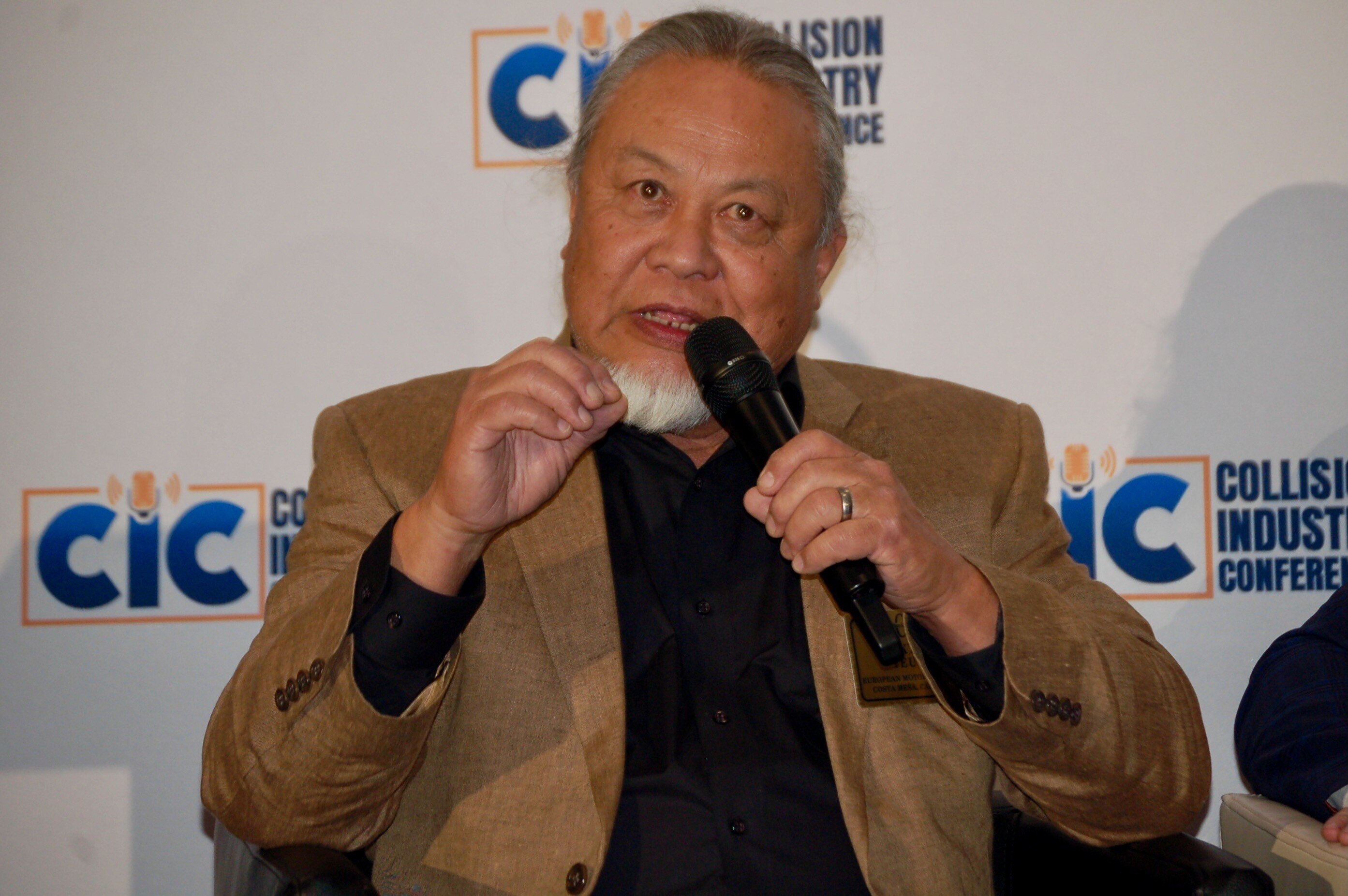 Kye Yeung said he thinks the industry needs to find a way to help shops notify towers or others handling a total loss EV that the battery has been compromised and poses a potential danger.
“Let’s say you have an EV and the battery is compromised, and we know it’s compromised, that’s why it’s a total loss,” Yeung said. “The situation that we have sometimes is that when the car gets picked up by the salvage company, there’s no form that they sign, or that we give them, to say, ‘We’re done with it.’ How do we notify them that, ‘Hey, potentially this thing could still have a thermal reaction because the battery is damaged.’ There’s a void there we’re concerned about. We all as repairers need to realize that if we know that there might be a potential problem, we have to notify or put something on that vehicle to indicate to the next person that gets it that this is why it was a total.”
Andrew Batenhorst of Pacific BMW in Glendale, CA, said his shop has developed a form that must be signed by whatever company is picking up any total loss vehicle from his shop.
“It states this is the condition of the car as you’re taking it, these are the parts that we’ve given you,” Batenhorst said. “It notifies them that if they choose to leave parts behind, we will dispose of or destroy those parts within three days. Because in my market, it’s very common for smaller, non-certified shops to purchase vehicles from [salvage auctions] and then trace back that it may have come from my facility, and then they come knocking on my door saying, ‘Hey, I don’t see this trim panel or I’m missing this rocker molding. Do you have them?’ That’s not something as a shop we want to be involved in, with the liability and all that. We want to protect ourselves and have it be a smooth hand-off [of the totaled vehicle] to the next party down the line.”
Panelists also pointed to differences among automakers in the extent to which they want electric vehicle batteries discharged when they are declared total losses.
“There’s not a federally mandated state of charge for transporting an electric car,” said Matt Pitta, senior manager of body repair technology for Lucid Motors. “So for Lucid, we just default to California’s rules, which is 30% or lower. If you’re going to be transporting a car or battery for us, we want the battery below 30%. There is discussion in our organization about whether 30% is enough. Do we need to get it below 5%? Do we need to drain it completely? Do we need to drain it completely and then remove the pack from the vehicle? That’s a discussion going on right now.
“So we’re going to be releasing some documentation, some special tooling, to help the shops when they do have a total loss know how to best handle that vehicle before it gets sent to the yard,” Pitta said.
To reduce power in the battery pack, he said, you can run the vehicle in a safe area with the heat on, or hook the vehicle to another electric vehicle to use the damaged Lucid to charge the other car. But he cautioned if there’s a diagnostic trouble code (DTC) present that indicates isolation of the vehicle is needed, “we can have a field service technician or one of our [high voltage] team flying doctors come out and they can remove the pack from the car and discharge it with a discharge tool.” He said that tool is “a really cool piece of tech” he hopes will be included in the future as part of the Lucid tooling package.
Post-Crash Handling of Vehicle Can Total It
Batenhorst said one thing that may be contributing to a higher percentage of vehicles being declared a total loss is what happens to the vehicle post-crash but prior to arrival at a body shop. He said this past summer, a 2024 Lucid Air was brought to his shop.
“We noticed stickers on the windshield that indicated that the car had actually come from [an auto auction], and we knew automatically that there was a strong risk that car had been put on a forklift to be moved around the [auction] lot,” Batenhorst said. “That’s really dangerous on an EV given that the forks are going to pass directly underneath the battery pack. So before we even took a single panel off of that vehicle, we racked it on a two-post lift to get it in the air. And immediately we discovered that in about five different areas, the battery pack was damaged.”
Batenhorst said that based on training from Lucid, the shop took photos of all that damage and sent them to Lucid for further direction.
“In reality, that vehicle did not appear to have been a total loss at the time that it was brought to us based on the exterior damage that we found,” he said. “But after the recommendations we got from Lucid, that the battery pack now needed to be replaced, that vehicle ended up actually becoming a total loss because of that.”





John Yoswick