


Mike Anderson of Collision Advice has called the post-crash safety inspections many automakers require 'the single big friction point in our industry.'" So, it may be of little surprise that such inspections — and that resulting friction — were the focus of a Collision Industry Conference (CIC) panel discussion this summer.
The panel focused on how consumers get caught in the middle of these differing views. Automakers understand that some potential safety issues — collapsed steering columns, seatbelt anchoring point damage or partially deployed airbags — may go undetected without the inspections. Collision repairers see the inspections as protection against liability if they miss a problem an automaker-required check would have caught. And insurers are concerned about the costs associated with some of these “invasive” procedures — that are sometimes called for on even lightly damaged vehicles — that often find nothing wrong.
Anderson was among the panelists at CIC sharing instances of problems in vehicles that would have been missed were such inspections not conducted.
Anderson pointed to real-world cases the inspections have caught. He described finding partially deployed airbags with no data trouble codes or dashboard warning lights, and collapsed steering columns with the same lack of DTCs or warnings. "I can show you on an Asian-manufactured vehicle where the seatbelt mounting location on the center pillar is actually buckled. No DTCs, no warning lights on the dash," he said. "So, these are not something that a scan is going to catch. I think it's important that we get that out of the way."
Shops regularly doing the inspections
Nader Akbari of Central Florida Paint and Body concurred.
“A DTC will pop up if there’s damage to an electrical system or [a module] is not communicating, but on a physical mechanical component, like a collapsed steering column, a lot of times you’re not going to get a DTC,” Akbari said. “So, there’s been quite a few examples that we’ve had at the shop of finding steering columns that have collapsed, a lot of times from rear-end hits, and it just doesn’t show up as a DTC. That’s why it’s extremely important to physically inspect these.”

Florida shop owner Nader Akbari said vehicle safety inspections at his shop have found collapsed steering columns not setting a DTC or a dash warning light.
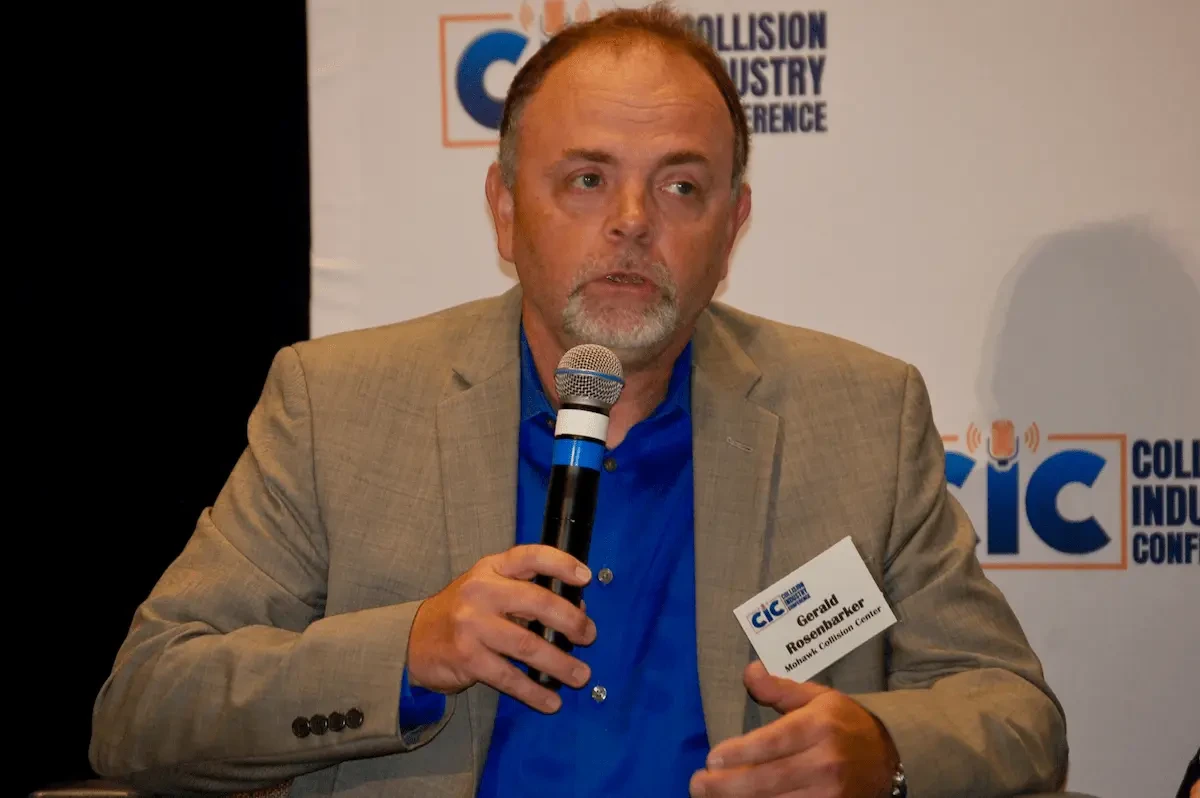
“A lot of people don’t really understand how to do a proper seatbelt inspection,” panelist Gerry Rosenbarker of Mohawk Collision Center in East Glenville, New York, said. “Part of that is removing the trim panels with seatbelt mounts. We’re finding a lot of vehicles where there was seatbelt deployment where the passenger was sitting, but the other ones sitting in their standard position with no one in the seat have deployed as well, and they’re actually damaging the pillars where they mounted to them. And you can’t see it in any way, shape or form without pulling the trim off and doing the actual inspection. And as to what Nader said about the steering columns: I would say we find nearly as many collapsed from rear-end collisions as we do from front-end collisions, which is not what you’d expect.”
Anderson said a shop in Nevada was doing safety inspections on a vehicle damaged when the wind jerked the door open.
“They actually did a safety inspection on it, and where the airbag mounted in the upper roof area, the airbag had started to deploy just from the pressure of the wind grabbing the door, and it buckled where the roof mounting location is,” Anderson said.
The insurer perspective
But much of the discussion at CIC focused on the friction between shops and insurers based on the inspections, and efforts to find solutions to such friction.

Roger Wright of Vector Squared said insurers may say their contract with the customer calls for payment for “repairs,” not “inspections.”
Industry consultant Roger Wright of Vector Squared said he was asked to be on the panel because the committee was unable to find an insurance company representative willing to participate. Wright, a former insurance claims executive and a past chairman of CIC, said his consulting firm has been working with Anderson and the shops in Anderson’s “Spartans” 20 groups.
“I’d say 60 percent or 70 percent of the requests we get [from those shops] are about safety inspections,” Wright said. “We reach out [on their behalf] to the insurers we know. The short answer we sometimes get is the insurer has a contract with the vehicle owner, and part of it says, ‘We’ll repair or replace your damaged vehicle.’ It doesn’t say anything about ‘inspecting.’ I’m not saying that doesn’t make it not right. I’m just saying the contract says they repair or replace the damaged vehicle.”
Wright said some insurers will use that to deny payment for the safety inspections, or will say they decide on a case-by-case basis based on whether there is supporting impact to the vehicle to indicate there might be damage to warrant the inspections
“One trouble insurers have is the definition of a collision,” Wright said. “If I hit my washing machine as I’m backing out of the garage and put a dent in the side of my bumper, that may create all kinds of ADAS situations that require some inspections. But it’s probably not the type of collision that you have to take the dashboard out, check the airbags, measure the steering column. Without that, the insurer is going to take the position that they’re not paying [for those inspections] until you do it and find damage related to the impact.”
Wright compared it to the type of scenario faced years ago when a customer said there was transmission noise after a front-end hit.
“Our statement then was you can tear the transmission apart, and if you find a broken tooth or something that relates to the accident, we’ll pay for it subject to wear and tear,” Wright said. “If you don’t, the entire expense of it is on the consumer.”








John Yoswick