



Not long ago, subletting auto glass work was a standard operating procedure for many collision repair shops. A cracked windshield or back glass replacement meant a call to a trusted glass vendor, a line item on the estimate. and a short wait while the vehicle left the facility for service.
Today, that model is shifting.
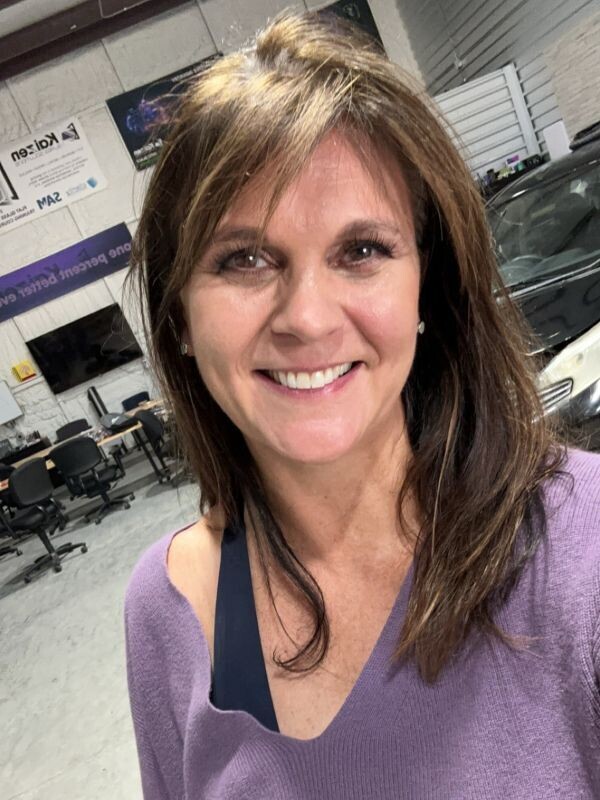 Shauna Davis, president of Kaizen Glass SolutionsAcross the country, more collision repair shops are bringing glass work in-house — not simply to capture additional revenue, but to take control of cycle time, quality, liability, and customer satisfaction in an increasingly complex repair environment.
According to Shauna Davis, president of Kaizen Glass Solutions, the trend is not surprising.
“From my vantage point, this absolutely aligns with what we’re seeing in the field,” Davis says. “In the past, if a shop brought glass in-house, it was usually about money or time. Today, it’s about much more than that.”
ADAS has changed the equation
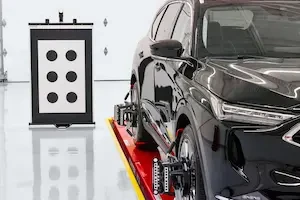
As previously reported in Autobody News, windshields are no longer just laminated-glass panes. They house cameras, sensors, and safety systems that support advanced driver-assistance systems (ADAS), heads-up displays, and other integrated technologies.
Because ADAS calibration is closely tied to windshield replacement, the responsibility associated with glass installation has increased dramatically. Improper removal, preparation or urethane application can compromise both structural integrity and calibration accuracy.
“OEM procedures have significantly increased liability and documentation requirements,” Davis says. “Quality control expectations are higher than ever, and ADAS calibration is now directly connected to glass replacement.”
When glass is sublet, shops often have less visibility into how procedures are performed, what materials are used, and whether technicians are current on training and certifications. In an era of tighter OEM requirements and growing scrutiny of documentation, that lack of control can pose a risk.
Legislative pressures and reimbursement concerns
At the same time, legislative developments in some states have raised concerns within the independent glass community about insurer influence over where glass repairs are performed. For collision repair shops, that dynamic introduces another layer of uncertainty — particularly if reimbursement is tied to insurer-preferred providers.
Rather than navigate potential reimbursement challenges or risk authorization delays, some collision centers are choosing to control the process internally. Having trained technicians on staff allows shops to align glass replacement with OEM repair procedures and ADAS calibration requirements without depending solely on external vendors.
Davis cautions, however, that bringing glass in-house does not mean severing vendor relationships.
“One of the biggest misconceptions is that shops have to choose between subletting and cutting ties with their glass vendor,” she says. “That’s not the goal. You still need a backup plan for overflow, peak seasons or specialty repairs. The goal is to become more educated and intentional about who you’re working with and how the work is being performed.”
Asking better questions
For shops that continue to sublet, Davis encourages owners to ask more detailed questions:
- Are technicians recently trained through an accredited program — and how recent is that training?
- What certifications do they hold, and are those certifications current?
- Are they up to date on OEM procedures and state or national regulations?
- Are manufacturer-approved tooling, materials, and urethane systems being used?
Those same questions apply internally for shops considering in-house expansion.
“In-person, accredited training is critical not just for technicians, but ideally for owners and managers,” Davis says. “It helps shops understand the ‘why’ behind procedures, not just the steps.”
Controlling cycle time and workflow
Beyond liability and compliance, workflow remains a major driver.
When glass work is sublet, vehicles often leave the facility or wait in queue, creating bottlenecks in production. By contrast, in-house glass replacement and calibration allow shops to schedule work alongside body and paint operations, reducing downtime.
Shops that have implemented in-house glass services frequently report improved cycle times, increased technician productivity, and fewer scheduling disruptions. With the vehicle already in the shop, the incremental labor and material investment can produce a relatively fast return.
“The investment in training and tooling is relatively low compared to the ROI,” Davis says. “You already have the vehicle in your shop. You’re reducing sublet expenses and gaining control of scheduling and quality.”
Tooling and preparation matter
Of course, successful in-house glass operations require more than a utility knife and suction cups.
OE-approved programs may specify particular tools, setting devices, and urethane systems. Larger, more complex windshields, such as those found in electric delivery vans and newer EV platforms, often demand advanced handling equipment and proper support during installation.
“Proper removal, preparation, and installation techniques are non-negotiable,” Davis says. “Running a proper urethane bead isn’t just a technical detail; it’s a critical safety requirement.”
Understanding Safe Drive-Away Times (SDAT), verifying bond integrity, and documenting procedures are essential to protecting both the customer and the business. Improper installation can lead to bond failure, increasing the risk of windshield separation, and potential injury in a collision.
Not just a revenue play
While the financial upside is real — glass replacement can represent a meaningful revenue stream — the broader motivation is operational control.
Customer satisfaction increasingly depends on seamless repair experiences. When calibration, glass replacement, and structural repairs are coordinated under one roof, communication improves and delays are minimized.
“This isn’t about chasing a trend,” Davis emphasizes. “It’s about recognizing how the industry has evolved and making informed decisions that protect the shop, the customer and the vehicle every time.”
A strategic decision, not an impulsive one
For collision repair shops evaluating the move, the decision should be strategic.
Owners must assess technician capacity, space, tooling requirements, and training investments. They should also evaluate existing vendor relationships and determine how to keep those partnerships part of the overall strategy.
In many cases, a hybrid approach — handling routine windshield replacements and calibrations in-house while maintaining strong vendor ties for specialty or overflow work — offers the best of both worlds.
What is clear, however, is that the role of auto glass in collision repair has fundamentally changed. As ADAS systems proliferate, OEM procedures tighten and customer expectations rise, glass is no longer a peripheral service.
It is central to vehicle safety.
For shops willing to invest in education, tooling, and process control, bringing glass in-house may represent not only a pathway to additional revenue, but a proactive step toward managing risk and strengthening long-term operational resilience.




Leona Scott