



Editor’s note: This is part two of a two-part series on collision shops bringing auto glass work in-house. Part one follows Choice Collision’s three-month rollout, from the vendor bottleneck that started it to the phased approach that got them to full capability. Read Part 1 of this series.
A windshield isn’t just a pane of glass sitting in a frame. On most modern vehicles, it’s a structural component that contributes to roof crush protection during a rollover, helps airbags deploy correctly and keeps occupants inside the vehicle in a crash. It’s also, increasingly, a mounting point for the cameras and sensors that make ADAS systems work.
“Passengers inside the car rely on the windshield to stay put,” said Jason Horne, an instructor with Kaizen Glass Solutions who trains collision shops on glass removal and installation.
That combination — a safety-critical component and a growing technology platform — is exactly why more collision centers are considering bringing glass work in-house. It’s also why shops considering the move need to go in with a clear-eyed view of what it actually takes, beyond buying tools and sending someone to a class.
Why Shops Are Making the Move
The appeal isn’t complicated. Outside glass vendors can become a bottleneck, especially during high-volume seasons, and every job sent out the door is revenue and margin the shop doesn’t capture.
“Glass has definitely become a hot topic in the auto body world,” Horne said. “What can we do to keep money in-house?”
Compared to many OEM certification investments, he says the entry cost is manageable. “It’s a fairly inexpensive thing to get into. Go through a course, buy your tools, start getting experience, and you’ll definitely see a return on that investment.”
But Horne is quick to separate the cost of tools from the cost of competence. “I can’t teach you experience,” he said. “Don’t try to rush it.”
Building the Capability
Start with training, not tools. Horne recommends shops resist the urge to buy equipment before they understand how to use it. “Don’t purchase anything until you learn about it,” he said, encouraging owners to attend training, test tools firsthand, and talk to other shops that have already made the transition. “Ask them what they did. How did it work out for them?”
Training should also go beyond mechanical technique. Horne emphasizes that technicians need to understand the Federal Motor Vehicle Safety Standards and why windshield procedures exist in the first place, and to strictly adhere to adhesive manufacturer procedures, such as surface prep, glass prep, primer application, and cure times.
“Follow your adhesive manufacturer’s recommendations,” he said. Skipping steps or rushing cure times isn’t just a quality issue; it’s a liability issue.
Sequence the work. Shops that have made a successful transition tend to start with the simplest, lowest-risk jobs and build from there. Brennan Thacker, production manager at Choice Collision, who brought glass in-house at the Rhode Island shop, began with Toyota quarter glass specifically because Toyota’s procedures require that replacement glass be included in the repair, regardless of whether the original piece is damaged during removal, which means there was no cost exposure while the team was still learning.
“If we damaged the glass during removal, we weren’t eating the cost because the replacement glass was already included in the repair,” Brennan said.
From there, Choice Collision added liftgate and rear glass, then windshields, reaching full capability across all vehicle types in roughly three months.
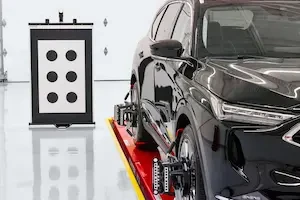
Treat ADAS as part of the glass conversation, not a separate one. Modern windshield replacement almost always triggers a camera or sensor recalibration. Shops that already perform ADAS calibrations in-house have a real head start.
“These cameras need to be calibrated when you put a new windshield in,” Horne said. “It’s not just a piece of glass anymore.”
Choice Collision had ADAS calibration capability before it added glass, and he says that sequencing mattered. “If you’re going to do windshields, ADAS and glass absolutely go hand in hand.” For shops starting from scratch, Horne suggests building ADAS competency gradually: begin with simpler calibrations, such as blind-spot and radar systems, before progressing to more complex camera and lane-keeping systems.
The Business Side Nobody Talks About
Tools and training get most of the attention, but two operational realities can catch shops off guard.
Supplier relationships take time to build. Once a shop starts sourcing its own glass through aftermarket suppliers like PGW or Pilkington, for example, account setup and onboarding isn’t instant. “You can’t just jump right in and expect to order glass immediately,” Brennan said. Shops should start that process well before they plan to need it.
Insurance reimbursement needs to be understood up front. Standalone glass claims can be difficult to profit from when OEM glass is required, and reimbursement rates don’t adequately cover costs. Before launching a glass program, shops need a clear picture of reimbursement structures, supplier pricing, material costs, and where their actual margin will land.
Staffing has to support the workload. Choice Collision currently has one primary glass technician and two others trained to assist, and says that cross-training more of the team is something he’d do differently. “If everyone’s able to do it, then nobody has to stop what they’re doing and wait for one technician.” His broader advice for shops that are already stretched thin: “If you’re already backed up and don’t have enough staff, I wouldn’t consider bringing it in-house.”
The Bottom Line
Both Horne and Choice Collision land on the same core message: the tools and the market opportunity are there, but the timeline should be dictated by competence, not ambition.
“We took our time and were very deliberate,” Brennan said. “You have to be willing to learn before you implement. If you rush into it, you’re going to eat costs and deal with comebacks you don’t want.”
5 Questions to Ask Before Bringing Glass In-House
1. Is your current vendor actually hurting you? Are they responsive, and are you already making reasonable profit on the glass work you send out or is the relationship costing you cycle time?
2. What’s the real financial picture? Factor in tooling costs, ongoing consumables, and material expenses against the labor revenue and margin you’d capture by keeping the work in-house.
3. Can you calibrate vehicles yourself? If not, will ADAS calibrations need to be sublet, and does that undercut the cycle-time benefit you’re trying to gain?
4. Do you have the staffing capacity to take this on? A shop that’s already backed up is not a good candidate for adding a new capability.
5. Are you prepared to move at the pace of training, not the pace of demand? Learn before you implement; rushing typically leads to wasted costs and comebacks.
Auto Glass Startup Checklist
Click here to download a PDF of the checklist.
- Training: I-CAR or ASE glass removal/installation courses, mentoring from an experienced glass technician or vendor, supervised hands-on practice
- Tools: Cut-Out tools, suction cups, glass, tape, primers and urethanes, moldings, adhesive application tools
- Suppliers: Establish aftermarket glass accounts (e.g., PGW, Pilkington) before you need them, as onboarding takes time
- ADAS strategy: Determine whether calibrations will be performed in-house or sublet, and build that capability before taking on windshields
- Liability review: Understand FMVSS requirements and commit to adhesive manufacturer procedures exactly as specified
- OEM procedures: Confirm replacement requirements by make/model; some OEM procedures (like Toyota’s quarter glass policy) can reduce risk during the learning phase





Leona Scott