



It was the middle of a brutal Rhode Island winter, and at Choice Collision, the work wasn’t the problem. Paint was done. Panels were aligned. Technicians were ready to move vehicles to final assembly. But the cars weren’t going anywhere. They were sitting outside, waiting; not for parts, not for insurance approval, but for glass.
The shop’s long-time glass vendor, overwhelmed by winter volume, couldn’t keep pace. Quarter glass removals, windshield replacements, and reinstallations were all backed up behind an outside company’s schedule.
“It was killing our cycle time,” said Brennan Thacker, production manager, at Choice Collision. “We’d have cars sitting outside waiting for glass work, and sometimes things would even get missed.”
That bottleneck pushed Choice Collision to do what a growing number of collision centers are now considering: bring auto glass work in-house.
A trend driven by time and money
Brennan’s experience isn’t an outlier, according to Jason Horne, an instructor with Kaizen Glass Solutions. Horne trains collision shops on glass removal and installation, and he says the driver behind the shift is straightforward.
“Time is probably one of the biggest things,” Horne said. “The longer a vehicle sits there, the more money the shop is losing.”
He also points to the economics of modern collision repair. As repair procedures evolve and labor hours shrink on certain jobs, shops are looking for ways to keep revenue in-house rather than hand it to an outside vendor.
“Glass has definitely become a hot topic in the auto body world,” Horne said. “What can we do to keep money in-house?”
Compared to many OEM certification programs, he added, the barrier to entry is low. “It’s a fairly inexpensive thing to get into. Go through a course, buy your tools, start getting experience, and you’ll definitely see a return on that investment.”
A deliberate, fast rollout
Choice Collision didn’t try to launch a full glass operation overnight. Brennan and his team built it in phases, starting with the lowest-risk work available.
Toyota quarter glass came first. The reason was practical: Toyota’s own procedures require the glass to be replaced during removal, meaning replacement glass was already built into the repair.
“If we damaged the glass during removal, we weren’t eating the cost because the replacement glass was already included in the repair,” Brennan said.
From there, the shop moved fast:
- Week 1: Toyota quarter glass
- Weeks 3-4: Liftgate and rear glass added, once the team felt comfortable
- Weeks 6-7: Windshields added
- Roughly three months total to full glass capability across all vehicle types
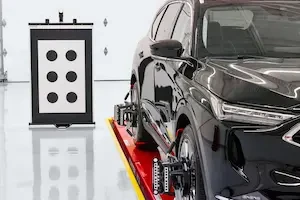
Brennan credits one thing in particular with compressing that timeline: Choice Collision already had ADAS calibration running in-house before it added glass. Windshield replacement on modern vehicles almost always means recalibrating the cameras and sensors mounted to it, and shops without that capability face a much steeper learning curve.
“If you’re going to do windshields, ADAS and glass absolutely go hand in hand,” Brennan said.
Horne sees the same connection industry-wide, and describes a windshield today as far more than a pane of glass. “These cameras need to be calibrated when you put a new windshield in,” he said. “It’s not just a piece of glass anymore.”
Training combined I-CAR glass removal and installation courses with direct observation and mentoring from the shop’s existing glass vendor, followed by internal hands-on practice. On the equipment side, the shop invested in tools like a WRD “Orange Bat” spider cutter, spider line cutting systems, GT cold cutters, suction cups, and Betaseal adhesives and primers.
The payoff: faster cycle time, more control and new revenue
The results showed up quickly, even though the shop hasn’t isolated glass-specific metrics from its overall numbers.
- Faster cycle time. Brennan estimates overall cycle time improved by roughly one to two days once the shop stopped waiting on an outside vendor’s schedule. “You don’t realize until you’re doing the glass yourself how many removals and reinstallations actually happen,” he said.
- Tighter quality control. With every step of the glass process happening under one roof, accountability improved. “We control the process ourselves,” Brennan said. “If something happens, we know exactly what happened and can address it immediately. Everything that touches the car is us.”
- New revenue. Before bringing the work in-house, Choice Collision made little to no profit on glass repairs handled by outside vendors. Now the shop captures labor revenue directly, retains more margin, and takes on standalone windshield work it wouldn’t have had before.
- Better customer experience. Technicians can now spot windshield damage during a repair and offer to handle it on the spot. “We can take care of it while the vehicle is already here, so they don’t have to take it somewhere else afterward,” Brennan said.
What he’d tell other shops
Not everything about the transition was seamless. Brennan said building supplier relationships with aftermarket glass companies like PGW and Pilkington took longer than expected. “You can’t just jump right in and expect to order glass immediately,” he said.
He also points to staffing as a limiting factor. Choice Collision currently has one primary glass technician and two others trained to assist, and Brennan says cross-training more of the team is one thing he’d do differently. “If everyone’s able to do it, then nobody has to stop what they’re doing and wait for one technician.”
Horne offers a similar caution to shops eyeing the move: don’t rush past the learning curve just because the tools are accessible. “I can’t teach you experience,” he said. “Don’t try to rush it.”
For Brennan, the deliberate pace is exactly why the rollout worked.
“We took our time and were very deliberate,” he said. “You have to be willing to learn before you implement. If you rush into it, you’re going to eat costs and deal with comebacks you don’t want.”
This is part one of a two-part series on collision shops bringing auto glass work in-house. Part 2 covers what shops should know before making the move when it comes to training, ADAS considerations and operational realities that come with it.




Leona Scott