


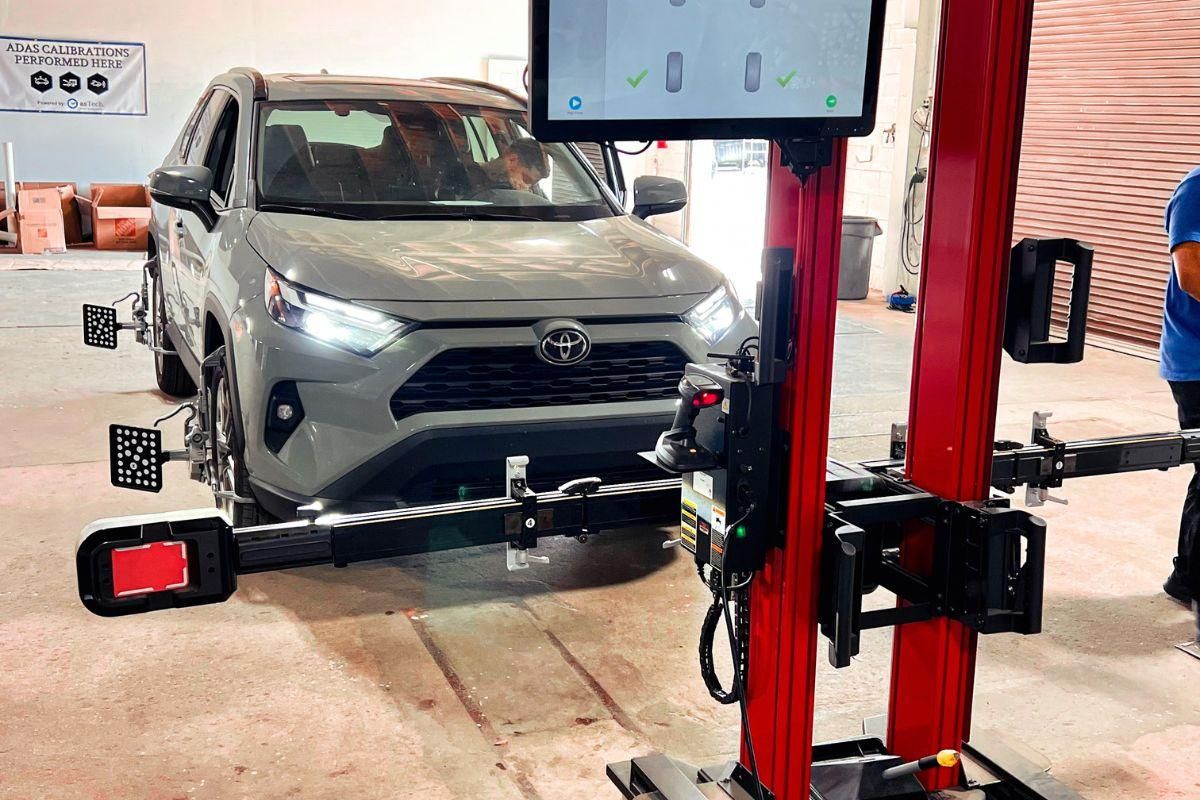
When ADAS started showing up in volume on late-model collision jobs, many shops leaned on dealer sublets or treated a clean scan as a green light.
Two early adopters — Kevin Gallerani of Cape Auto Body in Plymouth, MA, and Gary Wano Jr. of GW and Son Auto Body in Oklahoma City, OK — went further: they built controlled environments, formalized workflows, and invested in training so calibrations were completed to spec. They talked to Autobody News about what pays, what’s challenging and what they’d change if they started over.
The Room: Environment Beats Equipment
Gallerani said early sublets revealed a gap: dealers would scan, see no codes, and send vehicles back. He stressed that calibration isn’t about whether a sensor powers up — it’s aim and distance tolerance. As he put it, “calibration is teaching the vehicle how far away it needs to be from an object.”
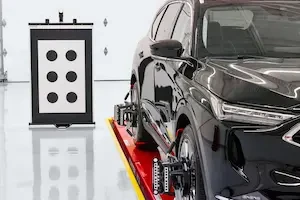
That’s why his team built a dedicated “clean room” in 2019: a laser-leveled floor, matte gray walls, blacked-out windows and controllable lighting. Sunlight, reflections, moving targets or wind can corrupt results, especially for camera-based systems.
Wano arrived at the same conclusion and built a separate brick-and-mortar calibration center rather than retrofit production space. His reasoning: production floors are sloped toward center drains, which violates OEM demands for a flat plane.
On outdoor/mobile work, Wano is blunt: “It’s impossible to calibrate outside.” He also emphasized lighting that can be dimmed to remove shadows and non-reflective walls so radar/sonar energy isn’t bounced back at sensors.
Both cautioned that a calibration room is not tape on the floor. It’s a dedicated 1,200– to 2,000-square-foot space — no toolboxes, lifts, or reflective clutter — and it stays dedicated. If volume isn’t there, ROI gets tough; if it is, the liability reduction alone justifies doing it right.
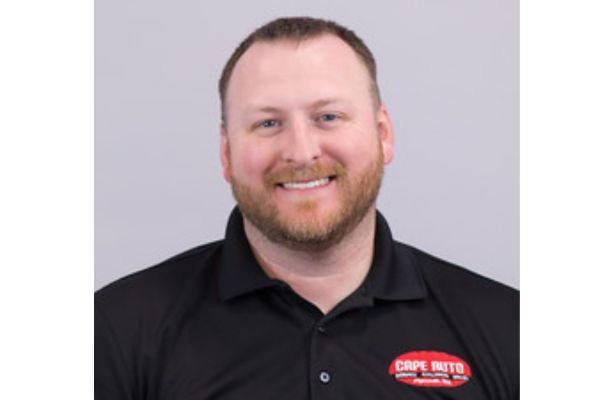 Kevin Gallerani.
The Workflow: Alignment First, Verification Last
Early ADAS adopters learned quickly that calibration is a process, not a button press. Gallerani’s and Wano’s sequences align:
• Pre-scan on arrival before disassembly.
• Blueprinting to identify affected ADAS components (hit, disconnected, replaced).
• Estimate plus an ADAS “scrubber” to flag required calibrations, then confirm with OEM procedures (or trusted aggregators).
• Alignment before calibration so you’re not aiming targets while the vehicle tracks crooked.
• Set vehicle condition per OEM (OE tire pressures; remove heavy cargo; clean glass/camera view; and — on many makes — a full fuel tank or ballast equivalent).
• Static and/or dynamic calibrations in the room and on the road as required.
• Verification drive to stage real-world triggers (cross-traffic, blind spot) and confirm proper function.
 Gary Wano.
On the alignment prerequisite, Gallerani was explicit: “You have to do an alignment first” when the repair involves front radar or windshield cameras. He also noted how sensitive these systems are — “one or two millimeters off” at the camera can “drag the car into a wrong lane” over distance.
That sensitivity is why both shops build in a post-calibration verification drive. In one case at Gallerani’s shop, a vehicle felt like it was gently “fighting” the driver; a re-check found a calibration issue, they corrected it, and the symptom disappeared.
Even good shops can miss, which is why the road test is non-negotiable.
Documentation & Insurers: Show Your Work
Wano’s files are a master class in defending necessary operations. He distinguished scans from calibrations this way: “A post-scan is not a calibration.” A scan can say a system is operable; a calibration confirms it functions to OEM parameters. That difference is critical for components like blind-spot radars in bumper covers — reinstallation can shift a module just enough that only calibration and a verification drive will catch it.
To secure approvals and protect the shop, Wano attaches:
• Pre/post/in-process scan reports
• Alignment printouts
• Photos of tire pressure gauge readings
• Photos confirming cargo removed
• Fuel/ballast weight verification (and seat weights if specified)
• Calibration reports and a short verification-drive note
He summed up the paper trail this way: “Supporting docs can run 20–40+ pages.”
Gallerani follows a similar approach and front-loads calibration operations into supplements so adjusters know what’s coming. Some carriers still conflate scans with calibrations, so both shops cite OEM procedures whenever there’s pushback or gray language.
Training & Tools: People Over Buttons
Both owners emphasize people and procedures over gadgets.
Gallerani invested in EV systems and safety training, sending techs for multi-week courses despite the short-term production hit.
Wano used layered learning from I-CAR, Car ADAS consulting and OEM training; his goal is to develop a team capable of reading schematics, interpreting OEM language and troubleshooting calibration failures — skills that extend far beyond menu operation.
On equipment, Gallerani selected a platform that matched his market’s specialties after years of DIY targets and dealer frustrations. But both say the tool is secondary to the room, SOP discipline, documentation and training.
Business Reality and a Hard Lesson
Wano’s center performed well, but he promised clients he’d cover short-pays and then contest them. That commitment, plus insurer pressure to standardize pricing, led to significant refunds. He ultimately sold the center, noting that owning both the body shop and the calibration business may have created optics issues in payor discussions.
His hindsight: structure ownership and pricing strategy carefully to reduce friction.
Gallerani took the liability view: if his shop touched it, his shop owns it — which is why he keeps “95%” of calibrations in-house. Subletting doesn’t outsource accountability.
What’s Next: Less Volume, More Skill
Both owners see fewer collisions, as ADAS sensors are preventing them, more totals and a market with lower car counts but higher complexity. Gallerani expects more self-calibrating modules, especially radar, and a gradual shift from “calibrate” to “verify and document.” Camera-only stacks may expand on some platforms, but that won’t eliminate alignment checks, clean-room conditions or verification drives.
What They’d Do Again
• Dedicate a true clean room and keep it uncluttered.
• Bake alignment, setup conditions and verification drives into the SOP.
• Treat documentation as revenue and liability protection.
• Train techs to read procedures and schematics, not just operate tools.
What They’d Rethink
• Ownership optics and pricing strategy if spinning up a separate calibration brand alongside a body shop.
• ROI assumptions without clear volume and payor alignment.
• Any temptation to “make do” outdoors or on a sloped floor.
In early adoption, millimeters matter and process is everything. The shops that win will be the ones that build the environment, follow the procedure and prove it — every time.






Leona Scott