

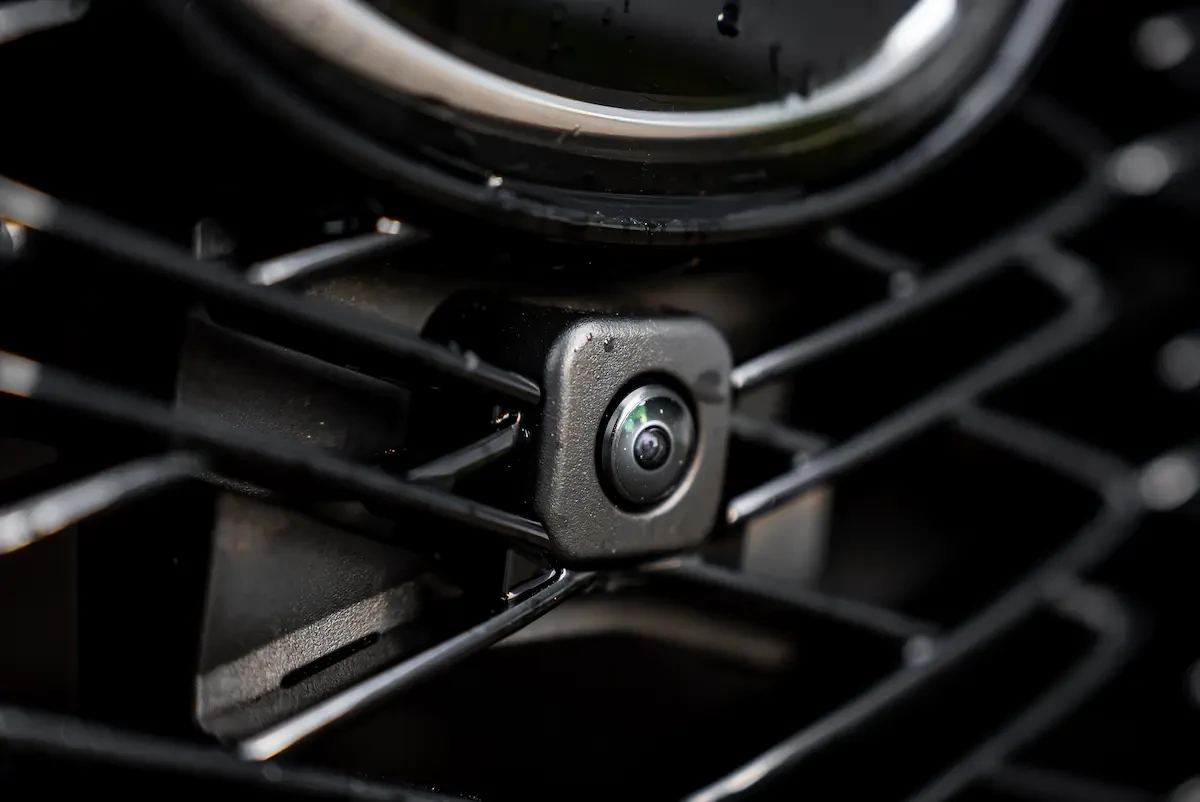
The sensors embedded in today's vehicles are doing more than most drivers realize. Adaptive cruise control, lane keep assist, automatic emergency braking — these systems depend on precise calibration to function as designed. A sensor pointing just two degrees off center line may cause a vehicle's safety systems to behave as though it's operating in an entirely different environment. There is no warning light for that.
That gap between what drivers assume and what shops can actually verify is at the center of where the collision repair industry finds itself in 2026.
The two-part problem: Identification and verification
Srisu Subrahmanyam, CEO of Repairify, puts the problem in two parts. The first is identification: knowing which sensors need to be recalibrated after a collision based on where the damage occurred and what systems are on the vehicle.
The second is verification: confirming the calibration was actually performed correctly. "Just because you see a blank screen doesn't mean your ADAS systems are perfectly fine," he said. A clear scan showing no DTC codes is not confirmation that sensors are operating within spec. Most vehicles have no instrumentation that tells a driver, or a technician, whether they are.
There is also the matter of sensor drift, a phenomenon that occurs independent of collisions. Sensors can fall out of alignment from normal vehicle motion over time, quietly degrading the performance of systems drivers rely on without triggering any visible warning. It is a dimension of ADAS risk that extends well beyond the repair event itself.
What identification systems can and can't do
The industry has made progress on the identification side. Standardized systems, including Repairify's own adasThink platform, have moved shops away from tribal knowledge toward more systematic approaches to identifying what needs to be done on a given repair order.
But Subrahmanyam draws an important distinction: OEM procedures tell technicians how to perform a calibration, but they do not tell shops which sensors require calibration based on the specific collision damage.
"There is a marriage of a few things," he said, like what sensors are on the vehicle, what damage was done, and how those map to required calibrations. That mapping is what identification systems are solving.
On the shop floor, that mapping requires deliberate process, not assumptions. Ryan DeMarco, owner of All County Collision in Eustis, Fla. starts every repair with a pre-scan, followed by full disassembly for damage discovery and repair planning. From there, his team uses multiple software platforms to identify potential ADAS-related operations before going a step further.
"Those tools are only a starting point," he said. "We then research the OEM repair procedures for the specific vehicle to determine exactly which calibrations, inspections, and related operations are required."
For DeMarco, that sequence is non-negotiable. "Every repair plan is built around OEM documentation rather than assumptions or generic guidelines," he said.
John Melendez, owner of JDM Collision & Calibrations in Thornton, Ill. takes a similar approach. His shop begins every repair with a complete pre-repair scan, a review of OEM repair procedures, and an evaluation of all ADAS systems equipped on the vehicle. They also work closely with calibration partner Kinetic to identify calibration requirements based on the vehicle, damage analysis, and manufacturer guidelines. Fault codes, he says, are not the deciding factor.
"If a mounting bracket, sensor location, camera mounting surface, or surrounding area has been impacted or compromised, we will perform additional testing and make recommendations even when the pre-repair scan shows no diagnostic trouble codes," he said. "Every vehicle is evaluated individually, but the final determination is always driven by OEM requirements and verification that the system can perform as designed."
A clean scan is not a green light
Verification, however, remains largely unsolved, and it is what the ADAS Functionality and Integrity Act is designed to begin addressing. The bill directs NHTSA to establish testing guidelines and tolerances that would give repairers a way to confirm calibration performance meets OEM specifications. Subrahmanyam notes the bill is more focused on the repair side than it is often characterized. "My focus is much more on the repair side of it because repairs are much more routine," he said. "It happens every day."
Since that framework was established, the legislation has advanced. On May 21, 2026, the House Committee on Energy and Commerce passed H.R. 7389, the Motor Vehicle Modernization Act of 2026, with the ADAS Functionality and Integrity Act incorporated as Section 221. The bill is now heading to a full vote on the House floor. Shops and industry stakeholders can track its progress at congress.gov.
Aaron Schulenburg, executive director of the Society of Collision Repair Specialists, offers a more qualified read on the legislation. The ADAS Functionality and Integrity Act, as part of the Motor Vehicle Modernization Act, directs NHTSA to study how common vehicle modifications affect ADAS functionality, a distinction he says matters.
"While the legislation focuses on studying impacts and developing guidance, it focuses more on understanding aspects surrounding modifications rather than establishing accountability mechanisms to ensure that the necessary repair and calibration procedures that can affect all vehicles are actually performed," Schulenburg said.
He acknowledges the bill creates meaningful awareness around how vehicle changes can alter the intended performance of systems such as automatic emergency braking, lane departure warning, and collision avoidance. But for collision repairers specifically, he points to a dynamic the legislation does not resolve. "Our businesses work in a unique space alongside our direct customers who are often also navigating a claims process that can present significant pressure that has the potential to impact consumer decisions in how a vehicle is repaired," he said.
That pressure, and the repair accountability gap it can create, is why SCRS continues to advocate for the SAFE Repair proposal, which Schulenburg describes as a framework to help ensure consumers receive safe, proper, and complete repairs by reducing commercial influence over repair decisions and reinforcing the importance of following OEM repair procedures and required calibration processes.
DeMarco draws the same line on the verification side. A clean scan, he says, is not a green light. "Many ADAS systems can be out of specification, improperly aimed, or otherwise affected by a repair without setting a fault code," he said. "The absence of a warning light does not mean the system is operating as designed." His shop performs required calibrations based on the repairs performed, regardless of whether fault codes are present.
Melendez puts it the same way. "Fault codes only indicate that the vehicle has detected a problem," he said. "They do not confirm that cameras, radar sensors, and other ADAS components are functioning within manufacturer specifications."
His shop uses OEM testing procedures, dynamic road tests, calibration verification, and support from its calibration partner depending on the manufacturer. "With today's technology, there is no such thing as being too careful when it comes to vehicle safety," he said. "Our responsibility is to verify system performance, not simply confirm the absence of fault codes."
What remote diagnostics can and can't tell you
Josh McFarlin, chief operating officer of AirPro Diagnostics, works at the intersection of that identification and verification gap every day. When a vehicle comes in after a collision, McFarlin says the scan result is more layered than it might appear.
A clean scan doesn't simply mean no problems; it depends on what type of codes are present and what the vehicle has had a chance to detect. Fault codes fall into three categories: active, meaning the fault is present right now; historical, meaning it was set at some point in the past; and pending, meaning the vehicle has identified a potential problem but hasn't completed enough of a drive cycle to set a full code. That last category is particularly relevant in collision repair.
"If the vehicle is in an accident, it leaves the scene on a tow truck," McFarlin said. "It's not uncommon for there to be things in pending status, because it hasn't gone through a drive cycle to effectively set that DTC yet."
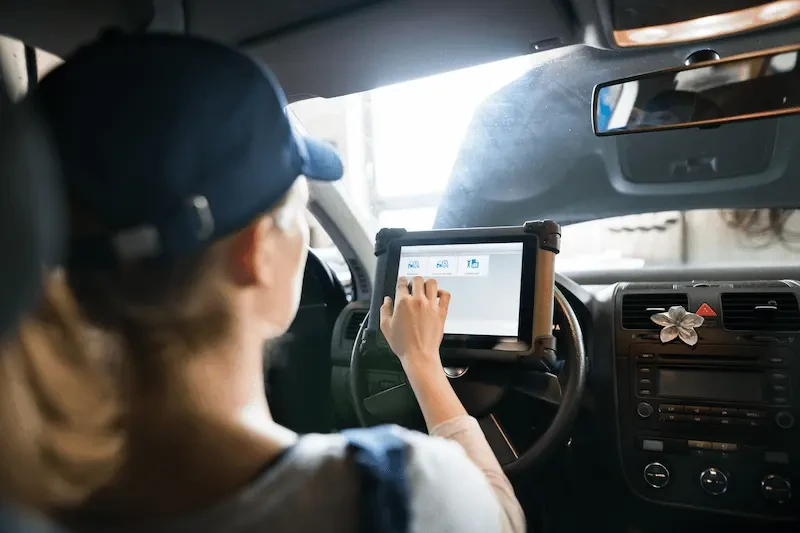
Beyond fault codes, AirPro also reviews live data — parameter identifiers, or PIDs — while the vehicle is powered up but not running. The goal is to catch damage that may not have triggered a code yet. McFarlin uses AC pressure as an example: in a front-end collision, a damaged condenser may have allowed refrigerant to escape without setting a fault. "There'd be no pressure, but the damage may not be so significant that the shop has identified that yet," he said. "We try and flag that for the shop."
The same layered approach applies on the post-scan side, where the picture gets more complex. Some original damage conditions may still be present if repairs aren't complete. New faults can appear from operating a partially disassembled vehicle through the shop. And lingering issues can surface if components weren't fully reconnected during reassembly.
AirPro walks shops through all of it, but McFarlin is clear about the limits of what remote diagnostics can determine. "We're not at the vehicle, we're remote to the vehicle," he said. "I can't tell you for sure whether or not a circuit fault is a result of that accident or a result of something they drove over three days before the accident. But I can give you all the details so that you can be in a position to make that assessment."
The liability gap
In the meantime, the liability gap is real and growing. Subrahmanyam is direct about what shops may be misunderstanding: subletting calibration work does not transfer responsibility. "That sublet concept doesn't absolve their responsibility," he said. "They're realizing that that's not true." As ADAS-related litigation continues to grow, collision shops that have treated calibration as someone else's problem are finding the industry disagrees.
McFarlin frames it the same way, using a courtroom analogy. "First chair always the shop," he said. Whether a shop sublets to a mobile provider, a fixed location, a dealer, or a remote diagnostics service, the shop that accepted the keys bears primary responsibility. "I've never heard anybody who, in my view, had an informed opinion take a different position than that."
That doesn't mean remote providers bear no accountability. McFarlin says AirPro maintains insurance for its work, has explicit language in its customer agreements, and — notably — records both the phone call and the screen session for every remote diagnostic interaction. Those recordings go back to 2016.
"If there's ever a need to be able to support that customer in documenting that what was done was done correctly, we've got that," he said.
The numbers reinforce the urgency. Subrahmanyam estimates that approximately 65% of vehicles going through collision shops require some form of calibration, and that somewhere between 35% and 40% of that work is actually getting done. That gap, measured in vehicles leaving shops with sensors that may or may not be functioning correctly, is what drove both the Collision Industry Conference and the Society of Collision Repair Specialists to formalize separate ADAS efforts in April. CIC's new task force chair Sean Carey said at the April meeting in Charlotte that "today, there are thousands of cars in shops incorrectly calibrated or ADAS work that's not done."
McFarlin's own data points to how often calibration needs go unidentified before a remote scan. Of the calibrations AirPro communicates to shops, he estimates 40 to 50% of the time the shop is hearing about the need for the first time. That figure climbs higher for shops that only use remote diagnostics for post-scans.
"If they're only doing post scans, that drives that percentage way up," he said. Shops using pre-scans are generally flagged earlier. Estimate scrubbing tools also help shops come to the scan better prepared, he noted, but the gap remains significant regardless.
Calibration is the last step, not the only step
For shops, Subrahmanyam points to process as the foundation. Understanding OEM procedures, implementing an identification system, and building calibration into every applicable repair order are the baseline. Technical skill is increasingly non-negotiable. "It's no longer about just not wanting to read tons of manuals," he said. "The fact is it's becoming very, very technical."
DeMarco puts it directly. "One of the biggest misconceptions in the industry is that ADAS decisions should be based on whether there's a warning light on the dashboard," he said. Modern vehicles, he argues, are far more complex than that — ADAS touches repair-versus-replace decisions, refinishing procedures, required OEM parts, calibration requirements, and overall vehicle safety.
"I wish more shops would make ongoing ADAS education a priority and rely on OEM repair procedures as the foundation for every repair decision," he said. "The information is available; the challenge is making the commitment to follow it consistently."
Melendez extends that point further. ADAS work, he argues, begins well before a calibration is ever attempted. Structural repairs, panel fit, sensor mounting locations, suspension components, ride height, and overall vehicle geometry must all be inspected and verified first.
His shop pre-measures the vehicle, verifies wheel alignment, inspects structural and suspension repairs, and confirms all mounting locations meet OEM specifications before calibration is attempted. "If a vehicle is out of specification, calibration results may be unreliable or may not be possible at all," he said.
His concern about the industry's broader approach is direct. "The biggest misconception is that calibration alone confirms a proper repair," he said. "Calibration should be the final verification of a properly repaired vehicle, not the process used to determine whether the repair was performed correctly."
As pressure to increase throughput grows, he argues, shops cannot let volume override safety. "The goal should always be to return the vehicle to the customer with the same level of safety and performance intended by the manufacturer."
McFarlin's final point cuts across all of it: process documentation. Having a defined, repeatable process for how calibration needs are identified, how the work is performed, and how it is recorded isn't just good practice; it's the foundation of a defensible liability position.
“It doesn't need to be the same as the process of your competitor down the road," he said. "But it needs to be the same process that you follow each time,” he said
When liability questions arise, he argues, the first thing someone will ask is why a particular step was taken, and a documented process provides the answer. “Have a process and follow it,” he said. “That becomes, in my opinion, pretty defensible.”
The direction the industry is heading is not ambiguous. Vehicle complexity is increasing, OEM position statements are tightening, and regulators are beginning to move. The shops building disciplined calibration workflows now are the ones that will be positioned to absorb what comes next.


Lisa McArdle