

The National Oceanic and Atmospheric Administration’s Climate Prediction Center expects a strong-to-very strong El Niño to last into early 2027, setting up a winter weather pattern that NOAA says typically steers storms across the southern U.S.
In its Oct. 8 El Niño update, the agency put the odds of a strong-to-very strong event lasting into January-March 2027 above 83%. It gave an 83% chance that the October-December period will surpass every El Niño on record since 1950 in strength. The agency noted that an event of that size makes typical El Niño impacts more likely but does not guarantee them.
Boyd Group Services, the parent company of Gerber Collision & Glass, has tied both a mild winter and unusual winter storms to its results. It cited a mild winter among the challenges of 2024 and estimated that winter storms in the South trimmed its first-quarter 2026 same-store sales growth.
Shops in Arkansas and North Carolina told Autobody News that ice storms cost them days of business. Shop owners in Nebraska and New York gave different accounts of how much a snowy winter moves their volume.
When NOAA declared El Niño in June, the agency said the jet stream tends to dip south during a typical El Niño winter, steering storms across the southern states. The same shift tends to leave the Northern Rockies and the Ohio and Tennessee valleys drier. NOAA added that El Niño frequently brings above-normal winter temperatures to northern states, while southern states see better odds of stormy weather, with higher chances of rain as well as snow.
Ice disrupted southern shops
The deadliest billion-dollar weather disaster in the U.S. in 2026 as of June was a winter storm that spread snow and ice in a band stretching from Texas to the Northeast, according to Climate Central’s mid-year tally. The storm accounted for 171 of the 183 deaths tied to the 12 billion-dollar events Climate Central counted from January through June.
Austin offers a snapshot of road conditions during a late-January winter storm. From 9 a.m. Sunday, Jan. 25, to 7 a.m. Monday, Jan. 26, Austin police handled 967 service calls, including 69 crash responses and 91 calls about traffic hazards, the city reported. Austin-Travis County EMS had answered 32 collision calls since that Saturday.
At Bale Collision in Little Rock, Ark., the January storm shut the shop down for close to a week because ice kept customers from reaching it, said David Cates, body shop manager. He said the storm came in three stages: freezing rain first, then sleet, then snow.
“We pushed out the cars in the shop and were ready when the storm-damaged cars arrived!” Cates said.
Todd McGee, owner of Johnson Auto Body in Knightdale, N.C., said the ice storms put the shop about 10% below its normal sales and cost it a few production days, though business picked back up afterward.
“Here in North Carolina, we tend to get more ice than snow, and when that happens, it pretty much shuts the whole area down,” McGee said.
“I’d much rather lose a few days of production than have one of my employees get hurt trying to make it to work, so I always make coming in optional,” he said.
McGee still pays employees who stay home and usually gives an extra day of paid time off to those who make it in.
How winter weather showed up in shop volume
Boyd’s first-quarter 2026 results reflected the southern storms. Same-store sales rose 1.7% in the quarter. Boyd estimated growth would have reached about 2.6% without a 90-basis-point impact it attributed to “unusual winter storm activity in the U.S. South.” The company said the quarter had as many working days for sales and production as the first quarter of 2025. Drawing on claims-platform data, Boyd also estimated that repairable claims across the industry fell between 0% and 2% during the quarter.
Looking back on 2024, Tim O’Day, Boyd’s CEO at the time, cited a mild winter, which he called “the warmest winter in over 129 years,” along with weak claims volume, in describing a challenging year. Boyd’s same-store sales fell 1.8% that year.
“In a hard winter with steady snow and ice, our volume can run about 10-15% higher than in a mild one,” said Eric Dawson, owner of Shadow Lake Collision, which has locations in Papillion and Omaha, Neb. “The 2023-24 winter was a good example of the other side. With so few storms, we felt the slowdown, and it took a while to make up for it.”
Too much weather can also work against the shop, Dawson said. When conditions get bad enough to close schools, the shop doesn’t get much work. The best conditions for business, he said, are a light dusting of snow in the middle of the day.
“We don’t see a huge difference in claims volume based on the severity of winter,” said Ben Bowman, owner of Cliff’s Body Repair in Scotia, N.Y.
In the Northeast, he said, even a mild winter brings some ice and snow storms that lead to accidents. A very snowy winter adds what Bowman called “snow bank” accidents, which happen when snow left behind by plow drivers blocks drivers’ views.
Storms that drop 2 to 3 inches of snow are the sweet spot for the shop, Bowman said, because people still get around town while the roads are slick. When 12 inches or more falls, people stay home, and the shop sees only minor incidents, such as people hitting their cars with snow blowers.
What winter brings in, and when
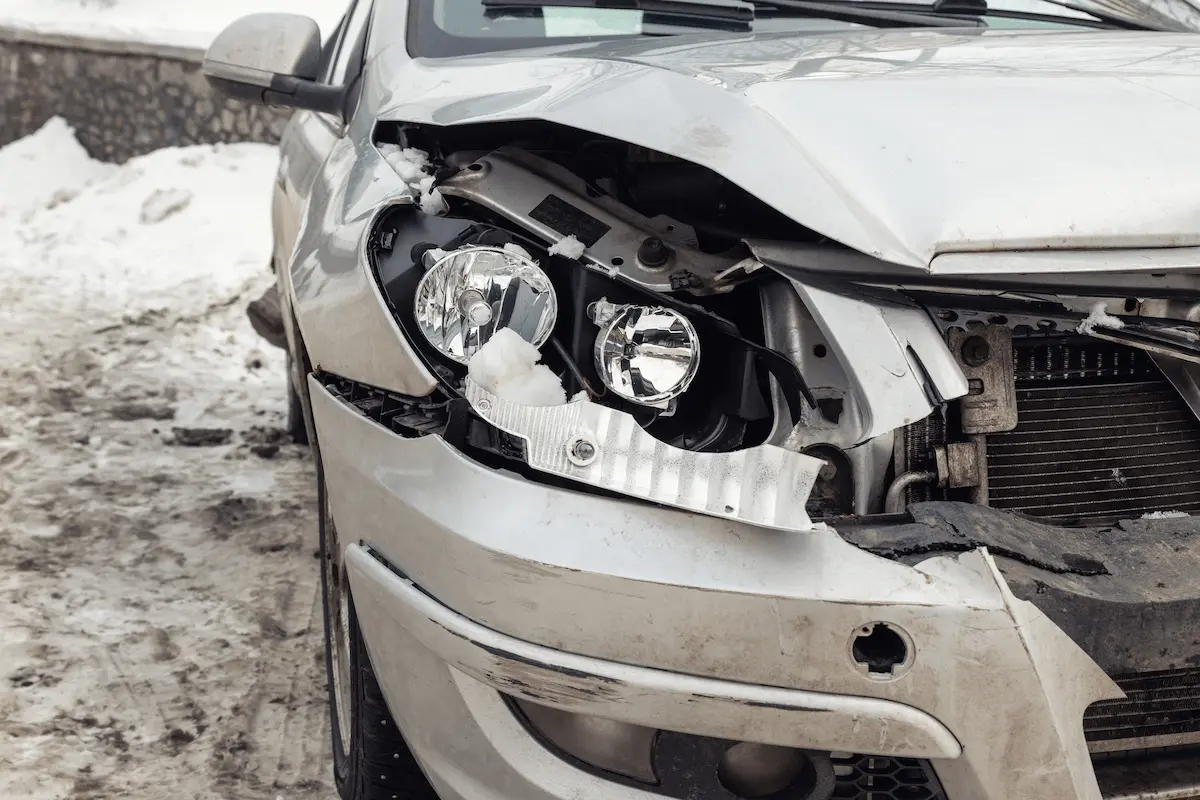
Dawson said winter work at Shadow Lake is mostly slide-offs and low-speed collisions, damaging front bumpers, fenders, headlamps, and grilles on vehicles that couldn’t stop on ice. The shop also sees a lot of rear-end collisions at intersections, wheel, and suspension damage from curb strikes, and some deer strikes as daylight hours shrink.
Bowman said winter collisions at his shop tend to be more severe. The shop handles a few minor incidents from clearing snow, but “for the most part we just see heavier hits,” he said.
Southern shops described damage tied to ice. Cates said Bale’s storm work came mostly from carports and tree limbs falling on vehicles amid heavy ice. McGee said Johnson Auto Body typically sees damage from falling limbs and from drivers sliding on icy roads., He added that most local drivers stay home until the roads clear.
Dawson said storm work also arrives at his shop on a delay.
“The calls and estimate requests start within a day or two, but the repair work usually lands one to two weeks later, once the insurance claims are filed and appraisals are done,” he said.
Storms don’t really slow Cliff’s Body Repair down beyond the work of clearing the lot, Bowman said. Claims volume rises about three to four days after a storm, he said.
Each year, 24% of weather-related crashes happen on roads covered in snow, slush, or ice, and 15% occur while snow or sleet is falling, according to the Federal Highway Administration. Crashes on pavement with snow, slush, or ice kill over 1,300 people and injure upward of 116,800 each year, the agency reported.
What shops are planning for this winter
“We’re planning around steady work instead of counting on a storm surge,” Dawson said. He added that the shop is keeping up its dealer and insurance relationships and its marketing, while managing staffing and parts inventory carefully.
Asked whether Cliff’s Body Repair is changing its approach for this winter, Bowman said,
“No, still business as usual for us,” he said.
McGee said he hadn’t given much thought to preparing for this winter until asked. He said that after the shutdowns, parts shortages, and backorders of the COVID-19 pandemic, he thinks the shop has “developed a pretty good attitude about things.”
“The good thing about being in the collision repair industry is that we’re pretty accustomed to adapting to whatever comes our way,” McGee said.
The Climate Prediction Center’s next El Niño update is scheduled for Nov. 12.








Lisa McArdle