


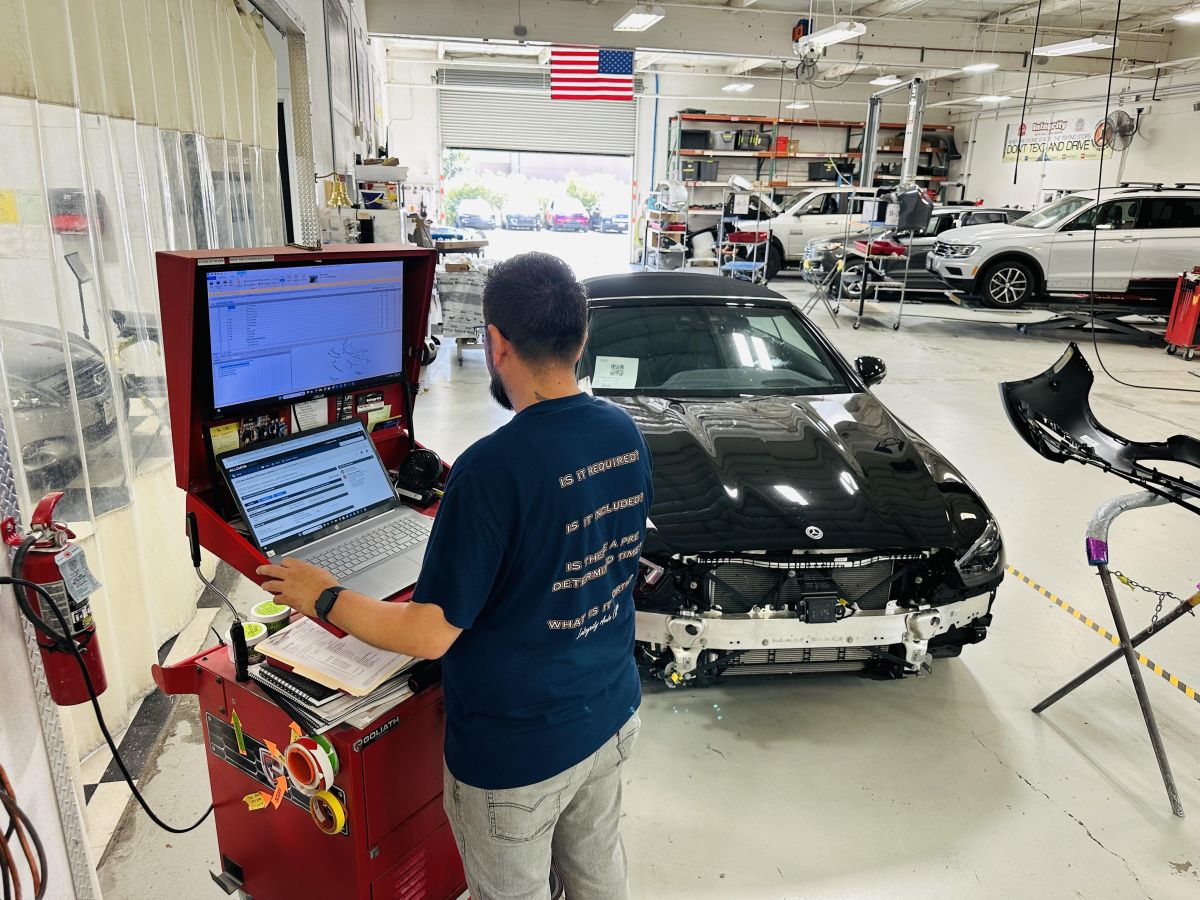
Collision shop owners need a plan for capital expenditures — when to purchase equipment to bring new services in-house, and when to upgrade equipment to enhance services they already perform.
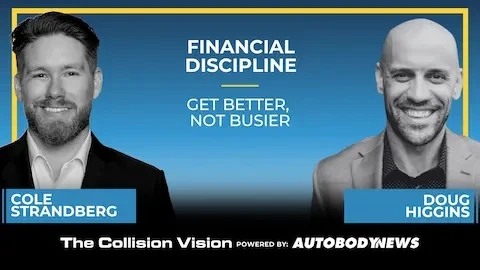
Bill Keyes, Midwest division manager for Hunter Engineering, has been in the commercial equipment business since 2001. He appeared on The Collision Vision podcast, driven by Autobody News and hosted by Cole Strandberg, to talk about how the best shop operators make smart, scalable equipment decisions.
Mistakes to Avoid When Choosing Equipment
While the internet has made it easier to research equipment, Keyes encouraged seeing it live and in action before making a purchase — whether it’s arranging a visit by a company representative to your shop, visiting another shop yourself that has the equipment, or attending a trade show.
When researching, Keyes recommended using all available resources to increase your knowledge base, like Hunter’s learning channel on YouTube.
“I think that alone will help limit the mistakes that you make, because other people have made those mistakes,” he said. “Take advantage of the fact that somebody else made the mistake and tried to try to learn from that.”
What to Consider in Equipment Purchases
Shops should first look at the kind of vehicles coming in for repair: how old are they, and are any particular makes more frequent?
“When you get into ADAS, for example, there's so many different targets and it seems like there's no crossover. Everybody's got their own target and has their own procedure,” Keyes said.
Alignment racks also have varying lifting capacities and lengths to accommodate different vehicles. A shop that repairs a lot of trucks would need a longer rack, or one that repairs commercial vehicles would need one that can lift more.
The next step is to figure out the budget for the equipment: “What do you expect to get out of this and what do you hope to pay to get yourself into it?” Keyes said.
The budget consideration includes a calculation of return on investment.
“We always start with what the investment number is, and then we try to peel that away by how much do you make per vehicle,” Keyes said. “What are you going to have to pay a technician to do it?”
When a shop decides to offer a new service it previously sublet, like alignments or brake work, it also needs to consider where the customer base will come from, and how it will be developed, and how long that will take.
“That may control a little bit what you spend up front,” Keyes said, noting equipment can always be upgraded as more business comes in.
Deciding Which Services Are Worth Bringing In-House
Keyes said he once visited a dealership service center that didn’t realize how much it was spending to outsource ADAS calibrations.
“They spent over 20 grand to outsource ADAS calibrations [in January], and they were closing in on 40 for February,” he said. “You start adding the numbers together and you're like, gosh, there's a couple of reasons you should do it here.”
In addition to the cost, outsourcing that work means the shop has to rely on a third party to do the work correctly, take time out of the shop techs’ days to drive the vehicle there and back, and hope the vehicle gets returned in time to make the delivery date promised to the customer.
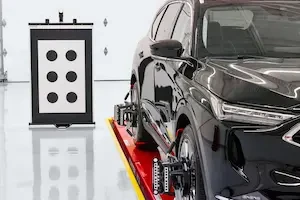
Keyes said about 85% of static calibrations can be done in a shop with a “modest footprint” dedicated to that work.
“We encourage people to get a little more creative with that space that they use,” he said. “If you're trying to recalibrate a camera on a driver's side mirror, you can always move the vehicle to the right side of the bay that you're in. If you're doing a rear camera, bring the car into the bay further, or back the car into the bay. There's many ways to kind of slice that up.”
Hunter’s ADAS calibration equipment can also be set up to compensate for a floor that’s not perfectly level, Keyes said.
“I think it's gotten better,” Keyes said of the facility requirements to bring ADAS services in-house.
Hunter Engineering encourages more collision shops to consider bringing alignment services in-house than it used to, Keyes said.
Its alignment machine can quickly check a vehicle’s camber, caster and toe out, which makes it easier to demonstrate the need for an alignment to the insurance company during the repair planning process — rather than arguing about it after the fact, when the customer is ready to take delivery.
“I think it's just a better service for the collision customer,” he said.
Financing Options for Collision Shop Equipment
Keyes said shop owners should look for financing incentives that can go as low as 0% APR for 12 months.
“You can pay for a piece of equipment in a 12-month period doing one or two alignments a day,” he said.
While some shop owners prefer to pay cash, Keyes said it could be smarter to finance equipment purchases to protect the shop’s cash flow, in case something “that doesn’t necessarily make you money,” like the roof or plumbing, needs to be repaired.
There are several options to finance equipment purchases, Keyes said, but most vendors selling the equipment will have one or two lenders they work with that can offer the best deal.
“If you go to a big collision show where they've got many vendors, there are great opportunities to find lending and cash that way,” Keyes said.
Shop owners also need to factor in depreciation, tax advantages and the payback period when making a financing decision.
“A good CPA is always helpful to help you make the right decision,” Keyes advised.
He said most of the equipment Hunter sells allows shop owners to claim a depreciation deduction on their taxes for five years.
Or, shop owners can take a one-time Section 179 deduction on their taxes, which allows them to immediately deduct the full purchase price of qualifying equipment during the tax year, rather than taking the depreciation deduction over several years.
“Maybe you had a great year in a revenue and a profit standpoint and [that could] help bring that taxable number down,” Keyes said.
“You don't want to just sign up, get your piece of equipment and go on. You want to take advantage of those tax benefits,” he added.
When considering financing, lenders will of course look at a shop owner’s credit score, but they also look at the quality of the equipment.
“I've had many times where sometimes people default, so the lending company is going to be a little sketchy about what are you actually purchasing? Because sometimes that equipment could belong to the lending company if things don't go well,” Keyes said.
Lenders also want to see a solid business plan for the equipment.
“Who's going to operate it? How is this going to add to your business? Things like that,” Keyes said.
From a tax standpoint, most lending situations work more like a lease to own, he said, “which is very good for your box score, as far as anything else that you may need to purchase in this calendar year. You've got this lease sitting out there, but it's not really impacting the fact that now you've got to put four garage doors in or something like that.”
How Top Operators Plan for Equipment Purchases
Keyes said the biggest difference between top operators and everyone else is that they have a plan for equipment purchases and upgrades at all.
“Many, many folks don't have a plan. It comes up when it's an emergency — when it's on fire or you gotta replace this thing. You don't necessarily get the best deal. You can't find the best financing,” he said.
Whether they own one shop or several, the best owners have a capital expenditure (capex) plan.
“They know that their alignment machine is already seven years old. They know once it gets to eight or nine or 10, it's getting pretty long in the tooth, so they're beginning to look — before it makes it to that point where it broke down today, parts are no longer available for this piece of equipment. Now what do we do?” Keyes said.
Keyes said if the owner of a brand new shop identifies five business segments they could get into, and chooses three to invest in, they should at least begin thinking about how to one day bring on the other two.
“When do they become important? When can you afford to get into that type of stuff as you expand your business?” he said.
Strandberg asked when equipment upgrades become about more than just adding a cost to a shop’s profit and loss statement.
Keyes said better equipment can improve both technicians’ and customers’ experiences.
“I think getting pieces of equipment that aid your technicians in [repairing vehicles right the first time], that's going to help the efficiency of the shop,” he said. “It's going to help your customers be more satisfied. They're not going to have to come back to have it fixed again.”
For shop owners looking to add more locations, Keyes said marketing and equipment are important when opening a new shop, but it really comes down to personnel.
Before opening a new location, hire people to work at the existing shop to learn from existing employees, he said, so they are prepared when it’s time to staff the new shop.
What’s Next in Collision Shop Equipment
Hunter Engineering is working on advancements towards autonomy and ease of use, Keyes said.
“I think that's going to be a growing space within the equipment — less interaction with a person to actually do the job that you're doing,” he said.



Abby Andrews