


At Enid Auto Body in Enid, OK, owner Ken Hunnell doesn’t just want cars to move through his shop — he wants them to flow. His two-location operation, which also includes a shop in Hutchinson, KS, has long followed a segmented repair model, assigning specialists to each phase of the process.
“Our body technicians primarily do panel replacement and repair, our painters primarily paint, and someone else handles reassembly,” Hunnell said. “That’s how we’ve operated since our existence.”
The approach ensures technicians work within their strengths, but it also poses challenges: communication gaps, bottlenecks and inconsistencies between locations. When the business began preparing to open a third shop in Salina, KS, Hunnell realized it was time to bring more structure to the flow.
Building a System for Growth
Earlier this year, Enid Auto Body began implementing the Entrepreneurial Operating System (EOS) to create alignment across all locations.
“As we grow, I recognized that I was managing our head coaches — our location managers — inconsistently,” Hunnell said. “One might be getting coached on communication and staffing, while another was focused on performance metrics. EOS helps us define roles clearly and hold everyone accountable in the same way.”
Although the shop is early in its EOS journey, the system is already helping Hunnell and his leadership team establish daily performance benchmarks and quantifiable goals.
“We set a production goal of moving 100 units through each department every day,” he explained. “That means 100 units disassembled, 100 through body, 100 through paint, and 100 through reassembly. Everyone tracks their numbers daily.”
With an average repair order of 25 units, that equates to moving about four cars per department per day. When a department falls short — for example, moving only 50 units in a day — the team knows to make up the deficit the following day.
“It’s not just about tracking units,” Hunnell added. “It’s about seeing where the bottlenecks are and shifting resources before they snowball into delays.”
Data-Driven Accountability
For Hunnell, numbers tell a story — one that’s sometimes uncomfortable but always instructive.
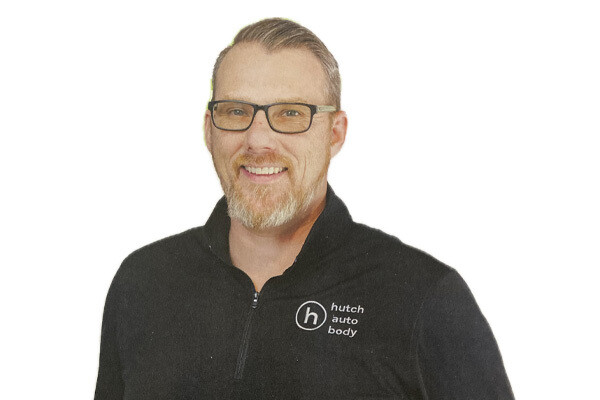 Owner Ken Hunnell leads Enid Auto Body with a focus on precision, communication and trust – values reflected in the company’s commitment to all OEM parts, a lifetime warranty and exceptional customer communication.
“I heard a long time ago, ‘We have faith in God, but data doesn’t lie,’” he said. “When the data shows that three people had to return a car, even if it’s just to buff a spot or wipe off compound, that’s a vehicle return in my mind. And we treat it seriously.”
That philosophy has translated into a measurable drop in rework and improved cycle times. While Enid Auto Body’s current EOS scorecard is still in development, Hunnell estimates the shop’s average cycle time has improved by more than a day compared to last year, largely due to real-time tracking and increased accountability.
To maintain that progress, every department leader reports on daily output metrics and flags any variances during morning huddles. If the disassembly area lags behind, for instance, the next day’s plan shifts to rebalance workload and prevent a backlog from carrying forward.
Incentives that Reinforce Team Ownership
Beyond hard numbers, Hunnell believes consistent recognition fuels better performance. One recent example came from his customer service representative team.
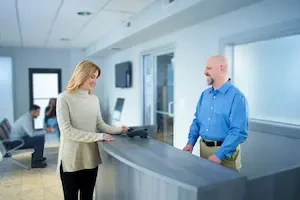
“Our newest CSR has only been here a year, but she earned four PTO days last year based on her performance and teamwork,” he said. “She would probably say she just did her job — greeting customers, checking them in, communicating clearly and delivering cars back. But that reliability made her invaluable.”
Small rewards like that reinforce what Hunnell calls “the ownership mindset.” Each team member sees how their part affects the next stage in the process. “When people know their numbers and understand the why behind them, they take pride in keeping the flow moving,” he said.
Fixing the Flow
Hunnell credits his management system and daily performance tracking for helping pinpoint bottlenecks. “Our management system shows us exactly where we’re backed up,” he said. “If we’ve got 12 cars in disassembly, we know the issue isn’t parts or approvals — it’s right there in front of us. Once we started looking at things mathematically, it became easier to manage the entire process.”
The visibility has reduced frustration and guesswork, two chronic pain points in collision centers using segmented repair. Now, technicians and estimators can quickly identify when the next department is falling behind and adjust accordingly.
“Every comeback makes me physically ill,” Hunnell admitted. “So we do whatever we can to prevent them. Having those benchmarks — even something as simple as 100 units per department per day — keeps everyone aligned.”
Looking Ahead
As Enid Auto Body expands into Salina, Hunnell is confident the EOS framework will help his growing team stay consistent. “We’ve always been process-oriented, but EOS is giving us the structure to scale that,” he said. “It’s about defining what success looks like and using data to get there.”
For him, the motivation goes beyond efficiency. “At the end of the day, I want every customer to feel like their car was repaired right the first time,” he said. “That’s how we measure success.”
Jessica Stegner, vice president of the Oklahoma Auto Body Association (OKABA), said Hunnell’s leadership and his team’s commitment to professional growth stand out across the state. “[Enid Auto Body] sends their team to almost every OKABA event to glean knowledge every chance they get. They are also so friendly and professional and are just an exceptional group of guys.”



Leona Scott