



We run into someone we know and would like to know better — or think more deeply of falling in love with — and we can either blow it bigtime or knock it out of the park, even if it’s only a minute or two, or just a phone call. Regardless, customer experience mapping (CXM) is vital. It’s your intentional, proactive research into all aspects of one customer’s journey, alongside unconditional positive regard for that person.
The website linked above provides resources and an extensive outline, including benefits and best practices, five implementation steps, risks and failures, and even software.
That’s CXM.
Enter the client.
First steps: To start, find the frame
From personal pictures to professional portraits to prominent paintings, framing is essential. Framing shows what to take in and what to leave out.
Matthew DiFrancesco of Pennsylvania’s High Lift Financial & Consulting likens it to learning about people.
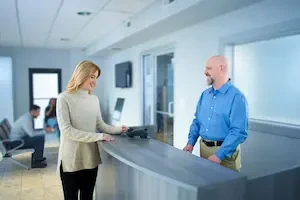
A shop owner or operator gains a sense of who a customer is and their situation from perceptual clues, such as gender, whether the car was towed, the day and time, and the tone and tempo of their voice.
This doesn’t mean irretrievably judging the customer to be irredeemable or excellent. Framing just guides the service provider, DiFrancesco said, on how to “walk them through the process — pre-framing before objections arise. Doing repairs right and using OEM parts — ‘mapping’ by setting it out for them.
The fact is, he added, shops should just do it all the time, “so [customers] get what they’re supposed to be getting. But a lot of shops don’t.”
What does this look like?
“It’s ‘Mr. and Mrs. Smith, we value you as customers and human beings. This vehicle was designed for your safety, and that’s how we want to give it back to you.’”
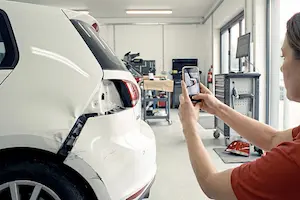
A customer’s first contact with you might be an artificial intelligence (AI) estimate. Your first personal touchpoint with them is this moment.
From there: Categories are OK at first
At db Orlando Collision, owner Drew Bryant has developed a series of categories called customer avatars — “Suzy Soccer Mom” and “Mick Write a Sheet,” among others. These are available to his team as a “trading card” mnemonic, a shorthand description of each type of person’s goals and values, challenges and pain points, sources of information, and objections and role in the purchase process.
“We’ve narrowed it down over 10 years to five different kinds of people,” Bryant said. “Our experience is they say, ‘You took the words out of my mouth; this is exactly what I was looking for.’”
These aren’t hard-and-fast profiles. If possible, staff members combine the avatars with other information, such as age, income, education, and occupation. The avatars don’t lead to static “this is how we do things” behavior. They’re tools to track an individual’s step-by-step movement through the shop’s repair process.
“We have specific resources — videos, materials, data, trends — that speak to them,” Bryant said. If it’s Suzy, the resources address “what she wants and what hurts, what she’s thinking about” — her “minivan carrying precious cargo,” for instance. The avatar is a starting point “for each customer’s journey, tailored to the individual.”
How to get there?
“See the signs, ask probing questions,” he said.
Discern, for instance, whether Mick just wants an estimate. “We might get a positive review without even fixing the car,” Bryant said. “We might have to say, ‘We can’t in this case bring you value, but we can refer you to an alternative service provider,’” and the customer doesn’t leave feeling frustrated or offended.
“We didn’t waste their time; they didn’t waste ours.”
Another tool in Bryant’s box is “3D-printed models of animals: dove, eagle, peacock, owl,” which are assigned as the relationship between the client and the shop progresses. Doves are peaceful, an eagle’s presence commands, a peacock preens to be seen, and an owl is analytical. Staff members have these physical items at their workstations as a reminder. Will 300 photos at a file link be welcomed or overwhelming? Well, it depends.
And finally: All over but the crying
The menagerie helps guide Bryant internally as well. His job before he began to change how cars are cleaned up in his corner of Florida was as a restaurant trainer, directing the work for a Panera Bread unit group.
You practice personality perception inside first, or it never reaches customer experience mapping.
“Hire the personality, not the skill,” Bryant said. “We need a certain kind of person.”
Clay Hoberecht, a shop owner in Kansas, recommends the book Unreasonable Hospitality by Will Guidara.
“It had me in tears [with what] I want to see in my business — heck, in my community,” Hoberecht said.
Restaurants are part of that industry, as are hotels, business and tourism travel, and entertainment attractions. All these have in common a service focus, in the context of people actually enjoying the trip — no matter what happens.
Hotel professionals since César Ritz in the late 19th century are well known, for instance, for never saying the word “no.” An answer might eventually involve that; CXM is not a collection of rules but guidelines, a map for the journey. How the “no” is given makes all the difference.
“Because of our business model, we have a generous amount of friction in the repair process,” Hoberecht said. But CXM involves seeing the person, with their goals, values, challenges, pain, and objections, and making that journey a shared experience, as a friend would.
Many call it simply “paying attention” — and many have called paying attention a synonym for care and love.
“I just got out of a consultation [and] I’m sitting down with a lady who’s never been in a collision, doesn’t know the process,” Hoberecht said. “We help her through that whole thing — walk them through it,” he enunciated.
A specific: Every Monday, Wednesday, and Friday — yes, three times a week — staffers at his Best Body Shop call “every single car on the property, period,” he said. “And typically we have 60 to 75 cars here.”
That’s not 20 to 25 a day, totaling 60 to 75, but every car on every one of those days.
“Communication? Let’s over-communicate. Build a relationship,” he said. “Perfection can be felt.”
It’s Steve Jobs obsessing over the inside of the iPhone, which no customer ever sees. It’s Hash House A Go Go, a restaurant with a location in Las Vegas where Hoberecht’s production manager ate while attending SEMA Show. The production manager “came back to tell me, ‘They’re just like us!’”
This reminds Hoberecht of another book, Setting the Table by restaurateur Danny Meyer, as well as the entrepreneur maven Marcus Lemonis, who has multiple shows — and auto industry experience.
Making the case, and shop results
Bryant and Hoberecht are reasonably well known in the industry, much remarked upon for their results. A third shop owner, Phill Lynn of Midwest Collision in Ohio, is abuzz on collision repair social, lauding CXM.
Collision repair’s future “will be decided by who connects the deepest,” he wrote in one post. “Efficiency and AI are powerful … but human connection, elevated soft skills — listening with empathy, communicating with clarity, creating peak moments of care — are the true differentiators in performance.”
Customers aren’t commonly technician-savvy, “but they never forget how you made them feel,” he added. If new technology gives you more time, use it to benefit people, both customers and team members. Retention and profits follow that “exceptional human connection.”
CXM is a “profit strategy,” as retained clients with great experiences become unpaid promoters of your shop, who then return often and refer others, “slashing acquisition costs.” Talk about a loyalty program.
“Map the experience, design consistent, positive touchpoints, eliminate friction” to create “another lever for revenue and profit growth,” Lynn wrote.
Like Hoberecht, Lynn also referred to unreasonable hospitality, including simple acts, such as personalized updates and thank-you notes. Repeat customers cost nothing to acquire — but you do have to keep them.
Every shop owner has just one customer: the one on the phone, or the one standing right in front of them.



Paul Hughes