



As director of fixed operations for the Tom Wood Automotive Group, based in Indianapolis, Bill Demaree oversees leadership of policy procedures, training, coaching, and collision. He sees soft skills — nontechnical abilities that often manifest as interpersonal prowess and self-sufficiency — as paramount to the type of service in the collision industry that keeps customers coming back.
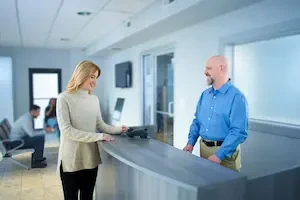
Emotions can run high when someone has been in an accident, he pointed out, meaning that empathy from shop staff is especially important.
“We really need to be the sounding board for what’s going on because they have insurance issues, something’s happened to their livelihood, their transportation. … It’s extremely important that we put ourselves in the guests’ place and have empathy for what they’re going through and take that burden from them,” he told Autobody News.
Getting employees into that stance is a process that requires training and leadership, and it’s one Demaree believes in as an investment. This viewpoint is gaining traction in shops when it comes to both customer-facing operations and internal processes.
Soft skills for employee retention
 Content from the WrenchWay webinar on its partnership with RockED and the Technician Onboarding certification programWrenchWay, an online platform that focuses on connecting schools and shops, has placed a strong emphasis on soft skills education. Through a partnership with RockED, an app-based mobile learning program, it’s offering RockED’s Technician Onboarding certification program for free to automotive schools, including high school and postsecondary programs. Chris Craig, fixed operations content owner for RockED, explained the program and the importance of emphasizing soft skills to new technicians in a webinar hosted by WrenchWay President Jay Goninen.
This emphasis is so important, Craig said, that it can impact new techs’ willingness to stay in the industry — a significant concern in a climate in which there’s a significant tech shortage.
“Modern technicians have responsibilities beyond just turning the wrench,” he said. “So, the thought process here is that if technicians are not trained in these soft skills, it could result in feeling unable or unwilling to remain in the automotive industry.”
Catching students preparing to enter the industry and offering them soft skills education may be beneficial in keeping them on the job, he added.
“We have a pretty large attrition rate of automotive technicians, and what we’re seeing is that’s commonly happening in that first six to 12 months of employment. So we have these highly qualified, trained, and ready people entering the industry, and then for reasons potentially unknown — maybe tied to soft skills or not — we’re losing them in that first six to 12 months,” he said.
Through the research process for its certification program, Craig said, the RockED team noticed a disparity between classroom and shop culture. Attrition rates support this, he said.
“You’re telling me this student sat through college and passed all of their classes and got their certificates or even their degree — so they’re dedicated — and then they hit the industry, and what happens? There’s a bit of a culture shock there,” he said.
Many new techs, he noted, feel “underused” because of the gradual way work often begins in the shop environment as they build trust and experience with their employers, compared with the volume of work they’re doing in the final stretch of their schooling.
Teaching soft skills
Critical soft skills for new techs include ideas that fall under self-direction, communication, and efficiency.
Change management, Craig said, is one of these.
“You see it happen all the time,” he said. “You’re working on this one car, and then the adviser comes in and says, ‘Hey, we’ve got a problem. You’ve got to work on this car instead.’ Change management is ‘How quickly can I get off this car onto that car?’ Mentally shift over and continue going with efficiency in mind.”
Proper documentation, he said, is also an important soft skill to develop, as it contributes significantly to vehicle service history and appears on invoices. If customers see a sizable price tag with a poor write-up and missing punctuation, an emotional reaction may ensue, but neat documentation can help offset that. Learning to put together documentation efficiently is also critical for techs, he said, because the time it takes to do it doesn’t factor into a flat rate.
Efficiency factors, in addition to soft skills, Craig asserted, can be supported by things like toolbox and cart setup, cleanliness in bays, and the stacking of repair orders while still keeping promise times in mind. And the adviser/technician relationship, he said, is an important component that ultimately impacts customer satisfaction.
“I’ve seen what happens when that relationship is strained and I’ve seen what happens when that relationship is strong, and it’s definitely more beneficial for both positions when they work better together in unison for the customer instead of in opposition to each other,” he said. “It’s supposed to be a partnership.”
Systems for success
Like Craig, Demaree feels training in soft skills is critical, and he has experience with implementing systems to emphasize them. Tom Wood has been operating on the Entrepreneurial Operating System (EOS) for about four years, using the business tools system as a structure for its 1,185 employees. Demaree said it allows the company to recognize issues and document them to discuss and solve them.
“We typically give ourselves seven days to solve them. So, what that does on the training side is it opens up communication with our teammates and the leadership of the stores to make sure we’re not missing something,” he said.
The company also uses the EOS Great Boss Workshop to instill accountability in leaders; all general managers of businesses across the organization began participating in it about a year ago. A workshop held for service managers, parts managers, and midlevel managers, he said, produced overwhelmingly positive results, and he plans to book another one in the new year. The company also uses RockED for leadership and soft skills training.
The result of all these systems has been an increased customer satisfaction index, despite the increasing difficulties in dealing with insurance companies.
“We felt like that was going to go backwards, and it’s actually gone the opposite, and we think it’s because of how we’re handling our customers from the training and the soft skills that we’re doing,” Demaree said.
These programs, especially EOS, he said, work well for smaller businesses. Tom Wood is one of the larger organizations using it, but independent shops could implement it, too, he said.
Overall, when it comes to customer satisfaction, the lessons are simple, he said: Consumers expect polite treatment from service providers, and if they don’t receive it, they’ll go elsewhere.
“It’s pretty cut-and-dried, in my opinion, when it comes to the importance of it. The old adage of grumpiness — customers aren’t going to tolerate it. There’s enough competition out there that we just have to be there for our guests,” he said.





Elizabeth Green