


A panel discussion at an industry event this spring focused on how plastic repair is offering collision repair businesses new opportunities to set themselves apart in the market, recruit young talent, and improve their financial bottom line.
One reason: There’s been continued increase in potentially repairable plastic parts on vehicles. I-CAR’s Bud Center, who moderated the panel discussion at the Collision Industry Conference (CIC), shared a slide showing the difference in the number of parts within a bumper in a particular vehicle 15 years ago compared to the bumper in the same make and model of vehicle now.
“Sixty percent of all the parts that went through your shop, through your production, are plastic,” panelist Frank Phillips, CEO of 4Plastic said. “How many of those are we taking time to do an evaluation to determine if they’re repairable or not? I think there’s an opportunity there.”
Phillips said the amount of textured plastic parts “has increased exponentially over the course of the last five or six years,” yet less than 1 percent of those parts are being repaired today.
“You see it every day: A new model with new textured side molding, side cladding,” Phillips said. “I think about my time at Rivian and how many parts [there were] down the side of the EDV for the Amazon delivery van, all of that plastic down the side. You see those vans driving all over the place with those parts damaged, yet completely repairable. It’s highly efficient to repair those and move them through your shop. And what an impact to your gross profit.”
In addition to textured plastic parts, he said, less than 26 percent of plastic bumpers and less than 10 percent of headlights are being repaired.
“The research and evaluation testing that we’ve done around recoverability on these products, that number on the bumper side of things could easily approach 80 percent,” Phillips said. “Obviously there’s things that we evaluate with the OE and make sure that we’re addressing what the OE says is repairable or not, and the location of the damage, those types of things. But there’s certainly room to move that 26 percent up for sure.”
The growth in the use of plastic in vehicle composition isn’t over, either. A recent trends report from Enlyte (parent company of Mitchell) stated that plastic will continue to make up a larger portion of auto composition, with a projected compound annual growth rate of 4.6 percent through 2030.
Fewer but more profitable jobs
But panelist Jason Scharton, global industry relations leader for 3M, said he views plastic repair as a good opportunity for shops right now less because of changes in vehicle materials but more as a response to the decline in claims.

Jason Scharton of 3M said high work volumes in past years led shops to get out of the habit of looking at "repair versus replace" opportunities.
“I think one of the things that happened during COVID when we saw the large backlogs [of work], was that it was just faster to get the part, swap things out, get the vehicle on its way,” Scharton said. “We got out of the habit of doing a lot of repair. And when we’re out of the habit, things don’t go right, we forget how to do it, we don’t have to practice. I think now we’ve kind of forgotten about it.”
With “repair” work generally providing higher gross profit percentages than parts replacement, Phillips said, a key step in capturing more plastic repair opportunities is educating estimators.
“In today’s world, we have fewer cars to fix,” he said. “We have to get what we can get on the cars that we’ve got. So, I think there’s a huge opportunity there to further educate estimators on how to evaluate these parts, and really assess repairability to begin with.”
Scharton said another reason he sees plastic repair as a good opportunity for shops is that it’s work that entry-level technicians can often do to become productive for a shop early in their career.
“One thing that’s changed over the last few years is that students coming out of school have learned more about plastic, performing plastic repair much more successfully,” he said, adding that may be a strategy for shops to consider — hire a technician out of school and make it their job to do the plastic repair. “They’re being productive independently, doing the plastic repairs, and not just sweeping floors and helping everybody else. They have their own responsibility, and I think it’s a great entry to the career.”
Environmental and cycle time impacts
Plastic repair may also help shops improve cycle time by avoiding parts availability issues.

Winston Cover of AkzoNobel said doing more plastic repair has positive environmental impacts — something shops can use to help distinguish themselves in a market.
“Mitchell data demonstrates this, showing that keys-to-keys cycle times for drivable repairs under $5,000 in total severity were completed eight-tenths of a day quicker when the estimate included at least one ‘repair’ time,” according to the recent report from Enlyte.
During the discussion at CIC, Winston Cover, MSO sales manager for AkzoNobel, said he sees another upside to shops doing more plastic repair work: the environmental impact, and being able to distinguish your shop as a “green” alternative.
“I think businesses can separate themselves if they employ some of these techniques,” Cover said. “The amount of material that’s produced from just tossing away perfectly repairable bumpers — I’m thinking about my granddaughter and what kind of world she’s going to live in if we keep doing this. In Europe, they’re now taking a holistic approach to the car repair itself and thinking about what we’re putting in landfills to see how we can minimize that impact.”
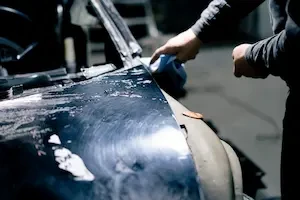
Center told the panelists he’s amazed by how often he still sees shops using body filler on bumper covers when 3M and other companies have very specific products for repairing bumper covers.
“Bumper covers by design are pretty flexible,” Scharton said. “They take light hits, they rebound. But body filler is pretty rigid stuff. It’s very brittle. So you really need a filler material that’s going to be just as flexible.”
He said that why’s it’s important that technicians understand the difference.
“In the shop, we may not be flexing that bumper a whole lot, especially after the filler really cures and then gets brittle. So they may not see that aspect of it,” he said. “That just raises the importance of getting information out to the technician base, along with training on how to use these products, why they’re different, and how easy they are to use instead of body filler.”



John Yoswick