


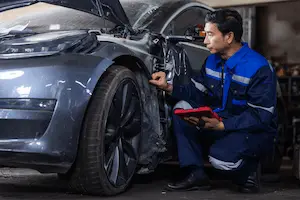
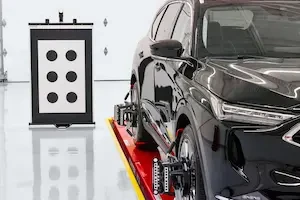
Collision shops across the country tout so many services now — auto glass repair and calibration, wheel alignment — but not every shop offers repair for an integral car part that frequently sustains damage both cosmetic and structural: wheels.
The tendency is to replace damaged wheels, due to the delicate balance of repairing them to OEM standards. Most shops that offer the service send wheels out to specialists, but the process of subcontracting this type of repair means back-and-forth communication and extra steps.
 CCA President Kyle Bradshaw.
Wheel repair can be the way to go for minor damage like road rash, but structural damage is often too complicated to tackle, according to Carolinas Collision Association President Kyle Bradshaw.
“If it's an insurance claim, the majority of customers want the vehicle to be safe,” he said. “If it's something that is above and beyond what the manufacturer says, that's something we'll provide to the customer and tell them, ‘Look, we're not going to repair it. We're not going to be responsible for subletting it out, and ultimately, replacement is the way that it should be done.’”
So, if wheels are a wildcard, why are so many shops still touting their repair on their websites? Here are the ins and outs of offering the service and solutions to the associated challenges.
Wheel Repair Difficulties
Achieving OEM-aligned results when repairing wheels often goes awry with the use of the necessary high torch heat to smooth aluminum, which can become annealed, explained Tom Morris, owner of Wheel Color It, based in Atlanta, GA. Replacing a factory pretreatment layer is also difficult, and skipping that step can mean metal exposed to the elements if an abrasion takes paint off after a repair.
Sending wheels outside the shop also presents problems; it’s difficult to perfectly match the color of the damaged wheel to the three remaining ones.
Nevertheless, Morris said it behooves some players in the collision industry to look for viable ways to repair wheels as cores from major providers are harder to come by these days due to shifting tariff prices.
“The collision trade is pretty much governed by the insurance industry,” he said. “The insurance companies are facing mammoth losses, so they're looking for alternatives to replacing by repairing aluminum wheels.”
Mobile Units as an Answer
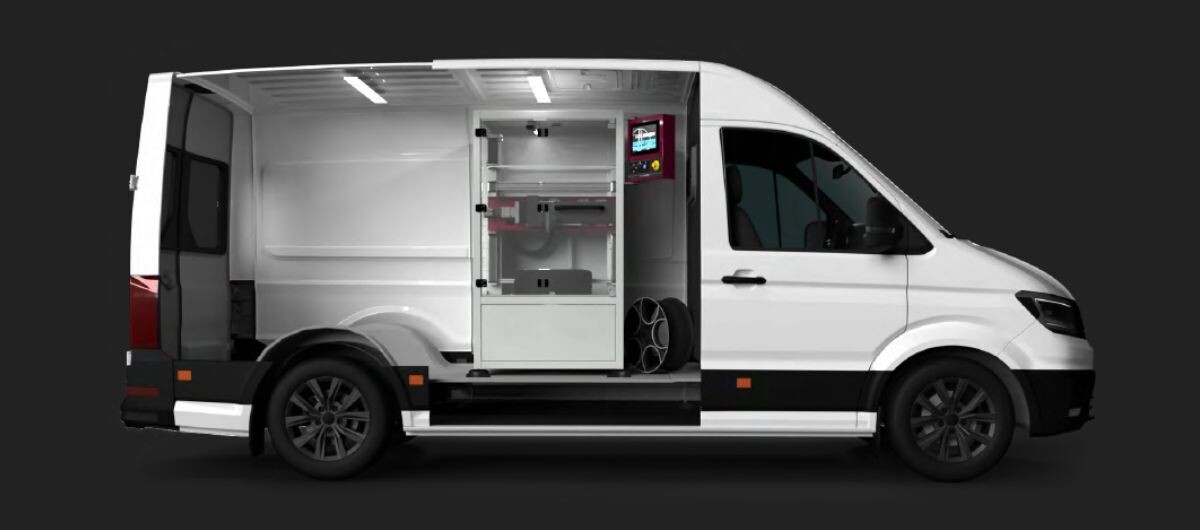
Morris’ company concept — mobile units that bring wheel repair to shops — is designed as an answer to the challenge and extra time shops face with the wheel repair process. He said these units can produce OEM-aligned results that insurance companies will recognize.
Franchisees operate out of box trucks or trailers that house equipment like a wheel straightener, CNC lathe, oven curing paint booth and bead breaker, along with a paint system, which company literature says can allow for up to 20 wheel repairs a day, affording customers like collision shops same-day, on-site service.
The company also touts a color matching solution with its numerous color options and coating process. Available to franchisees are more than 400 OEM-approved finishes and more than 30 silver blends; clear coat systems in gloss, satin, stormy black and matte; coating solutions options from water-based to powder to solvent-based; and special effects paints including chrome and hyper silver. A proprietary tint system and a related mobile app with more than 130 matchable colors round out the offerings.
Shop Owners Looking for Alternative Ways to Repair
The concept is attractive to at least one seasoned shop owner.
Jeniffier Grey owns Farmington Valley Autobody in semi-suburban Canton, CT. The shop handles all makes and models, moving 50 to 60 vehicles through each month.
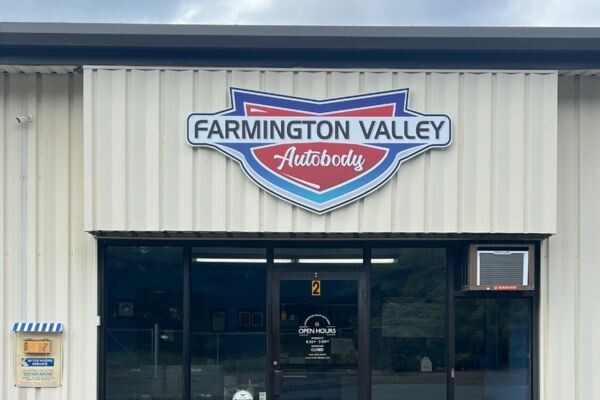 Jennifier Grey, owner of Farmington Valley Autobody in Canton, CT, said her shop could offer more wheel repairs with more reliable contractors. She hopes that by turning to a mobile unit, she can serve more customers. Image contributed by Farmington Valley Autobody.
The shop has been contracting wheels out to two outside wheel repair companies, but Grey describes high employee turnover rates for both and repair results that don’t always meet her standards. Color matching hasn’t been great either, she said.
Sometimes, she has to turn down wheel repairs because she doesn’t have the resources she needs in or out of the shop. She sees mainly curb rash or gauges to wheel rims — repairs customers ask to tack on to bigger jobs. These types of repairs, she said, usually come in at between $175 and $250 for the customer, a significant savings over replacing most wheels.
“If I actually accepted all the wheel repairs, I’d probably have about 20 wheels a month,” she said. “‘People are like, ‘Hey can you fix this, too?’ or ‘Hey, it's in here. I'll pay extra for the wheel to get fixed.’ And, obviously, you can't because it's unreliable. There are definitely a bunch of people that would do it.”
Her husband, James Grey, has a mobile service franchised through Wheel Color It. She’s hoping to use that to meet customers’ needs more readily. She’s not sure if the service will drive the cost of repairs down, but she does feel it will result in greater ease and quicker turnaround. She also feels that offering the repair service could allow people with unusual wheels manufactured in limited numbers to avoid downgrading or switching to a different style if replacements aren’t available.
Will Shops Expand with Wheel Repair?
The question now is: will wheel repair become a significant part of shops’ repair offerings?
Despite new options, Bradshaw remains unconvinced.
High liability, low financial return and a need to contract out the service mean it’s not going to be the bread and butter for most shops, he posited.
“It would be more of a specialization thing at this point in time,” he said. “So, it's pretty much a niche thing, and I think there are so many other opportunities and hats to be worn within the collision repair industry … There’s so much other opportunity and low-hanging fruit.”
Just because the service is on the back burner now for most shops, doesn’t mean it always will be, though. There are insurance factors, and the general economy to take into account.
“Who knows what'll happen with the claim count being down and the downturn in the market?” Bradshaw said. “I mean, people may look at it as a more viable option.”



Elizabeth Green