In today’s collision repair market, time is the currency that wins or loses business. Every day a vehicle sits in a bay waiting on parts or services is a day that work stalls, rental costs rise, and delivery commitments slip. Nowhere is this more evident than with wheel repairs.
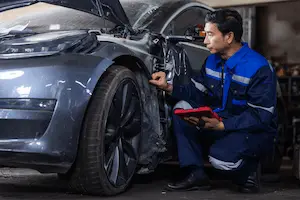
For many shops, a damaged wheel sets off a chain reaction: it’s sent to an outside provider, disappears from the workflow for two to four days, and everything else has to wait. That wait affects customer satisfaction scores, cycle time performance, and relationships with insurers. And because the work happens outside your facility, quality control and warranty responsibility often become a shared headache.
The Anatomy of the Bottleneck
This isn’t just about a single wheel repair — it’s about how the usual process is set up. Outsourced wheel repairs can take anywhere from one to four days. Remanufacturing can be a lengthy process, especially for a significant repair, custom color, or older model wheel. Repairs may be queued alongside work from multiple other shops, meaning your job might be at the end of the waiting list.
Meanwhile, the rest of the repair sits in limbo. Vehicles occupy valuable bay space. Technicians can’t move forward. Delivery dates inch later. For operators already under pressure from customers and insurers to reduce cycle time, that’s a bottleneck with a direct impact on profitability.
Pro Tip: Audit Your Wheel Repair Workflow
Track the average turnaround time and cost for outsourced wheel repairs over a month. This baseline will make it easier to quantify the gains if you bring the process in-house.
The Cost Beyond Time
The delays are only part of the story. Every outsourced wheel repair also sends revenue, as well as control, out the door. Instead of billing for that work, you’re paying someone else to do it. Instead of managing the process, you’re trusting a third party with your standards for quality and safety. Over time, that adds up to thousands of dollars in missed margin and opportunities lost to competitors who can do the work themselves.
It’s not surprising that many operators see in-house capability as the next big differentiator in collision repair. The question is how to add it without creating new operational headaches.
Pro Tip: Set Vendor Quality Standards
If you must outsource, require OEM-level finishes, proper color matching, and use of certified-safe straightening equipment from all vendors.
Two Paths to the Same Solution
The wheel repair bottleneck isn’t a new problem, but until recently, most shops only had two choices: live with the delays and lost revenue of outsourcing, or make a significant investment in equipment, training, and space to build the capability themselves. Both paths came with trade-offs in cost, complexity, and risk.
Now there’s a third way, designed to deliver the benefits of in-house capability without the steep learning curve of starting from scratch. Wheel Color It™ offers two approaches that meet shops where they are, whether they have space to spare inside their facility or see opportunity to expand beyond their own doors:
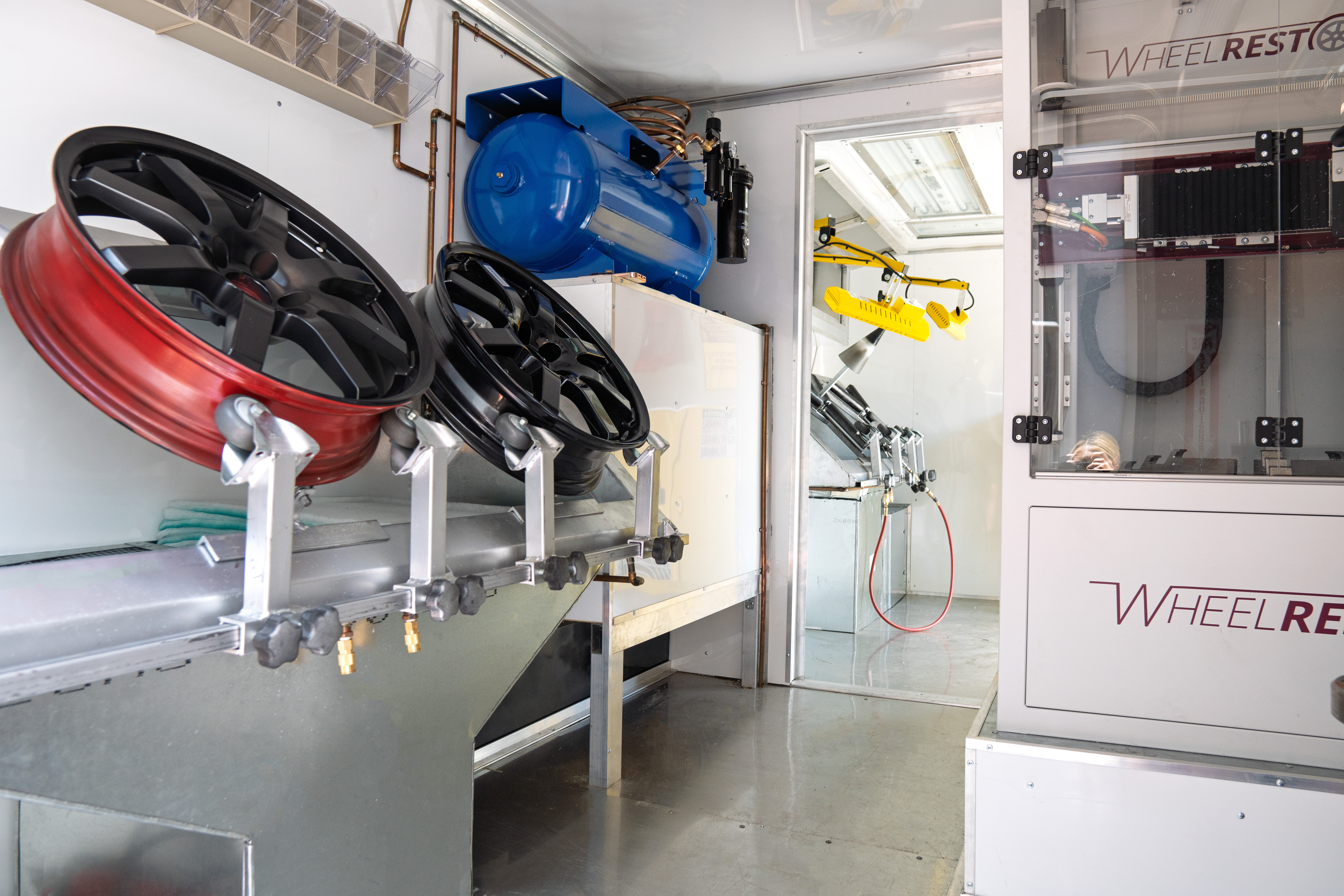
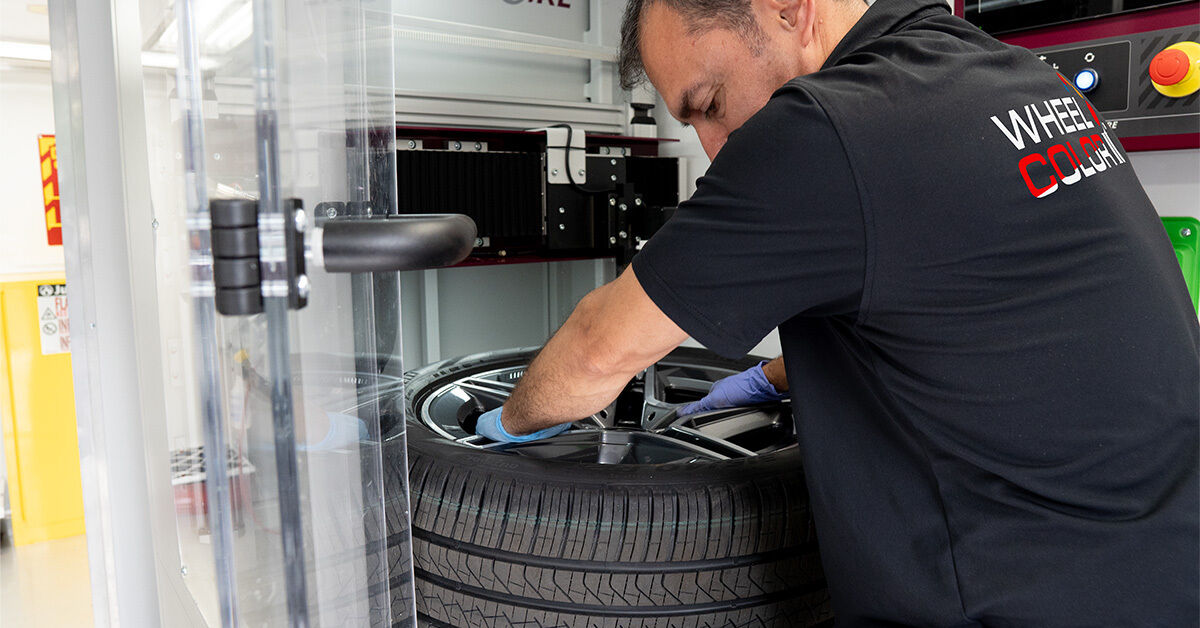
• In-Shop Setup: For shops with 200–400 sq. ft. of space, Wheel Color It™ provides the equipment, OEM-matched paints, and certified technician training to start generating new revenue right from your current location.
• 18’ Mobile Wheel Remanufacturing Unit: This mobile unit is fully upfitted with a CNC lathe for diamond-cut wheels, SAE-certified safe wheel straightener, OEM color-matching using DTM Powderlock Coatings, infrared curing systems, and all required tools and products. The unit is designed to produce $300,000–$400,000 in revenue per year, with potential profit of $150,000 or more, by servicing auto dealers and other collision shops in your exclusive territory.
Both paths are part of the Wheel Color It™ franchise partnership, offering exclusive territory rights, marketing support, and ongoing technical training.
Cycle times are then reduced from potentially multiple days to simply the amount of time it takes your shop to complete the wheel repair. But bringing wheel repair in-house changes more than just the turnaround time for one job. It reshapes the entire workflow. Repair orders close faster. Bays free up sooner. Technicians keep moving without wheel-related delays. And thanks to additional tools like the EZ Roller-Spinner™ system, vehicles can remain mobile during the process instead of being stuck on lifts or jack stands.
Improvements in operational flow can help boost customer satisfaction scores, strengthen DRP relationships, and open new revenue channels by attracting dealership and collision shop customers within your territory.
Pro Tip: Keep Bays Moving
Consider assigning a dedicated team member to manage vehicle movement and bay allocation throughout the day. A proactive approach to scheduling and staging can prevent bottlenecks and ensure that high-priority jobs keep flowing.
A Business Case That Adds Up
The operational benefits are clear — faster cycle times, more efficient bay utilization, and greater control over quality — but the financial case can be just as compelling. A single mobile or in-shop unit can generate $300,000–$400,000 annually, with average EBITDA margins around 25 percent. The best part is that ROI could be seen as quickly as within one year of investment.
What makes those numbers even more powerful is their ripple effect on the rest of the business. Once the system is in place, the opportunity to scale is built in. Shops can expand into additional units, add complementary services like PDR, bumper refinishing, or wheel personalization, and tap into entirely new revenue channels without significantly increasing overhead.
There’s also long-term value in treating wheel repair capability as a business asset. A well-run mobile or in-shop operation, complete with equipment, trained staff, and an established customer base, can have strong resale potential either as part of your existing business or as a standalone operation.
Pro Tip: Run Your Break-Even Numbers
Calculate how many wheels you’d need to repair each month to cover the cost of bringing capability in-house. Compare that to your current outsourcing spend, and factor in any additional revenue from new customers or services to get a realistic ROI picture.
Making the Move Without the Guesswork
Adding a new service line can feel risky, especially when it requires specialized equipment, technical expertise, and a marketing push to make it profitable from day one. The last thing any collision repair operator wants is to invest heavily in a new capability only to face unexpected delays, inconsistent quality, or an uphill battle to attract enough business to justify the spend.
Wheel Color It™ removes that uncertainty with a franchise model built to take the guesswork out of going in-house. It’s designed for collision repair owners who want the operational and financial advantages of same-day wheel repair without the growing pains of building a program from scratch.
Here’s what’s included:
• Certified training in cosmetic repairs, diamond-cutting, wheel straightening, painting, and wheel personalization.
• Fully equipped units (mobile or in-shop) ready to operate on day one.
• On-site launch support to help secure early accounts and ensure quality from the first repair.
• Ongoing marketing, lead generation, and operational assistance to keep your repair pipeline full.
Pro Tip: Leverage B2B Potential
When adding in-house capability, don’t stop at your own repair volume. Market your services to local dealerships, tire retailers, and smaller collision shops to maximize utilization.
From Bottleneck to Competitive Edge
For collision repair facilities, the decision to bring wheel repair in-house is about more than equipment — it’s about reclaiming control over time, quality, and profit. Whether you choose an in-shop setup or a mobile unit, same-day wheel repair capability can eliminate delays, keep revenue in your business, and improve the customer experience.
For many operators, that’s not just solving a problem. It’s securing an advantage. Click here to view the Wheel Color It™ information package and see if your territory is available.