


Not too long ago, an electric vehicle (EV) arrived at a dealership in Pennsylvania after a full-frontal collision. The technician checked the control light and found it was a battery-related problem. It was late in the day, so everyone went home while the car stayed parked in one of the shop’s stalls. In the middle of the night, the EV caught fire.
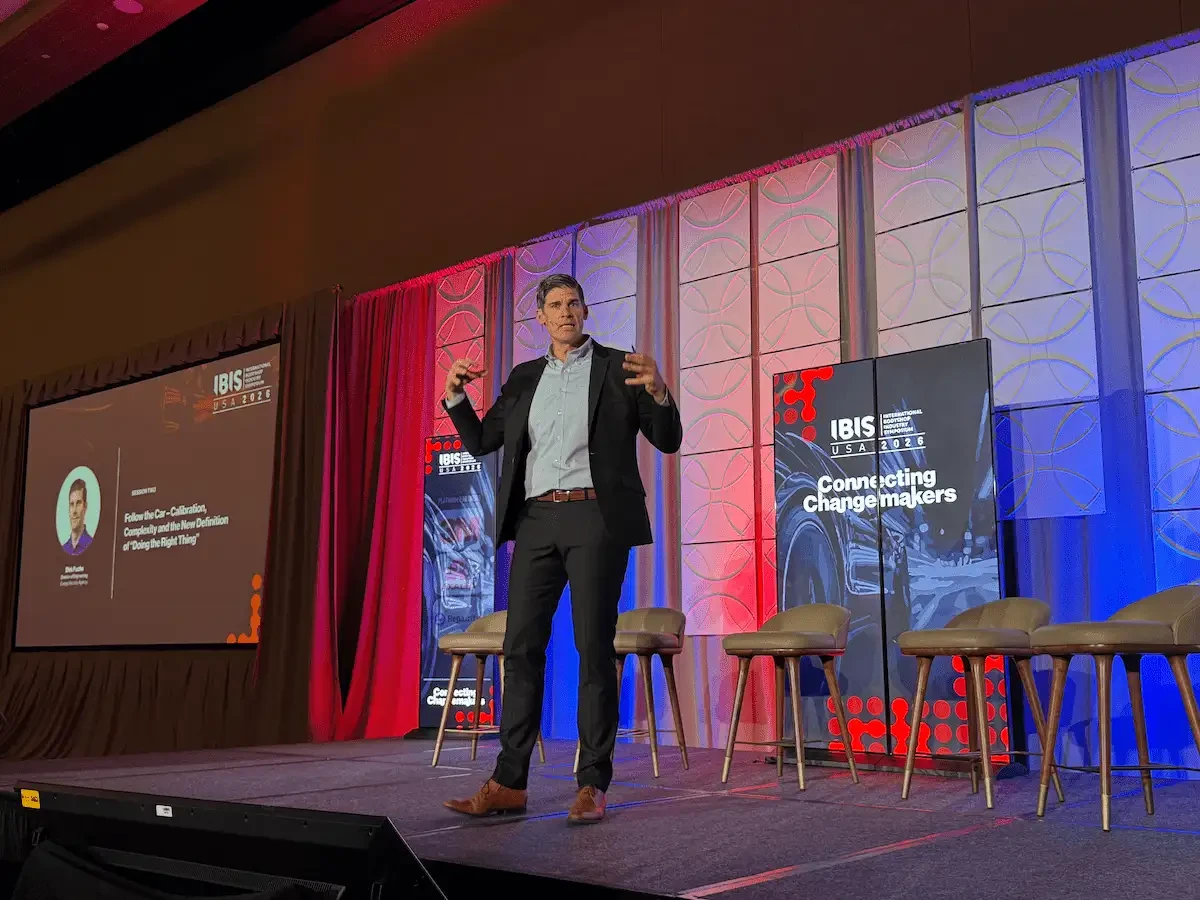
What may seem like an isolated case is becoming a common concern for collision repairers. To help the industry better understand what can potentially go wrong with an EV and the implications of a battery-related fire, EV expert Dirk Fuchs was invited to share insights during IBIS USA in March.
Fire Risk and Other Hazards
Fuchs, the director of engineering for the Energy Security Agency (ESA), is known nationwide for his knowledge on EV repair and battery storage considerations. As part of ESA, he provides risk assessments for electric and hybrid vehicles involved in collision, fire, damage, or mechanical malfunctions. He also supports the organization in providing awareness and training to first responders, tow, and recovery professionals.
One of the growing concerns with battery-operated vehicles is the potential for fires post-accident. Many are surprised to hear that hybrid vehicles are the highest risk drivetrain system. According to research from the National Fire Protection Association (NFPA), there are 25 fires per 100,000 EVs, compared with 1,530 fires per 100,000 internal combustion engine vehicles and 3,474 per 100,000 hybrids, Fuchs said.
Although the percentage of fires involving EVs is low compared to ICE vehicles and hybrids, when an EV fire occurs, Fuchs said they are extremely invasive and hard to stop. For example, a fully charged battery will burn significantly longer.
Most EVS are powered by lithium-ion batteries, which create unique challenges when EV fires occur. “When lithium-ion batteries are damaged or defective, they can enter a state known as thermal runaway, which is when the battery cells begin uncontrollably heating up,” according to the NFPA website. “This reaction can spread from battery cell to battery cell and lead to a fire.”
The energy density of the batteries used in EVs can make them extremely volatile when the process of thermal runaway begins, according to a U.S Fire Administration report titled “Electric Vehicle Fire/Resue Response Operations.
In addition to thermal runaway, the report highlighted other hazards related to EVs, including electronic shock, stranded energy, and deflagration.
Last year, Fuchs worked with NFPA to test EVs and battery packs and determine the effectiveness of firefighting tools and tactics. Rivian sponsored the study and donated the vehicles and batteries to test.
After burning dozens of battery packs and four large EVs, professional firefighters tested various suppression methods, including regular water, foam-based solutions and fire blankets.
“Everybody claims they have the golden bullet for EV fires,” Fuchs said, noting that there are very detailed standards and guidelines that should be followed.
The National Highway Traffic Safety Administration, which is part of the U.S. Department of Transportation (DOT), offers Standardized Emergency Response Information for Electric-Powered Vehicles based on the emergency response guides and rescue sheets provided by vehicle manufacturers.
The guidelines provide first and second responders information regarding the safe handling of battery-, hybrid- and fuel cell electric vehicles in emergencies and for towing and storing operations. The information can be filtered by vehicle make and model for battery-electric vehicles (BEV), plug-in hybrid-electric vehicles (PHEV), and fuel cell electric vehicles (FCEV).
EV and Batteries Considerations
“We have to be more cautious,” Fuchs advised collision repairers handling EV and hybrid batteries.
Part of being cautious is having a dedicated area inside or outside the shop in an isolated area as well as a sprinkler system nearby.
Typically, when a collision repair shop receives a new battery, it is swapped out and stored on the shop’s premises. Fuchs stressed the importance of taking steps to ensure batteries are handled safely and correctly.
He recommended that dealership shops handling high-voltage batteries perform “stable to ship” checks, disassemble the battery into smaller pieces, and pack them in a PG1 crate while ensuring the packer is certified under DOT 49 CFR.
“There are huge regulations around shipping,” emphasized Fuchs.
He suggested taking time to understand the codes and standards in NFPA 855, “Standard for the Installation of Stationary Energy Storage Systems.” Developed by subject matter experts worldwide, NFPA codes and standards are considered the leading resource on fire, electrical, and life safety guidelines and requirements.
Fuchs said NFPA 855 provides the minimum requirements for mitigating the hazards associated with an energy storage system (ESS), which is a device or group of devices capable of storing energy to supply electrical energy.
NFPA 855 is enforced by the Authority Having Jurisdiction (AHJ) to ensure compliance with safety standards.
“Damaged, defective, or recalled (DDR) lithium batteries, including those misused and abused, pose an even greater risk than non-DDR lithium batteries in transportation,” according to the U.S. Department of Transportation, which offers a guide on how to identify DDR lithium batteries and properly package them for shipment.
Safely Transporting EVs
Fuchs also addressed how a battery vehicle should be transported from the scene of an accident to a collision repair shop or tow yard.
Many assume it can be transported on a flatbed truck from an accident scene to it destination. However, under DOT regulations, this is prohibited and violates the law.
A new legal way to store and move burned vehicles across the country is using a FireBox. The transport and containment system is being used for all sizes of EVs and hybrids. It has specialized fire-retardant walls and an electric winch for pulling vehicles. A vehicle can be stored in the FIREBOX and observed for thermal runaway. Because the containment system is watertight, the fire department will flood it to submerge the battery system. It has an open top that prevents the build up of flammable gas. With total containment, Fuchs said there are standard fire couplings for rapid water fill, allowing for the safe removal of contaminated water, which is pumped out and disposed of by a hazardous waste company.
“This is a really important aspect for our industry,” said Fuchs. “We finally have a legal way to transport EVS in a compliant way.”






Stacey Phillips Ronak