


The latest innovations in advanced driver-assistance systems (ADAS), autonomous vehicles (AVs), and in-cabin technologies were showcased in June at AutoSens USA, co-hosted with InCabin USA in Detroit, Mich.
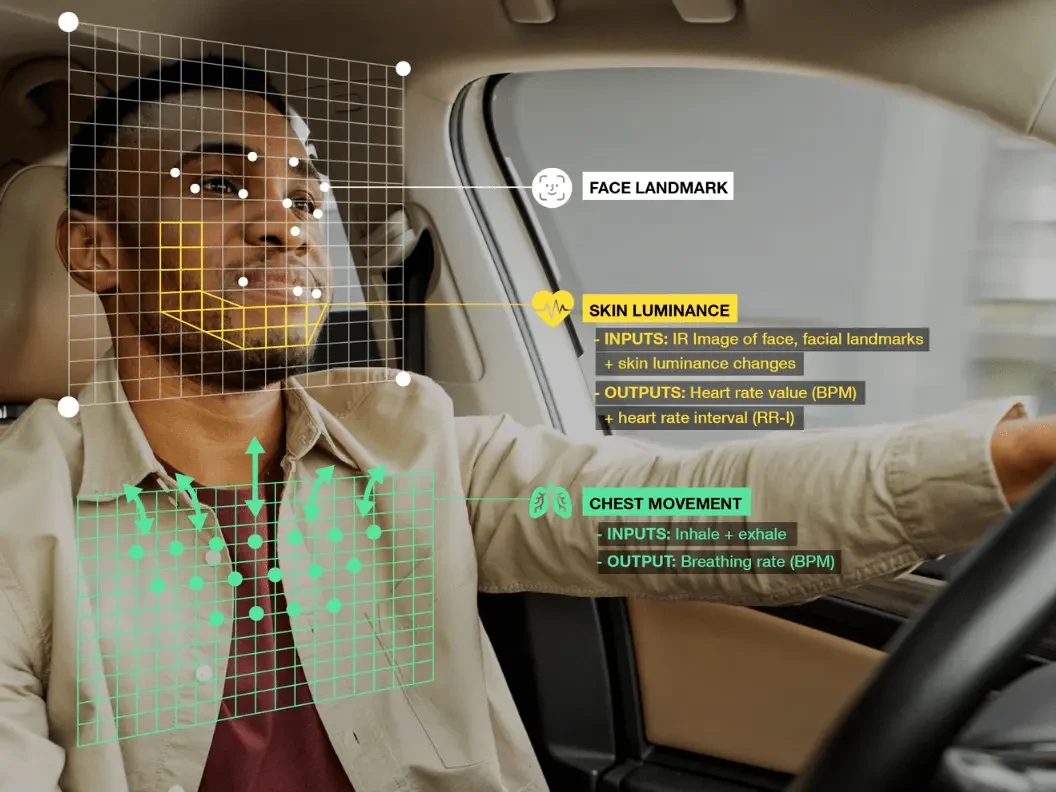
In addition to external sensors used for ADAS and automated driving features, automakers and suppliers are developing in-cabin sensing systems — including biosensing technology— to help vehicles better understand the driver and their occupants.
“Vehicular sensors and biosensors have become integral to modern automotive technology, driving advancements in vehicle safety, performance optimization, and driver wellbeing,” according to Raparthi Yaswanth and M. Rajasekhara Babu from the School of Computer Science and Engineering, Vellore Institute of Technology (VIT), in India. In their research article, “Revolutionizing Automotive Technology: Unveiling the State of Vehicular Sensors and Biosensors,” the authors explored the development, applications, and challenges of vehicular sensors and biosensors, emphasizing their impact on transportation.
“These technologies play a central role in the evolution of advanced driver-assistance systems (ADAS), autonomous vehicles, and vehicle health monitoring systems,” they said.
Babu noted how the growing integration of AI-driven analytics, connected vehicle ecosystems, IoT platforms, and real-time health monitoring technologies is further enhancing the capabilities of vehicular sensors and biosensors. “These advancements are expected to play an important role in the future development of intelligent transportation systems, autonomous mobility, and personalized driver assistance,” he said.
Following AutoSens USA, Autobody News reached out to exhibitors to learn about these automotive technologies collision repairers will likely encounter in their facilities in the coming years.
Biosensing Technology
Kelly Rickert, director of Sensing and Data Solutions for Mitsubishi Electric Automotive America (MEAA), shared insight about the company’s biosensing technology. MEAA, a U.S. affiliate company of Mitsubishi Electric Corporation, designs, develops, and manufactures electrical and electronic systems and components for automotive and heavy-duty vehicle OEMs, including technologies related to ADAS and autonomous driving, connected infotainment, powertrain and body electronics, and electrification.
Through its research and development activities, MEAA has evaluated how abnormal driver conditions can contribute to safety risks. The company has worked with medical and academic partners to explore how driver-monitoring technologies can be adapted to provide biosensing-enabled indicators that may help a vehicle recognize when a driver’s or occupant’s condition requires attention.
To understand biosensing and biometrics, Rickert distinguished the difference between the two. Biometrics are typically used to identify or authenticate a person by measuring unique physical or behavioral characteristics, such as fingerprints or voice patterns. Biosensing, which Rickert discussed for this article, focuses on physiological signals and the condition of the human body.
Rickert explained that in-cabin sensing is evolving from basic driver alert features to more context-aware driver and occupant monitoring. In-cabin sensing features may include driver attention monitoring, distraction and drowsiness detection, biosensing-enabled health and wellness indicators, occupant state sensing, and additional personalized in-cabin experience features selected by the automaker.
“These capabilities are being developed as part of a broader industry effort to reduce distraction, fatigue, drowsiness, and impairment-related safety risks, while supporting future vehicle intelligence use cases,” he said.
Depending on the use case and level of validation, the system may provide insight into physiological indicators such as heart rate, heart rate variability, respiration patterns, stress-related indicators, and blood pressure-related signals, along with other abnormal condition indicators.
However, Rickert emphasized that the technology is not intended to diagnose a medical condition, identify a specific substance or determine a legal impairment threshold.
“We can output heart rate, or we can output a scoring scale of what we think the stress level is, but ultimately, it is the OEM that has to decide what they are going to do with that information,” Rickert said.
For example, an automaker could decide that if a vehicle detects signs consistent with a serious abnormal driver condition, it may issue alerts, engage driver-assistance features, or execute a controlled stop where appropriate. Rickert said the key point is that the supplier can provide signals and context, while the automaker determines the vehicle’s response.
Impacts to the collision industry
Rickert said many driver monitoring systems (DMS) in vehicles today remain relatively limited in their interaction with other vehicle systems. In many cases, they may issue warnings or alerts without yet being deeply integrated into broader vehicle decision-making.
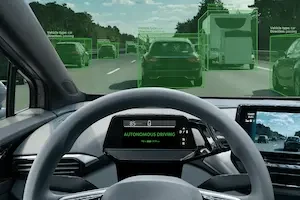
At the same time, ADAS and semi-autonomous capabilities continue to rely heavily on external vehicle sensors that help the vehicle understand the road environment. Rickert said the next step to connect that outside-the-vehicle awareness with a better understanding of the people inside the vehicle.
“Where we are in the industry today is that we have these separated sensing systems — external and internal,” Rickert explained. “The trend going forward is syncing those together to give the vehicle better contextual awareness of the human in the vehicle and taking that into account when making decisions.”
For the collision industry, Rickert said the key takeaway is that in-cabin sensing should increasingly be viewed as part of the broader ADAS and safety ecosystem. Cameras and sensors inside the cabin may affect driver-assistance features, occupant-protection strategies and future vehicle responses.
These systems may also create new categories of vehicle and occupant context data, although how that data is stored, accessed and shared will depend on OEM policies, user consent, regulation and data governance requirements.
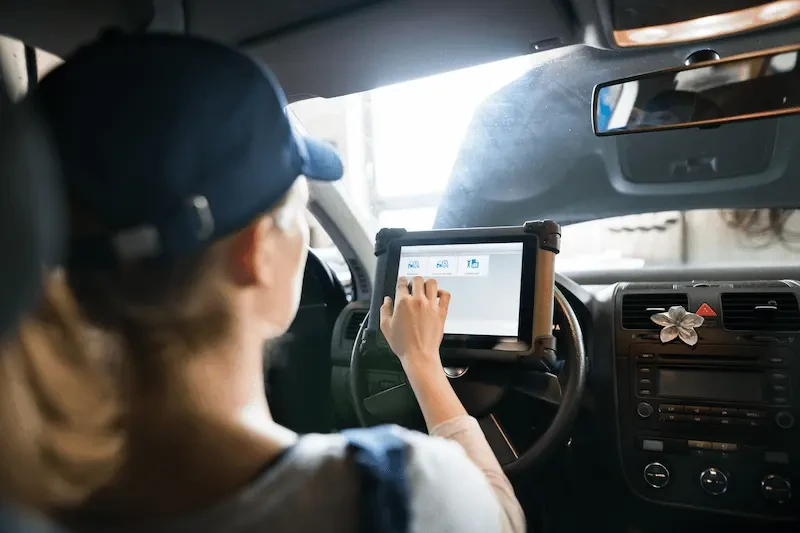
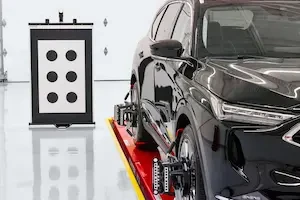
Rickert noted that DMS and occupant monitoring systems should be treated like other safety-related sensing systems. Depending on the OEM design and the repair, they may require inspection, calibration or functional verification after service. He stressed the importance of repairers identifying when these systems are present and following the applicable OEM repair procedures.
From driver monitoring to full occupant awareness
Rickert predicted that shops will begin to hear more about occupant monitoring systems, or OMS. While DMS focuses primarily on the driver, OMS expands the sensing scope to other occupants and seating positions.
“Occupant monitoring is important not only for a future robotaxi or autonomous vehicle environment, but also for near-term safety features,” Rickert said. “Vehicles are increasingly trying to understand not just where the vehicle is going, but also who is inside, where they are seated and whether they are positioned safely.”
Rickert said these technologies could eventually support safety features such as occupant classification, seating-position awareness, child-presence detection, and adaptive restraint strategies, depending on the OEM’s implementation.
For example, if an occupant is sitting out of position, occupant monitoring data could eventually help inform how restraint systems respond in certain crash scenarios.
“If the camera is looking at the driver and occupants and sees an out-of-position occupant, that information could eventually be used as part of adaptive occupant protection strategies,” Rickert explained.
Rickert also noted the increasing use of vehicle cameras.
“We started with a camera on the steering column just looking at the driver,” Rickert said. “We have now transitioned to cameras that may be located in the center touchscreen display, near the rearview mirror or behind the mirror glass in some cases, allowing the system to see both front seat occupants.”
Cameras may also be located to view the second or third row, including positions mounted in or near the headliner, depending on the vehicle design.
One of the growing issues with these technologies is determining who owns the risk and liability when impairment is detected.
“Even very high accuracy can still create meaningful real-world challenges when applied across millions of vehicles,” Rickert said. “That is why OEMs need to think carefully about thresholds, driver communication, liability and the downstream impact of false positives.”
Another challenge is building trust with these innovations.
“The world is becoming more and more software-defined,” Rickert said, whether that is a software-defined building, city or vehicle. “Humans need to be able to trust these new technologies.”
In response, Rickert said his team has been evaluating what it takes to build that trust as vehicles and other systems become more context aware.
Rickert said the broader goal is to help machines respond with better human context. If a vehicle can better determine whether a person is distracted, fatigued, stressed, impaired, out of position or experiencing an abnormal condition, it can support decisions that are better suited to the situation.
He described that idea as a form of “digital empathy,” not emotion from the machine, but better contextual understanding that can help people trust increasingly software-defined systems.






Stacey Phillips Ronak