



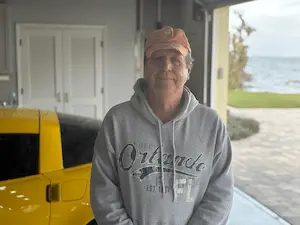
 According to Todd Ahrens, shops don’t win on equipment or square footage — they win on relationships.After 35 years in the collision repair industry — as a shop operator, refinish consultant, and territory sales manager with Sherwin-Williams — Todd Ahrens has seen one theme consistently separate thriving shops from those that struggle: relationships.
It’s not the equipment budget.
It’s not square footage.
It’s not Direct Repair Program (DRP) status.
According to Ahrens, “The foundation of everything we do in this business is relationship — just like in life. If shops understood the depth of the relationships required to operate successfully, they’d run completely differently.”
Ahrens recently shared his perspective as a guest speaker at Collin College’s collision program, where he walked students through the “five areas every shop must rock.” His emphasis on relational thinking sparked strong reactions from students — many of whom admitted they had never been taught how deeply people, partnerships, and communication shape repair outcomes.
Autobody News interviewed Ahrens to expand on these ideas and explore the operational lessons he believes matter most today.
1. Labor: value the craftsmen behind the work
Ahrens begins with labor because the success of every other system depends on it.
“Do your techs feel valued? Do they feel heard?” he asks. “Too many shops say, ‘Everyone’s replaceable.’ But these are skilled craftsmen. They need respect.”
He shared a story about a talented painter who chronically underperformed under a rigid, demanding manager. Ahrens shifted to a relationship-first approach: offering autonomy, trust, and flexibility. Productivity skyrocketed — not because the workflow changed, but because the relationship did.
“You’ll never get maximum efficiency from someone who feels pressured or dismissed,” Ahrens says. “But when a tech feels valued, they’ll go to battle for you.”
2. Estimating: the first opportunity to earn trust
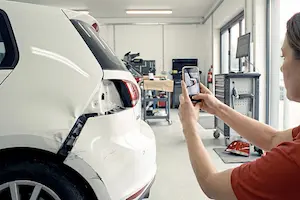
Ahrens challenges shops to rethink estimating as not just a technical skill, but a relational one.
“How did the customer get to your shop? A referral? A Google review? Value that. They had a hundred options, and they chose you.”
He urges shops to:
- - Allow walk-in estimates
- - Write complete, educational estimates
- - Identify safety concerns proactively
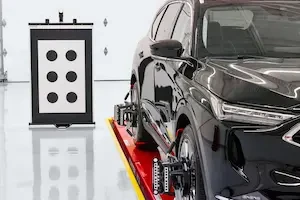
- - Explain ADAS impacts and keep the customer in your shop
- - Know P-Pages, OEM procedures, and adhesives
He also notes that blueprinting doesn’t fit every business model, and shops should understand when it helps and when it hinders.
Good estimating is not just accuracy, he says — it’s engagement, communication, and credibility-building.
3. Parts: relationships drive fit, finish, and cycle time
Parts challenges are inevitable. But how shops navigate them depends on one thing: vendor relationships.
“If a vendor likes working with you, they’ll go the extra mile,” Ahrens says. “They’ll run across town to find the part that wasn’t in stock. If they don’t like working with you, you’ll hear, ‘It’s on order.’”
He encourages shops to understand the true value of:
- - OEM vs. aftermarket choices
- - Price-matching strategies
- - CSI impacts
- - Fit and finish considerations
- - Tech satisfaction
“Sometimes you give up a little margin to gain major efficiency or quality,” he notes.
4. Scheduling: load leveling and flexibility win the day
Ahrens sees scheduling discipline as a major differentiator.
“Are you still an old-school shop where everyone waits for Monday’s chaos?” he asks. “Or do you load level consistently through the week?”
He encourages shops to:
- - Spread out incoming work
- - Leave space for quick turnaround jobs
- - Stay flexible for customer emergencies
- - Avoid bottlenecks between body and paint
“Scheduling shouldn’t be rigid. It should be responsive.”
5. Workflow: processes with built-in adaptability
Workflow, Ahrens says, is where the best shops shine. But it’s not about rigid SOPs — it’s about structure plus adaptability.
Key questions he urges shops to ask:
- - Do you know your WIP — and manage it daily?
- - Do you have a production manager or shop foreman?
- - Are QC checkpoints defined?
- - Are supplement approvals efficient and clearly assigned?
- - Do you hold daily morning meetings to align the team?
“You may lose 45 minutes on a morning meeting,” he says, “but you gain hours of clarity, communication, and alignment.”
What the next generation of techs must master
When asked what matters most for tomorrow’s workforce, Ahrens didn’t hesitate: education.
“You can’t fix 2025 cars the way you fixed 2015 cars,” he stresses. “Know your OEM procedures. Stay curious. Stay ahead. Be flexible.”
He adds that adaptability — not ego — is the mindset that will define the next decade of technicians.
Efficiency comes back to one thing
When defining shop efficiency, Ahrens keeps it simple:
“How quickly can I take a car from wrecked to delivered — profitably and safely?”
But again, the key is relationships:
- - A strong ADAS partner shows up on Friday afternoon.
- - A trusted parts vendor finds a hard-to-locate part.
- - A respected tech goes the extra mile.
“Relationships make you efficient. They make you profitable. They make you successful.”
The message that stuck with students
Students at Collin College told Ahrens they’d never seen the collision business through a relationship-driven lens. His closing message surprised them:
“The most important part of a body shop is you,” he told them. “Your actions shape your relationships, and your relationships shape everything else.”
After 35 years, that’s the lesson he’s determined to pass on.
“People say this is the only thing I know,” he laughs. “I know more. But what I really know is this: I’ve never seen it all, and there are no experts. The day you stop learning or building relationships is the day you stop growing.”




Leona Scott