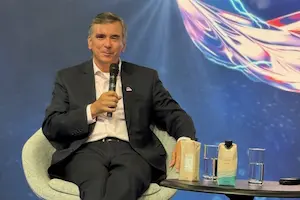

Recently, while attending the Global Leadership Summit, I met a successful entrepreneur from Chicago who has owned businesses across several industries. During one of our conversations, he told me about a business he had recently sold after partnering with someone who came from the automotive dealership world. He described a leadership philosophy his former partner held. His partner believed employees should take on more debt — buy the bigger house, buy the expensive truck, increase their lifestyle — because the more financial obligations they had, the more they would need to work.
As he shared the story, he asked me a question that has stayed with me. He wanted to know whether I had seen that same mentality in the collision repair industry: whether people were sometimes viewed primarily in terms of what the organization could get from them, rather than who they could become under good leadership.
His question brought to mind versions of that same philosophy I have heard throughout my career, comments about technicians needing more financial obligations so they will be motivated to produce more hours. Some of those comments may have been said jokingly, but I think they reveal something about how we can sometimes view people. People can slowly become resources we use to accomplish our goals, rather than people we have been given the opportunity to lead, develop, challenge and help grow.
That does not mean we should feel guilty about needing people to perform. Businesses need results, and every person on the team has a responsibility to contribute to them. The problem is not expecting people to produce; the problem is when what they produce becomes the primary way we see their value and define our relationship with them. Healthy leadership holds both responsibilities at the same time: building a high-performing business, and developing the people whose work makes that performance possible.
Performance still matters
Before anyone interprets this as an argument for lowering expectations or putting people ahead of the business’s health, that is not what I believe. I believe deeply in excellence, accountability, profitability, hard work, personal responsibility, and delivering results. Companies must perform, and people must contribute to that.
A technician who consistently does not meet reasonable expectations needs leadership and accountability.
A manager who constantly makes excuses for missed goals, rather than looking for solutions, needs to be challenged.
An employee who repeatedly demonstrates behavior that harms the team cannot be allowed to continue simply because having a difficult conversation feels uncomfortable.
Caring about people does not mean tolerating poor performance, and developing people does not mean lowering the bar so everyone feels good. Healthy leadership requires us to challenge people; to coach, equip, and hold them accountable; and sometimes to make incredibly difficult decisions when someone is no longer the right fit for the organization.
The difference is not whether we expect performance. The difference is how we view the person responsible for delivering it. There is an enormous difference between thinking about how we can create enough pressure in someone’s life that they have no choice but to produce more for us — versus asking how we can create an environment where that person can become better, develop their skills, increase their earning potential, contribute at a high level, and build a better life — while also helping the organization win. Healthy leadership does not require us to choose between people and performance. It requires us to pursue both.
Develop people rather than manage production
One idea reinforced for me at the Global Leadership Summit was that our responsibility as leaders is not simply to manage today’s production, but to develop the people producing it. Do our technicians, estimators, customer service reps, and managers see an opportunity to grow in our business? Are we only noticing where they fall short, or are we also recognizing their potential and helping them develop it? Sometimes the issue may even be that we have the right person in the wrong role, or have not given them the training, tools or leadership they need to succeed.
That leads to a principle that has been recurring in my own life and leadership lately: When we put ourselves at the center, we almost always get it wrong. Intentionally wanting employees to accumulate debt so they have to work harder is only an extreme example of self-centered leadership. Most of the time, it is much more subtle, which is exactly why I believe we need to become better at recognizing it in ourselves.
Putting ourselves at the center can show up in ways we may not immediately recognize. When an employee makes a mistake, my first thought may be how that mistake impacts me. I may become defensive when someone challenges my decision, or I may avoid giving needed feedback because I do not want the discomfort of a difficult conversation. I may tolerate a high performer who damages the culture because I am afraid of losing their production. I may blame employees, customers, insurers, competitors or “the market” for our organization’s results before examining what I can influence and what I need to do differently as a leader. In each of those moments, I have put myself at the center.
Moving past ‘command-and-control’
I recognize these behaviors because I have had to face them at times in my own leadership. Earlier in my career, I was much more of a command-and-control leader. I cared deeply about results, I had high expectations, and I believed people needed to do their jobs and deliver what was expected of them. There is nothing wrong with those expectations, and I still care deeply about results and excellence today. What has changed is my understanding of what good leadership looks like, and how much responsibility comes with influencing another person’s experience, development, confidence and growth.
For years, I thought leadership was figuring out how to get people to do what needed to be done. Over time, I began asking different questions. Instead of asking only what I needed from the people I led, I started thinking more about what they needed from me. What did I need to teach them? What conversations was I avoiding? Where did they need to be challenged? Where did they need encouragement? What potential could I see in them that they could not yet see in themselves?
More recently, I have added another question that I believe gets to the heart of healthy leadership. What does healthy leadership require from me right now?
I’ll speak to this more in my next column.