

Collision repair shops that store, tow or hold customer vehicles overnight are facing a growing category of risk: vehicles under federal "park outside" recall orders because of a fire hazard that persists even after the engine is switched off. Gasoline and diesel vehicles, not electric vehicles, account for most of the recent increase, Washington Post reporter Todd C. Frankel found in an analysis of National Highway Traffic Safety Administration recall data.
NHTSA has issued 93 "park outside" recalls since 2021, covering roughly 10.3 million vehicles combined, the Post reported. Separately, the Post found that the agency issued 17 more such recalls in just the first seven months of 2026, covering 1.7 million vehicles, making 2026 the year with the second-highest number of vehicles covered by this recall type since it was introduced more than a decade ago. An estimated 3.4 million vehicles nationwide currently carry an outstanding "park outside" recall, per a Carfax estimate cited in that reporting.
A "park outside" designation tells owners to keep a vehicle away from structures and other vehicles because of the risk of a fire even when the vehicle is parked and switched off. They're known as "key-off fires," said Frank Borris, a former NHTSA investigator who now works as a safety consultant, in comments to the Post. "The engine is off," he said, "but the circuits are still hot and they stay hot all the time."
Recent recalls illustrate the pattern
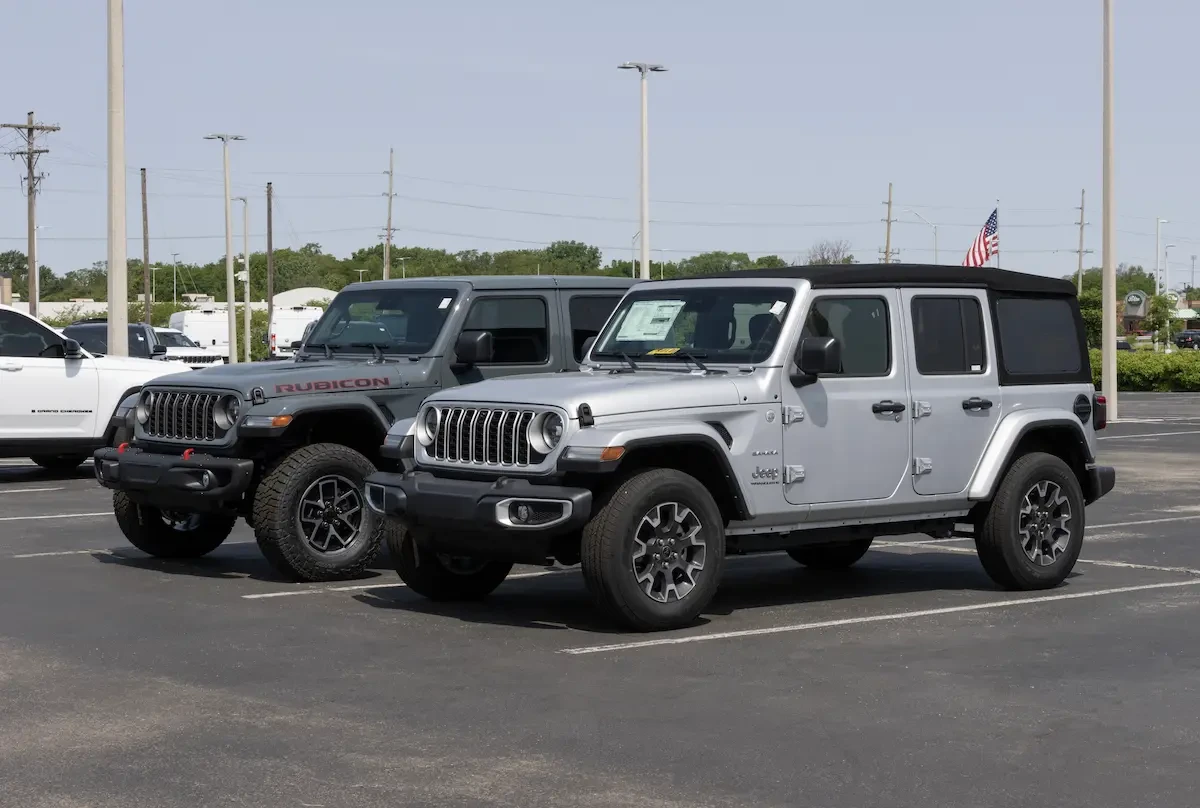
FCA US issued a recall June 9 covering 1,076,999 model year 2021-2025 Jeep Gladiator and Wrangler vehicles, after determining that a faulty wiring connection at the electric hydraulic power steering pump could let nearby combustible material overheat. NHTSA said it was aware of 51 fires and one injury linked to the defect and advised owners to park the vehicles outside and away from other vehicles and buildings until a repair is completed.
The recall carries direct operational relevance for collision repair facilities, since the affected power steering pump and wiring sit near the front-end structure that technicians already work on during crash repairs. Shops handling incoming Wranglers or Gladiators should confirm a vehicle's recall status before beginning repair work, an Autobody News review of the recall noted.
Kia America issued a separate "park outside" recall July 9 for 462,869 model year 2020-2024 Telluride vehicles. NHTSA said that striking the front power seat's slide cover or knob can dislodge, misalign or damage the seat switch, causing the motor to run continuously and overheat; the agency said Kia was aware of seven seat fires and 11 instances of the motor melting. It was the second Telluride recall tied to the same underlying defect; a 2024 recall covering the same issue did not fully resolve it, according to the Post.
A third case in the Post's analysis involved 2021 Ford Expedition and Lincoln Navigator SUVs, more than 66,000 of them, pulled back after regulators tied at least 16 fires to short-circuiting battery junction box circuit boards. The Post reported the fires often broke out after the vehicles had already been parked and shut off.
Not an EV-specific problem
Of the 93 "park outside" campaigns NHTSA has issued since 2021, 44 covered vehicles with conventional gas or diesel engines exclusively and 38 covered electric or hybrid vehicles only, according to the Post's count. But gas-only campaigns covered far more vehicles over that span: about 4.6 million over the past five years, compared with roughly 662,000 for EV- or hybrid-only campaigns.
Measured by vehicle count rather than number of campaigns, the largest share of the 10.3 million recalled vehicles, 49.5%, fell into a "mixed powertrain" category that the Post defined as recalls covering models sold with a mix of conventional and electrified drivetrains. Conventional ICE-only recalls made up 44.0% of the total, EV and hybrid recalls 6.4%, and hydrogen fuel-cell vehicles 0.1%, per the same analysis.
Gas and diesel versions dominated even within the mixed-powertrain category. Two recalls NHTSA announced together in September 2023 made up roughly two-thirds of that category's 5.1 million vehicles on their own: about 1.65 million from Hyundai and more than 1.73 million from Kia, the Post reported. The automakers said at the time, "the safest place to park [the vehicle] is outside and away from homes and other structures. Fires can occur whether the vehicle is parked and turned off or while driving."
Both companies' vehicles were pulled back for the same reason: an anti-lock brake system prone to leaking fluid and short-circuiting in a way that could ignite the engine, even with the car parked. The Hyundai models involved were overwhelmingly gas-powered, with fewer than 100,000 hybrid or fuel-cell vehicles in the mix; nearly every Kia model on the list ran on a conventional engine as well.
Part of the overall imbalance reflects the makeup of the U.S. fleet: about 94% of light-duty vehicles on the road have conventional internal-combustion engines, versus about 6% that are hybrids or fully electric, the Post reported.
Sean Kane, president of the auto safety research firm Safety Research and Strategies, told the Post the causes behind individual recalls resist a single explanation. "It's a mix of things causing this," Kane said. "It's messy. It doesn't lend itself to simple description of what's happening. But it boils down to growing electronic systems and the number of components." Discussing the Hyundai and Kia brake-system recalls specifically, Kane was blunter: "They've figured out more ways to catch fire than any other vehicle."
That broader electronics trend also showed up in a separate, first-half 2026 recall index from claims administrator Sedgwick. The index found electrical systems accounted for more recall campaigns, 74, than any other vehicle system industrywide in the first six months of the year, the most units affected in that category in a decade at 6.23 million. One Ford recall alone made up most of that volume, 4.38 million vehicles, after the index flagged a trailer communication problem that could disable brake response and turn signals for vehicles under tow.
Earlier warnings, and how to check for them
Michael Brooks, executive director of the advocacy group Center for Auto Safety, told The Wall Street Journal in June that the growth in "park outside" recalls is, to some extent, an inevitable consequence of vehicles carrying more electronic components that keep operating even after they're parked. "It's encouraging that we are seeing more manufacturers notifying owners of potentially dangerous conditions prior to the availability of repairs," Brooks said.
Owners and repair facilities can search for open recalls, including active "park outside" orders, by vehicle identification number at NHTSA.gov or by calling the agency's Vehicle Safety Hotline at 888-327-4236.


Lisa McArdle